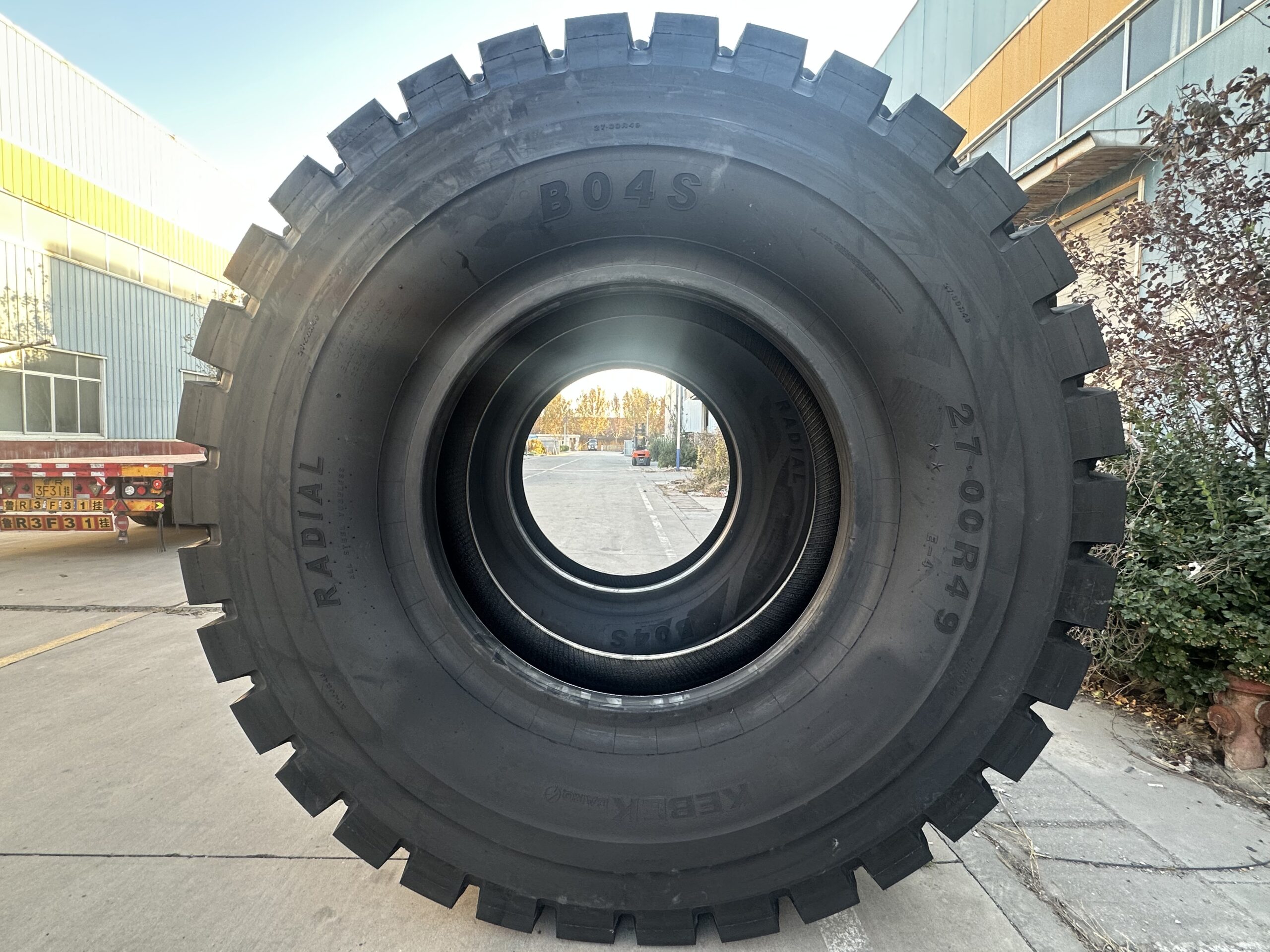
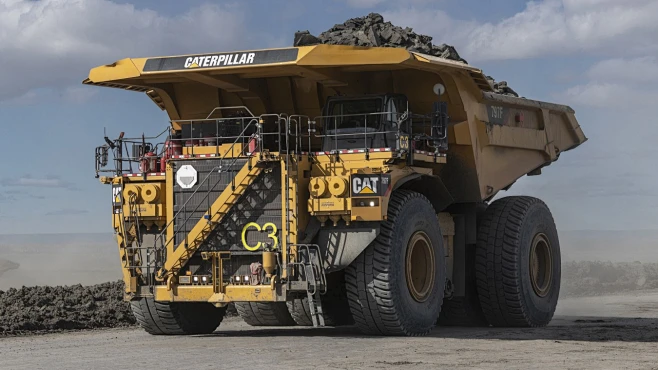
Mining is a brutal business for equipment. A single off-the-road haul truck can carry 400 tons of payload across punishing, rock-strewn terrain in searing heat, and the only thing keeping that machine productive, safe, and profitable is a set of correctly specified OTR tires. Choose the wrong tire and you don’t just buy replacements sooner: you trigger unplanned downtime that can cost a mine upwards of $5,000 per hour in lost production, plus elevated fuel burn, safety incidents, and operator fatigue.
This guide covers how to choose the right OTR tire for mining: the bias-vs-radial decision, tread pattern codes, load and TKPH ratings, and field-proven selection logic. The framework applies whether you manage a fleet of rigid dump trucks, wheel loaders, or support equipment.
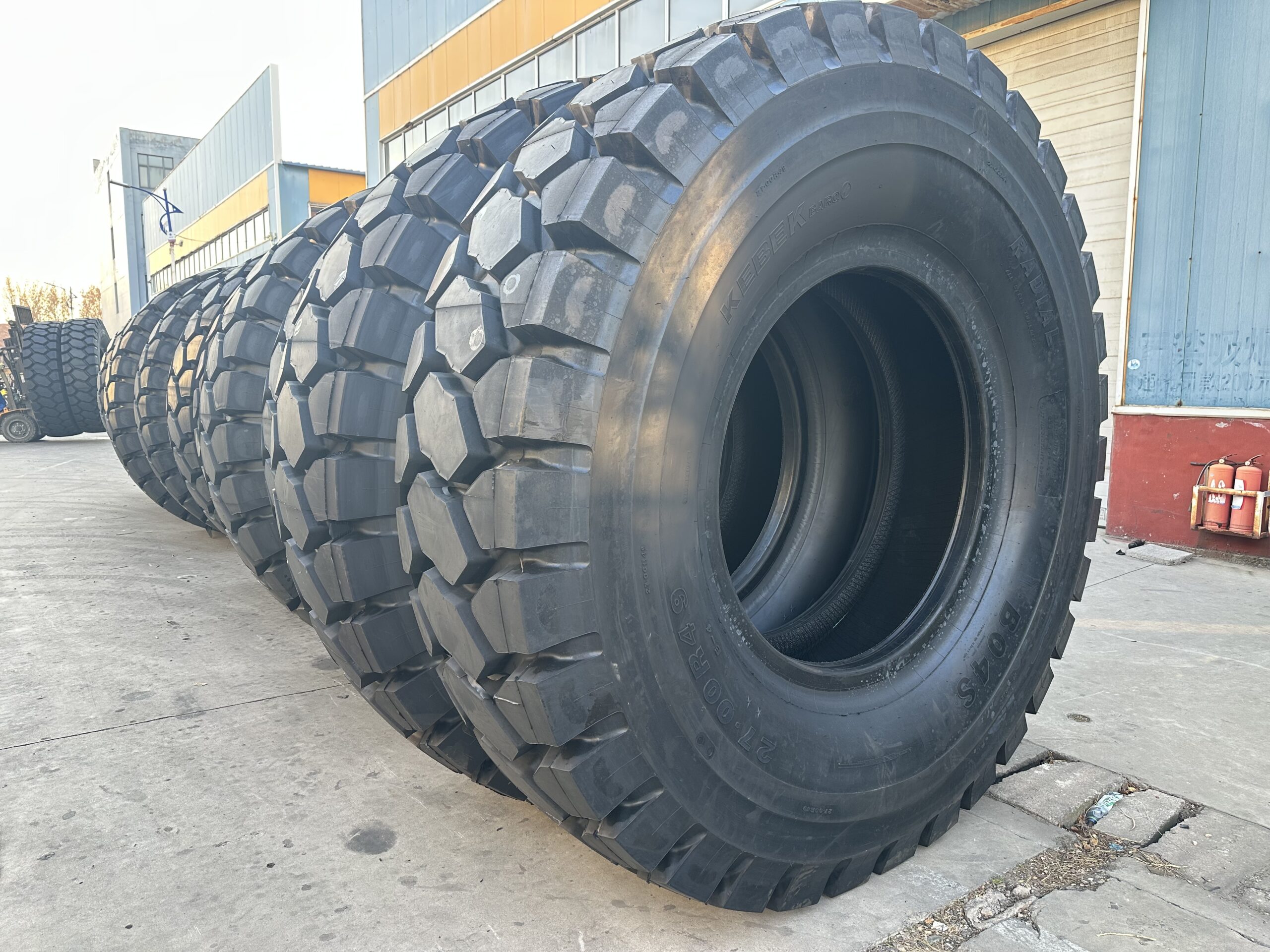
[Link to: OTR Tire Product Page]
What Is an OTR Tire and Why Does It Matter in Mining?
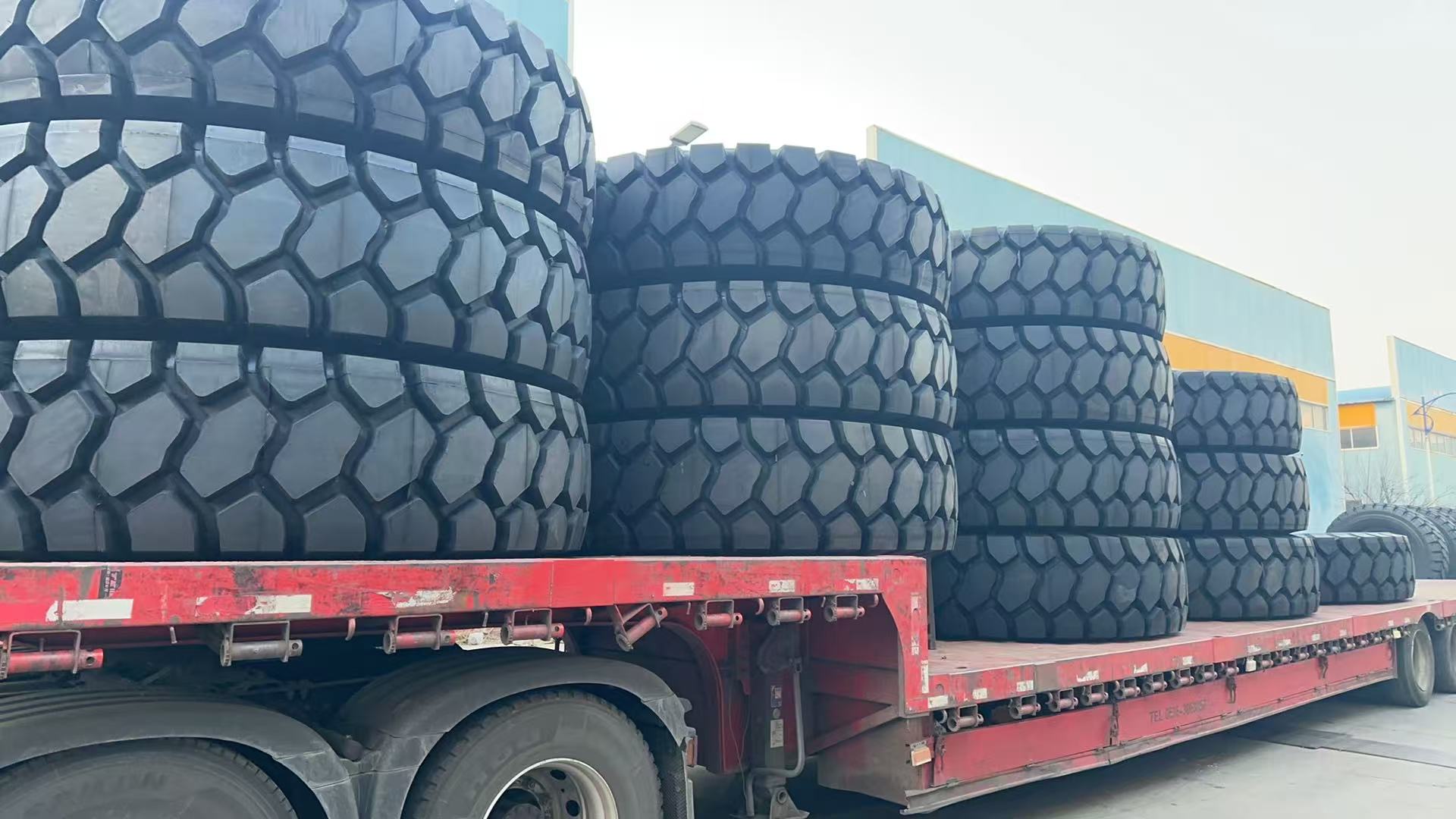
An OTR tire (Off-The-Road tire) is a heavy-duty pneumatic tire built for slow-speed, heavy-load service on unimproved surfaces: construction sites, quarries, surface and underground mines, and industrial yards. Unlike highway or agricultural tires, OTR tires use ultra-thick, cut-and-abrasion-resistant tread compounds, massive steel cables in the casing, and sidewalls designed to absorb shock loads from jagged rock.
Why does tire selection matter so much in mining?
Safety. A tire failure on a loaded 400-ton truck at speed can cause catastrophic loss of vehicle control, fires, and injury. Correct tire specification is a frontline safety control.
Total Cost of Ownership (TCO). Tires are typically the second-highest consumable cost on a haul truck after fuel, often 10–15% of operating cost. The right tire can double tread life and cut cost-per-ton hauled.
Availability. A flat truck produces nothing. Specifying a tire that survives the actual duty cycle keeps the fleet moving and hits production targets.
The OTR tire is an engineered component that must be matched to the machine, the material, and the mine.
Key Factors to Consider When Choosing an OTR Tire
Selecting an OTR tire for mining comes down to six interlocking decisions. Get them all right and the tire will deliver its full design life; miss any one and you’ll see premature failure.
1. Tire Construction: Bias vs. Radial
The first and most consequential choice is between bias-ply and radial construction. Each has a distinct performance profile that suits different mine conditions.
| Attribute | Bias-Ply OTR Tire | Radial OTR Tire |
| Construction | Cords run diagonally (30–40°) across the casing, multiple plies | Cords run radially (90°) from bead to bead, plus steel belt package |
| Cut & puncture resistance | Excellent: thick, rugged sidewall shrugs off rock cuts | Good, but sidewall more vulnerable to deep cuts |
| Heat dissipation | Lower: heat builds up in thick multi-ply casing | Higher: steel belts and fewer plies shed heat fast |
| High-speed / long-haul performance | Limited: heat caps sustained speed | Excellent: ideal for long haul cycles |
| Tread wear rate | Faster, more uneven | Slower, more even (up to 30%+ longer life) |
| Ride & comfort | Stiffer, harsher ride | Softer, better ride and less machine stress |
| Fuel efficiency | Lower (higher rolling resistance) | Higher (lower rolling resistance) |
| Typical best use | Short hauls, rock-filled/rough terrain, scrapers, slow service | Long haul cycles, high speeds, graded haul roads, large dump trucks |
How to decide: If your haul cycle is short, the road is rough and full of sharp rock, and speeds stay low, bias-ply’s rugged cut resistance wins. If your trucks run long, graded haul roads at higher speeds (the dominant case for large surface mines), a radial OTR tire’s heat control and tread life deliver the lowest cost-per-ton.
2. Tread Pattern: Reading the ETRTO Code
OTR tread patterns follow the ETRTO (European Tyre and Rim Technical Organisation) classification. The letter tells you the equipment, and the number tells you the service severity.
- E = Earthmover (loaders, dozers, scrapers)
- G = Grader
- L = Loader and dozer (log loader/industrial)
-
3. Load Capacity and the TKPH/TKPH Rating
Two ratings govern whether a tire can survive the job:
Load index / load capacity: the maximum weight a tire can carry at its rated speed and pressure. Always confirm the tire’s rated capacity exceeds the loaded vehicle weight per tire with an adequate safety margin.
TKPH (Ton-Kilometer Per Hour) or TMPH (Ton-Miles Per Hour): the single most important rating for mining haul tires. It captures the tire’s thermal limit by combining payload and distance over time. To use it:
- Calculate your actual cycle TKPH = (average payload in tons) × (average cycle distance in km) × (cycles per hour).
- Choose a tire whose rated TKPH exceeds your actual TKPH with a buffer.
- A tire can be within its load capacity but still fail from heat if the TKPH is exceeded. Many premature OTR tire failures are TKPH violations, not overload violations.
4. Operating Conditions: Heat, Cut, and Abrasion
Every mine has a dominant wear mode. Identifying yours drives the compound and pattern choice:
- Heat (long hauls, high ambient temps, high speeds): favor radial construction and E-3/E-4 patterns with good heat ratings.
- Cut & chunking (sharp, jagged rock, loading faces): favor deep-tread patterns (L-4, L-5, L-5S) and cut-resistant compounds, even at the cost of speed.
- Abrasion (gravel, sand, highly abrasive ore): favor rock-service patterns with wear-resistant tread compounds.
- Impact (large rocks dumped into trays): favor bias-ply construction that absorbs shock without casing damage.
[Link to: Mining Industry Tire Solutions Page]
5. Machine Type and Duty Cycle
Different machines demand different tire philosophies:
- Rigid dump trucks (haul trucks): long haul, higher speed → radial, E-4, high TKPH.
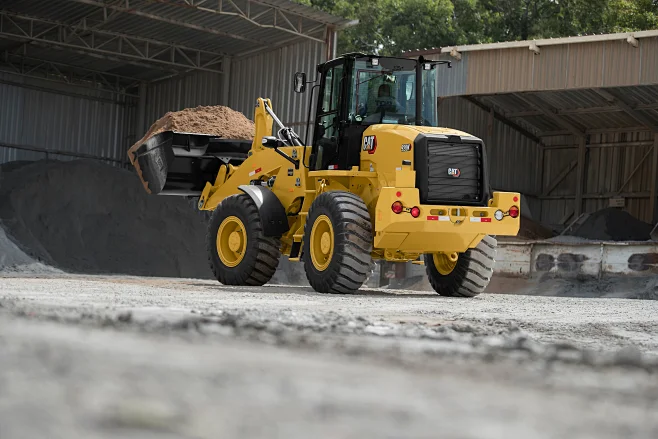
- Wheel loaders: short cycle, heavy loading, rock face → bias or radial, L-4/L-5, cut-resistant.
- Articulated dump trucks: mixed terrain, moderate haul → radial E-3/E-4 with good all-round balance.
- Motor graders: low load, steering precision → G-2/G-3, bias common.
- Scrapers: self-loading, often rough ground → bias for cut resistance.
6. Tire Size and Fitment
Always fit the OEM-specified size for the machine. Undersizing risks overload and blowouts; oversizing can foul the bodywork, strain drivetrain geometry, and invalidate the speedometer/load calibration. Confirm rim width compatibility and use the correct rim type (e.g., 5° taper vs. flat-base) per the tire and wheel manufacturer’s pairing tables.
How to Match OTR Tires to Mining Equipment (Step-by-Step)
- Profile the duty cycle. Measure actual average payload, cycle distance, cycle time, and cycles per hour for each machine type.
- Calculate required TKPH. Multiply payload × distance × cycles/hour. Add a 15–20% safety buffer.
- Identify the dominant wear mode. Walk the haul road and loading area. Is the enemy heat, cut, abrasion, or impact?
- Select construction. Bias for short/rough/cut-heavy; radial for long/fast/graded.
- Select tread pattern. Match ETRTO code to equipment and severity (E-3/E-4 for trucks, L-4/L-5 for loaders in rock).
- Verify load & TKPH ratings. Tire rated values must exceed your calculated actuals with buffer.
- Confirm size & rim. Match OEM size and compatible rim.
- Set inflation & maintenance plan. Correct pressure per load/speed table, plus a daily pressure and tread-depth log.
Common Mistakes to Avoid When Selecting OTR Tires
- Choosing on price alone. A cheaper tire that fails early costs far more in downtime than a premium tire run to full life.
- Ignoring TKPH. The most common silent killer: the tire carries the load but overheats and fails.
- Over-spec’ing tread depth. An L-5 on a long, fast haul road will fail from heat; deeper isn’t always better.
- Skipping inflation discipline. 20% under-inflation can cut tire life by ~25% and spike fuel burn.
- Mixing tire types on an axle. Bias and radial, or different patterns, on the same axle causes uneven loading and rapid wear.
Frequently Asked Questions (FAQ)
What does OTR tire stand for? OTR stands for Off-The-Road. OTR tires are heavy-duty tires built for slow-speed, heavy-load service on unimproved surfaces such as mines, quarries, construction sites, ports, and industrial yards, not for highway use.
How long do OTR tires last in mining? Service life varies widely with duty cycle, maintenance, and conditions, typically 3,000 to 6,000 hours for haul truck tires in surface mines, and 1,000 to 3,000 hours for loaders in severe rock service. A well-matched, well-maintained radial on a graded haul road can reach the higher end; abused or mis-specified tires may fail well before half-life.
What is the difference between bias and radial OTR tires? Bias-ply tires have diagonal cord plies that create a thick, rugged, cut-resistant casing best for short, rough, low-speed cycles. Radial tires have perpendicular cords plus a steel belt package that dissipates heat better, wears slower, and improves fuel economy, ideal for long, fast, graded hauls. Radials generally deliver lower cost-per-ton; bias tires win in brutal cut-and-impact service.
What is TKPH and why does it matter for OTR tires? TKPH (Ton-Kilometer Per Hour) is a tire’s thermal limit, expressing the combined load-and-distance duty it can sustain without overheating. If your operation’s actual TKPH exceeds the tire’s rated TKPH, the casing overheats, the rubber degrades, and the tire fails prematurely, even if it’s within its static load capacity. Always spec a tire whose rated TKPH exceeds your calculated operational TKPH with a safety buffer.
How do I choose an OTR tread pattern? Match the ETRTO code to your equipment and service severity: E-3/E-4 for earthmovers and haul trucks (E-4 for deeper, more cut-resistant rock service), L-3/L-4/L-5 for loaders (deeper = more cut resistance but lower speed/heat tolerance), and G-2/G-3 for graders. Deeper tread resists cuts but traps heat. Never run deep-tread patterns (L-5) on long, fast haul cycles.
Can I use a larger OTR tire than the OEM size? Generally, no. Oversizing can foul bodywork, alter drivetrain loading, invalidate load/speedometer calibration, and create safety issues. Always use the OEM-specified size and a compatible rim. If you need more capacity, move to a higher-load or higher-TKPH-rated tire of the correct size, or consult the OEM before any change.
How important is tire pressure for OTR tires? Critical. Under-inflation is the leading cause of premature OTR tire failure: roughly 20% under-inflation can reduce tire life by ~25% and increase fuel consumption. Over-inflation reduces footprint and accelerates center-tread wear while raising impact-damage risk. Check pressures cold, daily, with calibrated gauges, and always set pressure to the load/speed table, not a fixed default.
Where can I get help specifying the right OTR tire for my mine? Work with a supplier that can analyze your actual duty cycle, calculate your TKPH requirement, and recommend a matched construction, pattern, and size. [Link to: Contact Us / Tire Specification Consultation]
Conclusion
Choosing the right OTR tire for mining comes down to matching the tire to the machine, the material, and the duty cycle. The framework is straightforward:
- Pick bias vs. radial based on haul length and road condition.
- Pick the tread pattern (ETRTO code) based on equipment and rock severity. Remember that deeper tread trades cut resistance for heat tolerance.
- Verify load capacity and TKPH against your actual operational numbers, with a safety buffer.
- Respect size, inflation, and maintenance discipline to capture the tire’s full design life.
Get these four right and OTR tires shift from a recurring cost center to a managed, predictable line item, with fewer flats, longer life, lower cost-per-ton, and a safer operation. If you’d like a tire specialist to analyze your specific duty cycle and recommend a specification, [reach out for a consultation].