The fastest way to order the wrong scissor lift tire is to search for your model number and buy whatever size comes up first. The second fastest is to buy the size that fits a different production year of the same model name.
Both failures happen because scissor lift sizing has two layers. The model number tells you the machine’s platform height and width class — which predicts tire width and load rating with reasonable accuracy. The sidewall marking on the tire currently on the machine tells you what actually fits. When those two disagree, the marking wins, and the manual settles the argument.
This article assumes you already know which type of tire your machine should run and are now trying to get the size right. If the type question is still open — solid versus foam-filled, non-marking versus black — start with what tire does a scissor lift use and come back here for the tables.
This guide covers the model-by-model layer: how Genie, JLG and Skyjack numbering works, what each model family typically runs, and the three mounting styles that determine whether you order a tire or a complete wheel assembly.
Before you order anything. The size tables below are typical values for each model family. Tire specifications change across production years and across regional builds of the same model name. Always read the marking on the tire being replaced and confirm against the manual for your serial number range. Treat these tables as a starting point for a conversation, not as a substitute for the plate on your machine.
What Do Scissor Lift Tire Size Markings Actually Mean?
This is covered in depth in our scissor lift tire size conventions guide, so here is the short version you need to read the tables below.
| Marking style | Example | Reading | Where you see it |
| Three-number inch | 12 x 4.5-8 |
Outer diameter × section width × rim/band diameter | Compact and mid-size electric slab |
| Metric-flotation | 240/55-10 |
Section width (mm) / aspect ratio (%) – rim diameter (in) | European-built and some global models |
| Flotation inch | 26 x 12-16.5 |
Outer diameter × width – rim diameter | Rough-terrain and diesel machines |
The one number that matters most for fitment is the last one — the rim or band diameter. It has to match your hub, and no amount of width or diameter tolerance compensates for a rim diameter that does not seat. If you are replacing a press-on tire, that number describes the steel band the rubber is bonded to, not a demountable rim — a distinction we unpack in our press-on solid tire guide.
Dimension tolerances and load rating definitions follow the standards published by ETRTO in Europe and the Tire and Rim Association in the US. Where a marking looks ambiguous, those tables are the authority.
The Model Number Decodes to a Tire Class — If You Read It Correctly
This is the part that saves the most time, and the part most buyers miss.
Scissor lift model numbers are not arbitrary. They encode platform height in feet and machine width in inches. Decode those two numbers and you have already narrowed the tire to a family before you look at a catalog.
The catch: the two brands do not agree on the order.
| Brand | Convention | Example | Reads as |
| Genie | Height, then width | GS-1932 |
19 ft platform height, 32 in wide |
| JLG | Height, then width | 1932ES |
19 ft platform height, 32 in wide |
| Skyjack | Width, then height | SJIII 3219 |
32 in wide, 19 ft platform height |
Look at what that means. A Genie GS-1932, a JLG 1932ES and a Skyjack SJIII 3219 are the same machine class — 19 ft platform, 32 in wide — and their model numbers contain the exact same four digits. Genie and JLG put height first; Skyjack puts width first. Read Skyjack’s number with the Genie convention and you will conclude it is a 32 ft machine that is 19 inches wide, which is not a thing.
Why the width number predicts the tire. Machine width is a design constraint that propagates down to the tire. A 32-inch-wide slab machine has to keep its wheels inside a narrow footprint, so it runs a narrow tire — typically 4.5 to 5 inches of section width. A 46-inch machine carries more platform area and more load, so it runs a wider tire with a higher rating. Width class, not model year, is the strongest single predictor of what your machine takes.
Why the height number does not. Platform height says almost nothing about tire size on its own. A 19 ft and a 26 ft machine in the same width class frequently run the same tire, because the load per wheel has not crossed a threshold. Two machines at the same height in different width classes usually do not.
Genie GS Series: Typical Tire Sizes by Model
Genie’s GS range is the most common slab scissor family in the world, which is also why it is the most counterfeited and most frequently mis-ordered.
| Model | Platform height | Machine width | Typical tire family | Notes |
| GS-1930 / GS-1932 | 19 ft | 30-32 in | 12 x 4.5-8, some builds 15 x 5-11 |
Most common slab size globally; non-marking solid standard |
| GS-2032 / GS-2632 | 20-26 ft | 32 in | 15 x 5-11, some builds 240/55-10 |
Wider tire than the 19 ft class despite similar width |
| GS-2646 | 26 ft | 46 in | Wider section, higher load rating | 46-inch class — do not assume 32-inch tires fit |
| GS-3232 / GS-3246 | 32 ft | 32 / 46 in | 16 x 5-12 class on the 3232 |
Height jump with the same width code means a different tire |
| GS-4047 | 40 ft | 47 in | Heavy slab class | Highest load per wheel in the electric range |
| GS-2669 / GS-3369 / GS-4069 RT | 26-40 ft | 69 in | 26 x 12-16.5, 33 x 15.5-16.5 flotation |
Rough-terrain: pneumatic or foam-filled, not solid |
Two patterns worth noting. First, the 3232 breaks the width-equals-tire rule — it is the same 32-inch width class as the 1932 but a taller machine with a heavier platform, and it steps up to a larger diameter tire. Width narrows the family; height and load still move you within it. Second, the RT models are a different machine category entirely, not a trim level. Their tire question is answered by pressure and traction, not by solid-versus-solid comparison — see our scissor lift tire pressure guide for that side of it.
JLG ES and R Series: Typical Tire Sizes by Model
JLG follows the Genie height-then-width convention, and their ES (electric slab) line maps closely onto the Genie class structure — which makes cross-shopping confusing in a useful way.
| Model | Platform height | Machine width | Typical tire family | Notes |
| 1930ES / 1932ES | 19 ft | 30-32 in | 12 x 4.5-8 class |
Direct class equivalent to Genie GS-1932 |
| 2032ES / 2632ES | 20-26 ft | 32 in | 15 x 5-11 class |
Steps up in width and load |
| 2646ES | 26 ft | 46 in | Wider section, higher rating | 46-inch class |
| 3246ES | 32 ft | 46 in | Heavy slab | Highest load in the ES slab range |
| 4045R | 40 ft | 45 in | Heavy slab, larger diameter | R-series redesign; verify per serial |
| 260MRT / 330MRT / 400MRT | 26-40 ft | RT class | 26 x 12-16.5 flotation |
Rough-terrain, pneumatic or foam-filled |
The 4045R is worth flagging as the exception that proves the rule. It is a later R-series redesign, and its wheel and tire specification does not follow automatically from the older 40 ft machines — exactly the kind of model where a previous owner’s aftermarket substitution may already have moved the machine off OEM spec.
Skyjack SJIII and SJ Series: Typical Tire Sizes by Model
Skyjack’s reversed numbering is the single most common source of mis-ordering in this category.
| Model | Machine width | Platform height | Typical tire family | Notes |
| SJIII 3215 / 3219 / 3220 | 32 in | 15-20 ft | 12 x 4.5-8 class |
Read width first — this is a 32-inch machine, not 32 ft |
| SJIII 3226 | 32 in | 26 ft | 15 x 5-11 class |
Same width class, taller machine |
| SJIII 4620 / 4626 / 4632 | 46 in | 20-32 ft | Wider section, higher rating | 46-inch class |
| SJ-6832 RT | RT class | 32 ft | 26 x 12-16.5 class |
Rough-terrain, pneumatic or foam-filled |
| SJ-4740 | RT class | 40 ft | Flotation | Rough-terrain |
If you take one operational habit from this article, make it this: before you search a Skyjack part, write down which number is width and which is height. Getting this backwards sends you to a catalog page for a machine that does not exist, and the first plausible-looking result will be the wrong tire.
Three Mounting Styles — What You Are Actually Buying
Two tires with identical markings can be entirely different products depending on how they attach to the machine. This is the second layer of ordering failure, and it is not visible from the size alone.
| Mounting style | What it is | What you order | Typical application |
| Press-on (banded) | Rubber bonded to a steel band, pressed onto the hub | Tire + band assembly, machine-pressed on | Most compact and mid-size electric slab |
| Demountable wheel | Tire mounted on a multi-piece or one-piece wheel | Either tire only, or tire + wheel | Larger slab and some RT models |
| Pneumatic wheel assembly | Air-filled tire on a wheel, often with a valve | Tire, tube, or complete assembly | Rough-terrain diesel machines |
The practical consequence: on a press-on machine you cannot buy “just the tire.” The rubber and the band are one bonded unit, and fitting requires a hydraulic press with enough force to seat an interference fit — typically tens of tonnes. That is a workshop operation, not a loading-bay operation, and the old band is normally destroyed on removal. If your fleet runs press-on wheels, the operational answer is spare pre-pressed wheel sets, so the swap fits inside a maintenance window rather than costing a shift.
On demountable and pneumatic wheels you have genuine choices — tire only, tire plus tube, or full assembly — and the right answer depends on whether your workshop can mount, whether the wheel is itself in serviceable condition, and whether downtime or unit cost is the binding constraint.
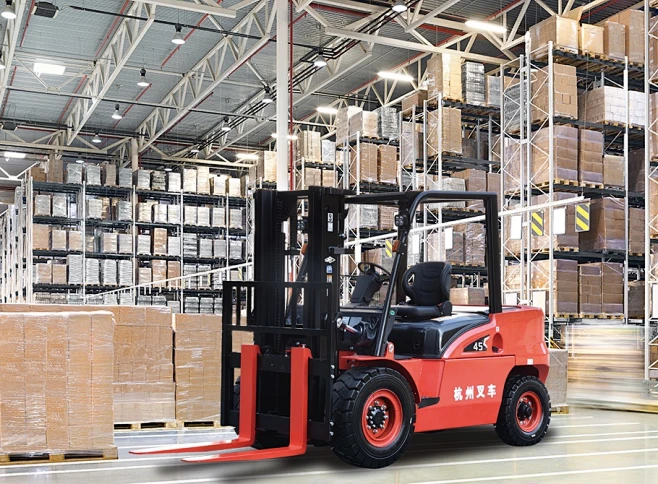
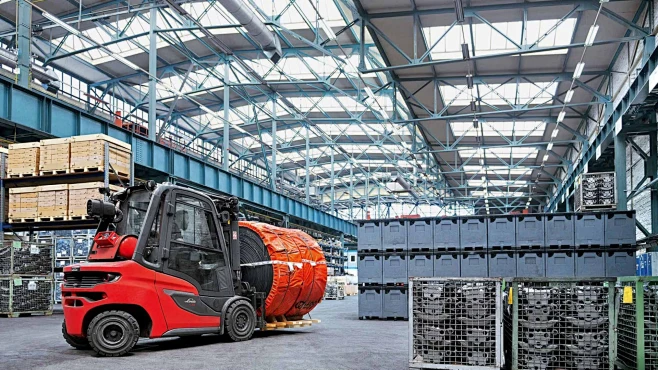
The press-on arrangement is not unique to scissor lifts; it is the standard fitting on counterbalance forklifts too, which is why the wheel hardware and press tooling overlap across both machine types. Our forklift tire range uses the same band-and-hub logic, and if you are stocking for a site that runs both machine types, the tooling investment is shared.
One more layer: on non-marking solid tires, the compound is a specification, not a cosmetic upgrade. If your machine works on a finished floor, or under a lease that makes floor marking a violation, the compound belongs in your order line alongside the size. We cover the compound and marking behaviour in our non-marking tire guide, and the economics of getting tire life wrong in our solid tire lifespan analysis.
OEM Part Number or Tire Marking — Which Do You Trust?
Both, in a specific order.
| Source | Strength | Weakness | Use it for |
| Sidewall marking | Physically present on the machine | Can reflect a previous aftermarket substitution | First check, every time |
| OEM part number | Unambiguous within a serial range | Changes when a supplier or spec changes; hard to cross-reference | Confirming you have the right item for a specific serial |
| Machine manual (by serial) | The authoritative statement for that build | Requires you to find the right serial range | Final confirmation before ordering |
| Model-level catalog lookup | Fast | Ignores production-year and regional variation | Estimating and planning only |
The failure mode to watch for is a silent aftermarket substitution. A machine can arrive in your fleet already wearing a tire the OEM never specified — a different ply rating, a different compound, or a size that “fits” but was chosen on price. If you then order against the model number, you may get the OEM spec and find it does not match the wheel currently fitted, or you may get a continuation of the substitution without knowing it.
The check that resolves this: measure the tire you are replacing, photograph the marking, and count wheels. Then confirm against the manual. Where the tire marking and the manual disagree, you have found either a substitution or a serial break — and you need to know which before you buy four.
Cross-Brand Equivalence: Useful, and Slightly Dangerous
Because Genie, JLG and Skyjack build to similar duty cycles and similar jobsite constraints, machines in the same class often run compatible tires. A 19 ft / 32 in class machine from any of the three brands typically sits in the same tire family.
That does not make them interchangeable without verification. Differences that survive the size match:
- Load rating — two tires with identical markings can carry different ratings by construction and ply
- Wheel or band offset — affects track width and, on a machine that carries people at height, stability margin
- Outer diameter tolerance — the functional dimension on a MEWP, since it sets platform height and interacts with pothole-protection behaviour
- Compound and marking class — a black solid is not a substitute for a non-marking solid on a finished floor
The rule: cross-brand shopping is a legitimate way to find a supplier; cross-brand fitment is an engineering decision. Verify rating, offset, diameter and compound before committing a fleet. If you are specifying across a mixed-brand fleet, our scissor lift tire buying guide covers the supplier and specification side.
Ordering Checklist
- Decode the model number correctly — Genie and JLG read height then width; Skyjack reads width then height
- Read the existing sidewall marking and photograph it
- Measure outer diameter, section width and rim/band diameter on the tire being replaced
- Confirm against the manual for your serial range — not the model name alone
- Identify the mounting style — press-on band, demountable wheel, or pneumatic assembly
- Specify load rating and ply, not just the size marking
- Specify the compound if the machine works on finished floors
- Check the wheel or band — a worn or damaged band obsoletes a new tire
- Order the fleet quantity in one batch for mixed-brand fleets, so a substitution is a decision rather than an accident
FAQ
What size tires does a Genie GS-1932 use? Typically a 12 x 4.5-8 class non-marking solid, though some builds use a 15 x 5-11 family tire. Read the marking on the tire you are replacing and confirm against the manual for your serial number, since Genie has changed specifications across production years.
What tire size is a Skyjack SJIII 3219? The SJIII 3219 is a 32-inch-wide machine with a 19 ft platform — Skyjack lists width before height, unlike Genie and JLG. It typically runs a 12 x 4.5-8 class solid. Reading the number with the Genie convention will mislead you.
Are scissor lift tires the same across Genie, JLG and Skyjack? Often compatible within the same machine class, but never assume interchangeability on size alone. Check load rating, wheel or band offset, outer diameter tolerance and compound before fitting a cross-brand tire.
Can I buy just the tire for a scissor lift? Only if the machine uses a demountable wheel or pneumatic assembly. Press-on tires are bonded to a steel band and must be replaced as an assembly using a hydraulic press — the band is normally destroyed on removal.
Why does the same model number take different tires in different years? Manufacturers change tire suppliers, specifications and wheel designs across production runs without renaming the model. This is why the manual for your serial range outranks any model-level size chart, including the tables in this article.
Does tire size affect scissor lift stability? Yes. On a MEWP, outer diameter is a functional dimension — it sets platform height and interacts with pothole-protection behaviour — and track width affects the stability margin with people at height. Fitting a non-specified size is an engineering change, not a maintenance choice.
Do rough-terrain scissor lifts use the same tires? No. Rough-terrain models use flotation-size pneumatic or foam-filled tires, typically in the 26 x 12-16.5 to 33 x 15.5-16.5 range. They are a different machine category with different pressure and traction requirements.
How often should scissor lift tires be replaced? Replace on measured wear, not on a calendar. Wear limits, measurement method and the signs that trigger replacement are covered in our solid tire lifespan guide. For MEWPs, add a diameter check — uneven wear that changes effective diameter matters more than the tread depth number alone.