Most scissor lifts run on non-marking solid rubber tires. That is the short answer, and it is correct for the majority of machines — the electric slab units you see in warehouses, fit-out sites, and distribution centres. But it is not the whole answer, because the minority that does not use them does not use them for a reason worth understanding: a rough-terrain scissor lift runs on pneumatic or foam-filled tires, and putting solids on one is not an upgrade.
This article explains what is actually on a scissor lift, how each tire type is built, and the engineering reasons behind the split. If your question is commercial — which one to buy, how to evaluate a supplier, what it costs — that is covered in our complete scissor lift tire buying guide. This is the “what and why” layer underneath it.
The answer depends on the machine family
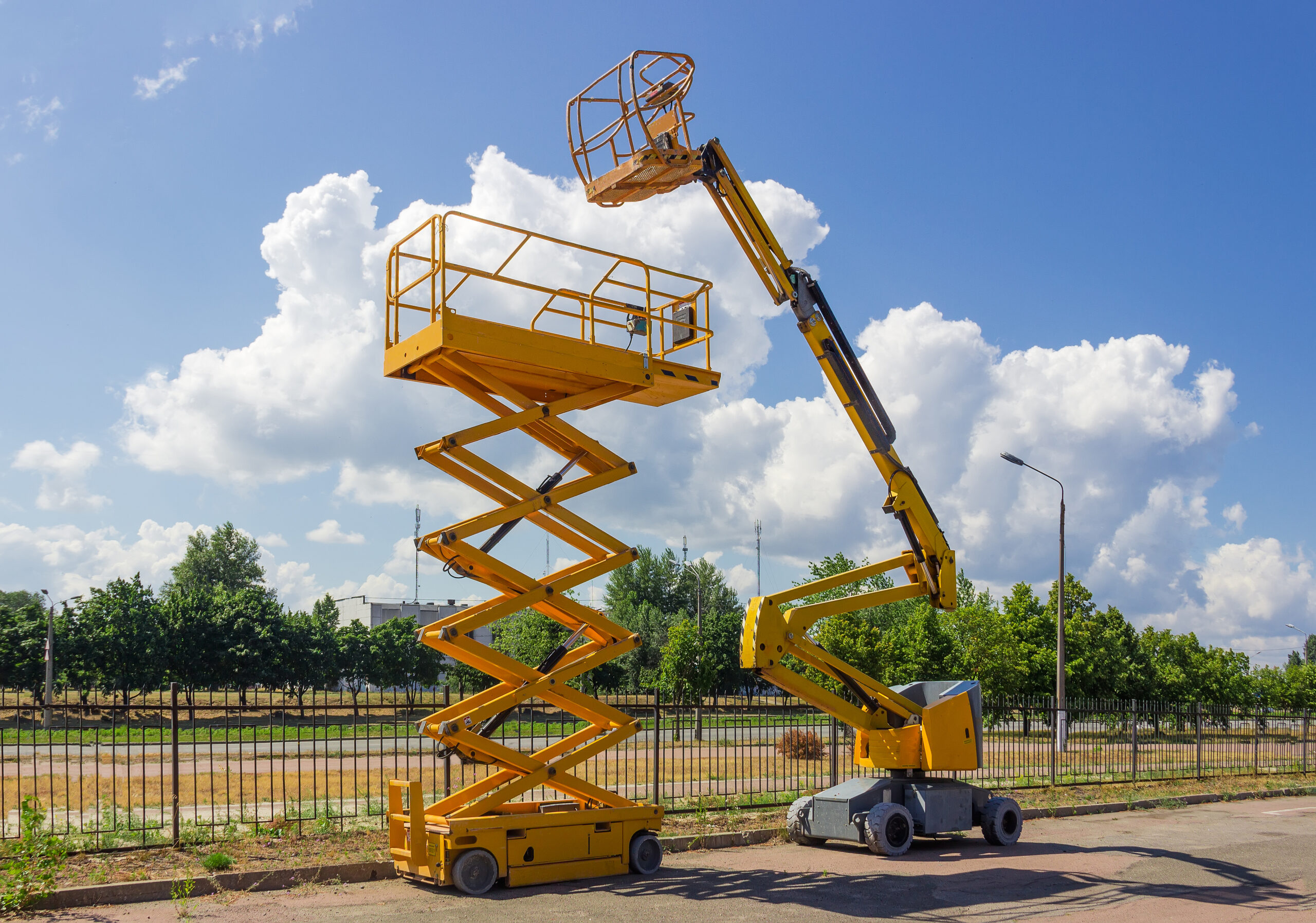
Scissor lifts split into two families, and the tire follows the family rather than the brand.
| Family | Typical machines | What they use | Why |
| Electric slab scissor | 19-40 ft indoor units, warehouses and fit-out | Non-marking solid rubber | Indoor finished floors, no debris, no puncture exposure, no pressure maintenance |
| Rough terrain scissor | Diesel 4×4 units, construction sites | Pneumatic, or foam-filled pneumatic | Uneven ground needs compliance and grip that a solid cannot provide |
The dividing line is ground condition and the machine’s stability design, not preference. A slab machine spends its life on flat concrete; a rough-terrain machine is engineered around a compliant tire for exactly the same reason a 4×4 is.
What each tire type actually is
The names get used loosely in the trade, so here is what each one physically is.
Non-marking solid. A ring of solid rubber, moulded with light-coloured fillers (silica or mineral compounds) instead of carbon black, mounted directly to the wheel — often bonded to a steel band or hub. There is no air chamber anywhere in the structure. The “non-marking” part is a compound property: the tire still sheds rubber particles under steering slip, but they are light-coloured and do not leave black streaks. The same principle drives the non-marking compounds in our forklift tire range, and we cover the compound science in detail in our non-marking tire guide — the reasoning is identical, because the floor remediation costs more than the tire premium.
Black solid. Identical construction with a carbon-black compound. Used where floor marking does not matter — industrial yards, unfinished floors, outdoor slab work. It is generally the better value in those conditions and the wrong choice on finished floors.
Pneumatic. A conventional air-inflated casing on a rim, running at industrial pressures. It absorbs shock and grips uneven ground, which is why rough-terrain machines are built around it. It carries the usual trade: puncture exposure and pressure maintenance.
Foam-filled pneumatic. A pneumatic casing that has been filled with a cured elastomer instead of air. The tire keeps its pneumatic shape and footprint but cannot lose pressure. It is a puncture-proofing measure for rough-terrain machines working debris-heavy sites — and it must be specified against the machine’s load data, not improvised in the field, because it changes mass, ride, and compliance.
Polyurethane / microcellular. A cast elastomer rather than vulcanised rubber, found on some compact and specialised units. High load capacity and low rolling resistance, but less grip and more impact-sensitive. Niche in this category.
Solid and press-on constructions have this in common: once fitted, there is nothing to check and nothing to inflate. The mechanical principle is the same one that makes press-on forklift tires maintenance-free, though scissor lift mountings differ from press-on bands.
Five engineering reasons slab machines use solids
It is tempting to read the solid-tire choice as “solids are tougher.” They are, but that is not the deciding factor. Five properties matter more:
- There is nothing to maintain. A slab machine working three shifts has no scheduled tire task at all. No gauges, no pressure logs, no flat-response callouts.
- Puncture exposure indoors is low, and its cost is high. Warehouses are relatively debris-free, so the main benefit of pneumatics — and their main liability — is mostly absent. Meanwhile a flat on a machine with a person on the platform is a rescue, not a workshop job.
- The floors are finished. Non-marking compound is a lease and handover condition in most commercial buildings. This single constraint eliminates black compound on the majority of slab machines.
- Outer diameter is a functional dimension. Many slab machines have pothole protection systems calibrated to tire diameter — deployable bars or plates that engage when the platform is raised. A tire with the wrong outer diameter, even one that mounts correctly, changes when or whether that system engages.
- Low speed, high load, tight turning. Scissor lifts move slowly but carry concentrated load and turn in very tight arcs. That combination is hard on tread shoulders and rewards a stable, non-compliant tire with a full-width contact patch.
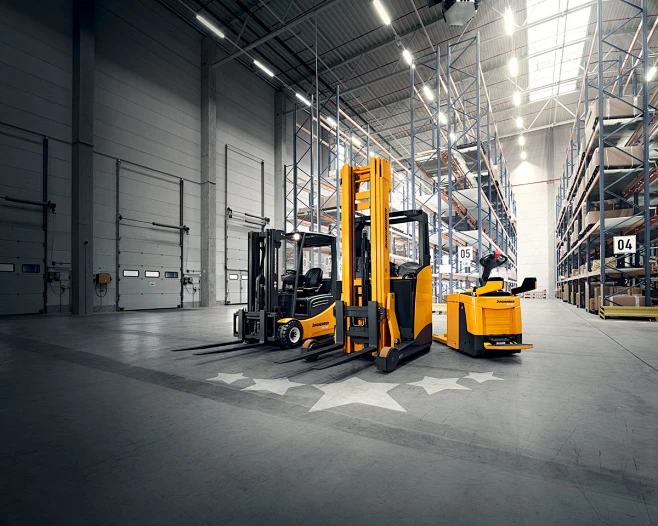
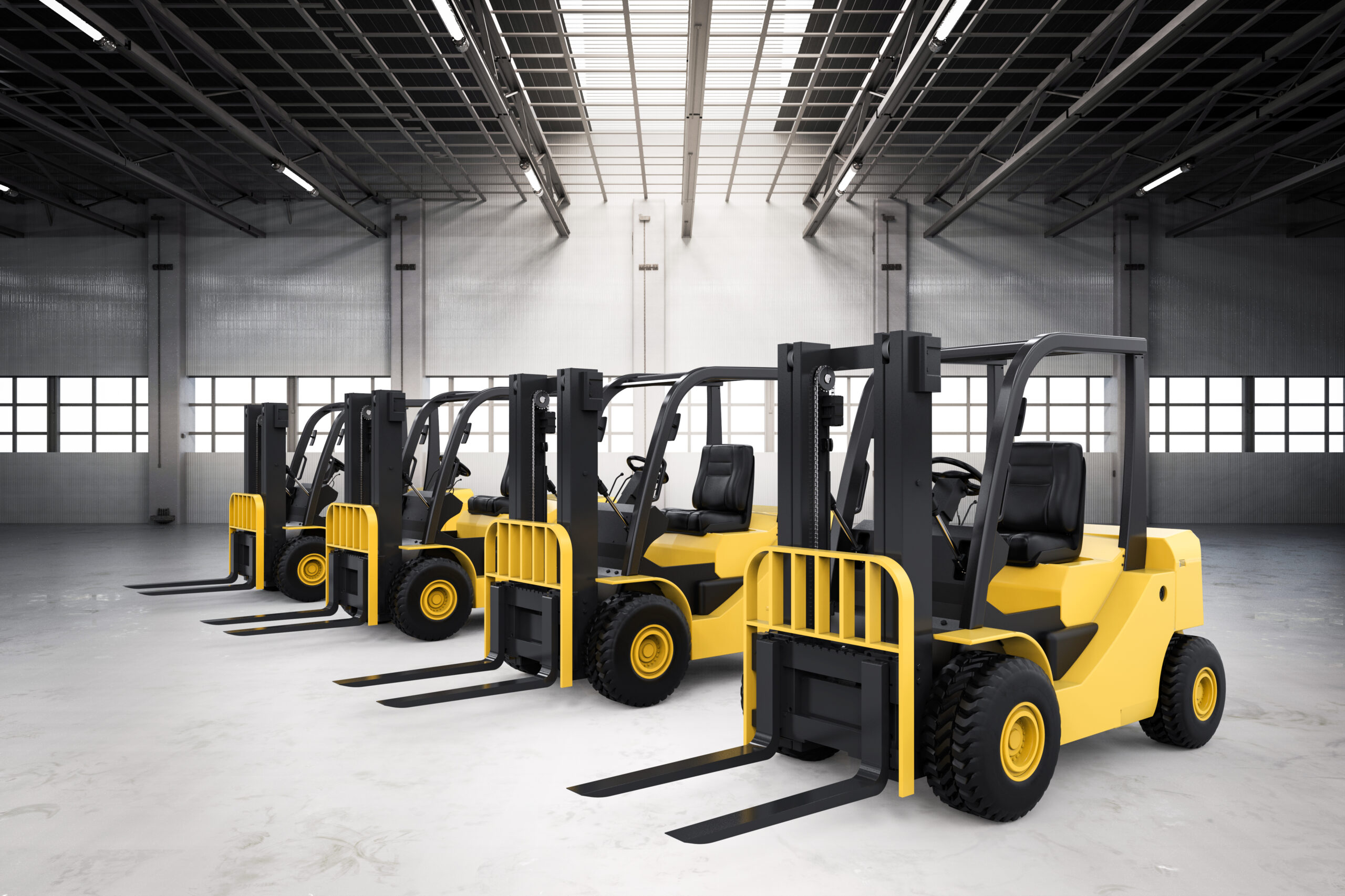
How scissor lift tires differ from forklift tires
This is the comparison buyers most often get wrong, because the two machines look similar and both run solid tires. They are not interchangeable, and the reasons are instructive.
| Dimension | Scissor lift tire | Forklift tire |
| Primary design driver | Stability at height | Load handling and traction through duty cycles |
| Load character | Largely static — platform load sits on the chassis | Highly dynamic — load cycles on and off continuously |
| Speed | Very low, intermittent | Low to moderate, continuous |
| Turning | Extremely tight, often near-pivot | Tight but with load transfer dynamics |
| Tolerance for height error | Low — tire diameter affects platform height and protection systems | Height is not a functional output |
| Floor sensitivity | High — finished floors drive non-marking | Variable — industrial floors often allow black compound |
| Failure consequence | Stability exposure with a person at height | Downtime and load handling risk |
The practical takeaway: a tire that is correct for a forklift is not automatically correct for a scissor lift, even at the same size. Load rating, compound, and outer diameter tolerance all need to be checked against the aerial platform’s specification rather than assumed from a shared dimension.
Reading the size marking
Scissor lift tires use several marking conventions, all of which appear in the field:
12 x 4.5-8— outer diameter × width × rim or band diameter, in inches
240/55-10— section width in mm / aspect ratio / rim diameter in inches
26 x 12-16.5— flotation style, common on rough-terrain units
Model-by-model size references for the major brands are substantial enough to warrant their own article — see our scissor lift tire size guide for Genie, JLG and Skyjack models for the detailed tables. The rule that applies regardless of convention: match the marking on the tire, then confirm against the machine manual for your serial range. Tire specifications change across production years on otherwise identical model names.
Load and dimensional standards for these sizes are published by the Tire and Rim Association and ETRTO; a supplier quoting a load figure should be able to trace it to one of them.
Four misconceptions worth correcting
1. “Solids are always the upgrade.” On a rough-terrain machine, they are a downgrade. Those machines are stability-engineered around pneumatic compliance, and changing it is a manufacturer-level decision.
2. “Foam-filling is just puncture insurance.” It changes mass, ride, and compliance. On a machine with a raised platform, those are stability variables, not conveniences.
3. “A tire that fits is a tire that works.” Outer diameter tolerance is a functional requirement on machines with pothole protection, and load rating must meet or exceed the machine’s specification regardless of how well the tire mounts.
4. “Scissor lift and forklift tires are the same part.” Same category, different design driver. Stability at height is not the same engineering problem as load handling.
Whether pneumatic or solid, condition inspection is what catches problems before they become incidents — the failure mechanisms for industrial tires are covered in our OTR tire failure guide, and the hierarchy of proper specification, correct inflation where applicable, and condition checks that Tyrepress tracks across the industry applies here with more consequences than usual.
FAQ
What kind of tire does a scissor lift use? Most electric slab scissor lifts use non-marking solid rubber tires. Rough-terrain diesel machines use pneumatic or foam-filled pneumatic tires. The distinction follows the machine family and its ground conditions, not brand preference.
Are scissor lift tires solid or pneumatic? Both exist. Slab machines are almost always solid; rough-terrain machines are almost always pneumatic or foam-filled. Putting a solid on a rough-terrain unit is a specification change, not an upgrade.
Why are scissor lift tires non-marking? Because these machines work on finished indoor floors where black rubber streaks are costly to remove and frequently a lease or handover condition. Non-marking is a compound choice — light-coloured fillers instead of carbon black — not a different tire category.
Can I use forklift tires on a scissor lift? Not on the assumption that a shared size makes them equivalent. Scissor lift tires are designed around stability at height, where outer diameter affects platform height and protection systems. Check load rating, compound, and diameter tolerance against the aerial platform specification.
Do scissor lift tires need air? Solid tires do not. Pneumatic and foam-filled types do — and foam-filled tires should still be inspected as a pneumatic casing, since the casing can be cut even though it cannot go flat. See our scissor lift tire pressure guide for the maintenance detail.
How long do scissor lift tires last? It depends on floor condition, duty, and compound. Indoor slab machines on smooth concrete can run for years; rough-terrain units on abrasive sites wear much faster. Condition-based replacement beats any calendar rule.
What size tire does my scissor lift take? Read the marking on the existing tire, then confirm against the manual for your serial range. Common conventions include 12 x 4.5-8, 240/55-10, and 26 x 12-16.5. Brand-by-model tables are in our scissor lift tire size guide.
Can I mix tire types on one machine? No. Different constructions produce different compliance rates at each corner, which affects platform level and stability behaviour on transitions and slopes. Replace complete matched sets.
Key takeaways
- Most scissor lifts use non-marking solid rubber tires; rough-terrain units use pneumatic or foam-filled. The split follows machine family and ground conditions.
- “Non-marking” is a compound property, not a category — the tire is still solid rubber, just with light-coloured fillers.
- Five engineering reasons favour solids on slab machines: no maintenance, low indoor puncture exposure, finished floors, diameter-sensitive protection systems, and low-speed high-load tight-turning duty.
- Scissor lift tires are not forklift tires. Stability at height is a different design problem from load handling, even at identical dimensions.
- Outer diameter is a functional dimension — it affects platform height and pothole protection engagement, not just fitment.
- Confirm the marking, the manual for your serial range, and the load rating before ordering. Sizes and specifications change across production years.
Send us your machine make, model, and serial range along with the floor and duty description, and our team will confirm the correct type, size, and compound — including diameter tolerance and load rating — before you commit. Contact our tire specialists, or browse our scissor lift tire range for the common configurations.