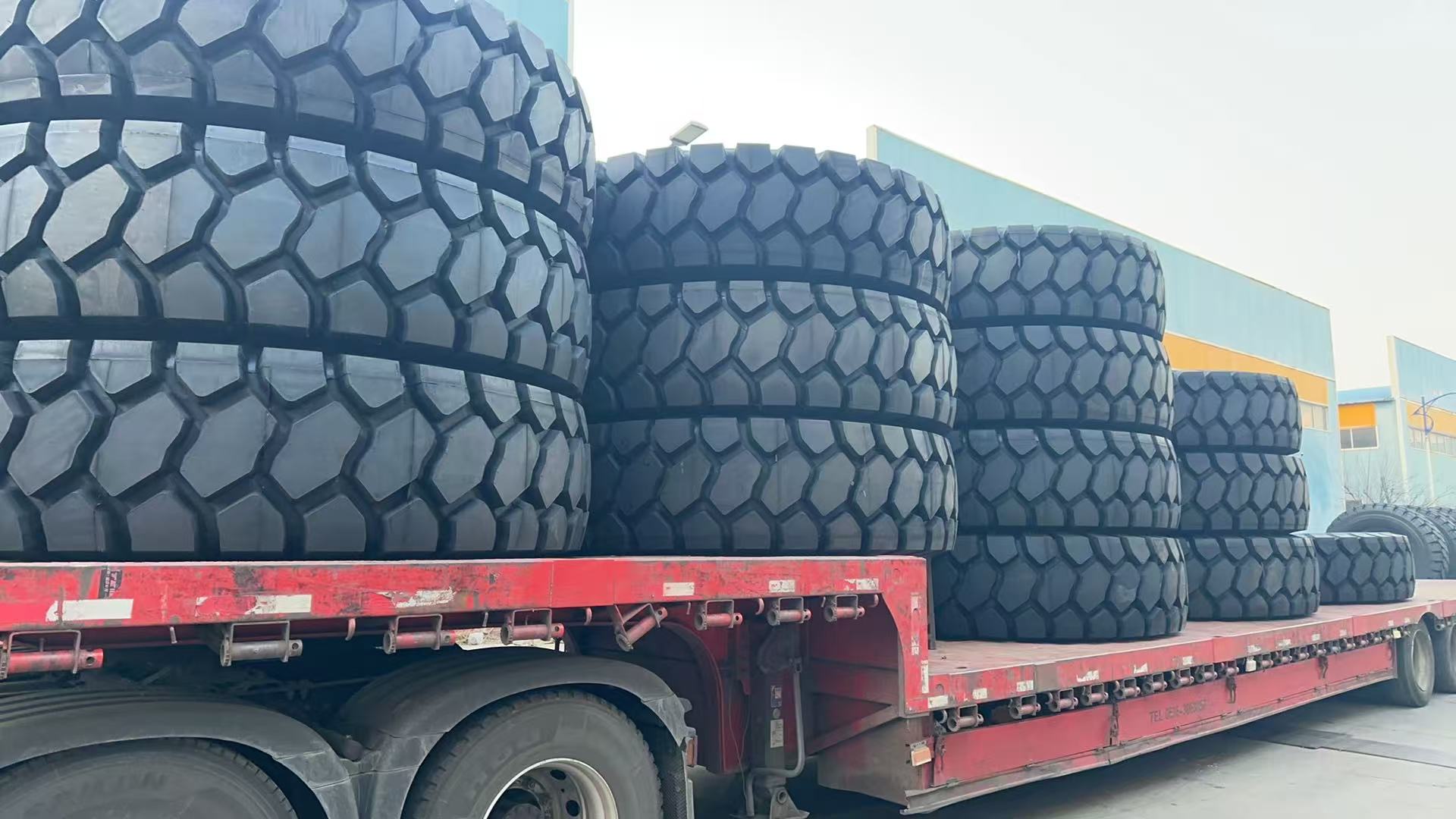
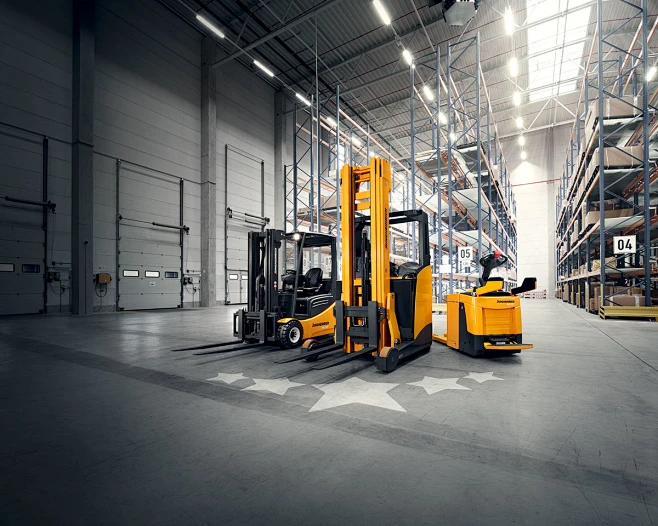
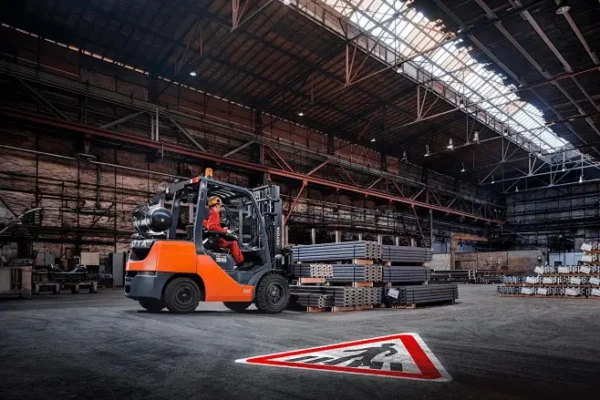
Construction sites are tire-destroying environments. Rebar stubs, jagged concrete shards, scattered nails, broken glass, and sharp aggregate chew through pneumatic tires at an alarming rate. A single flat on a critical machine — a telehandler, a skid-steer loader, a scissor lift, or a forklift moving materials across the site — can halt an entire work crew for hours. On a busy job site with tight deadlines, that downtime costs far more than the tire itself.
Solid tires eliminate the flat-tire problem entirely. No air chamber means no punctures, no blowouts, no valve-stem failures, and no pressure checks. For construction operators who need equipment available every minute of every shift, solid tires are not just a convenience — they are a strategic decision that protects uptime, worker safety, and project profitability.
In this article, we explain what solid tires are, why construction environments are uniquely punishing for pneumatic tires, how solid tires compare to pneumatic and polyurethane-filled alternatives, which equipment benefits most, and how to decide if solid tires are right for your fleet.
What Is a Solid Tire?
A solid tire is a non-pneumatic tire made entirely of rubber or polyurethane compounds — there is no air-filled inner chamber. Instead of relying on compressed air for load support, the tire’s solid core bears the weight through its material density and structural design.
Modern solid tires are engineered with multi-layer construction:
- Outer tread layer — a wear-resistant compound with a tread pattern designed for traction.
- Cushion layer — a softer intermediate compound that absorbs shocks and protects both the tire and the equipment from impact stress.
- Base layer — a hard compound bonded to the steel ring (or band) that secures the tire to the wheel rim.
This three-layer design allows solid tires to approximate the ride characteristics of pneumatic tires while eliminating the vulnerability of an air chamber. [Link to: Solid Tire Product Page]
Types of “Flat-Proof” Tires Used in Construction
| Type | How It Works | Puncture-Proof? | Ride Comfort | Typical Use Case |
| Solid Rubber Tire | Solid rubber bonded to a steel band; no air chamber | Yes — 100% puncture-proof | Firm but acceptable | Forklifts, scissor lifts, skid steers, compact loaders |
| Polyurethane (PU) Foam-Filled | Pneumatic casing filled with liquid PU that cures into a solid elastomer | Yes — fill stops punctures | Closest to pneumatic; excellent shock absorption | Telehandlers, boom lifts, loaders operating on debris-covered ground |
| Aperture (Cellular) Solid Tire | Solid rubber with engineered holes/apertures for cushioning | Yes — no air chamber | Softer than standard solid; firmer than PU-filled | Indoor forklifts, electric lifts where comfort matters |
| Pneumatic Tire | Air-filled rubber casing | No — vulnerable to punctures and cuts | Best ride comfort; absorbs shocks naturally | Light-duty construction, finished surfaces, long-distance travel |
Why Construction Sites Destroy Pneumatic Tires
To understand why solid tires are the smart choice, it helps to understand the specific hazards construction sites present:
1. Sharp Debris Everywhere
A typical active construction site contains rebar cut-offs, nails dropped from framing packages, screws, sheet metal scraps, broken glass from demolition, and jagged concrete edges. These objects are practically invisible in dirt, gravel, or mud — and they puncture pneumatic tires relentlessly.
2. Mixed and Changing Surfaces
Construction equipment moves between finished concrete, gravel sub-base, compacted dirt, muddy trenches, and demolition rubble — often within a single shift. Each surface stresses tires differently. Gravel and aggregate cause abrasive wear; demolition rubble causes cutting and impact damage; mud hides embedded hazards.
3. Heavy Loads and High Cycle Frequencies
Telehandlers lifting pallets of block, skid steers carrying buckets of concrete, and forklifts moving steel beams operate at or near their rated load capacity continuously. High loads generate heat in pneumatic casings, which softens the rubber and makes it more vulnerable to cutting and puncture.
4. Impact and Shock Loads
Driving over curbs, construction debris, uneven slab edges, and unfilled trenches generates impact loads that can pinch pneumatic tire sidewalls between the rim and the obstacle — causing sidewall fractures, bead damage, or sudden blowouts.
5. Curing Concrete and Chemical Exposure
Fresh concrete, solvents, curing compounds, and fuel spills degrade rubber compounds over time. Pneumatic tires with thinner sidewalls are more susceptible to chemical softening than solid tires with thick, dense tread layers.
6. Remote Locations and Slow Service Response
Many construction sites are far from tire service centers. A flat tire can mean a 4–8 hour wait for a service truck — during which the equipment sits idle and the crew is stalled. On remote or night-shift sites, service may not be available at all.
6 Reasons Solid Tires Are the Smart Choice for Construction
Reason 1: Zero Puncture Risk — Zero Flat-Related Downtime
This is the single biggest advantage. Solid tires cannot go flat because there is no air to lose. On a construction site where a single nail can sideline a telehandler for half a shift, eliminating puncture risk eliminates an entire category of unplanned downtime.
Real-world impact: Fleets that switch from pneumatic to solid tires on forklifts and scissor lifts typically report 60–90% reductions in tire-related downtime.
Reason 2: Longer Service Life in Abrasive Conditions
Solid tires have significantly more usable rubber than pneumatic tires of the same size. A typical solid forklift tire may have 60–100 mm of usable tread depth, compared to 20–35 mm on a pneumatic equivalent. In abrasive construction conditions, this translates to 2–4 times the service life of a pneumatic tire.
| Metric | Solid Tire | Pneumatic Tire |
| Usable tread depth | 60–100 mm | 20–35 mm |
| Typical life on construction site (hours) | 3,000–6,000 | 800–2,000 |
| Puncture-related failures | 0 | Frequent |
| Pressure maintenance required | None | Daily |
| Replacement cost per tire | Higher upfront | Lower upfront |
| Cost per hour of operation | Lower (long life + zero flats) | Higher (frequent replacement + downtime) |
Reason 3: No Pressure Maintenance — No Underinflation Damage
Underinflation is the #1 cause of premature pneumatic tire failure. On a busy construction site, daily pressure checks are often skipped, leading to:
- Excessive heat buildup → casing degradation
- Increased sidewall flexing → fatigue cracking
- Irregular tread wear → premature removal
- Higher rolling resistance → increased fuel consumption
Solid tires require zero pressure maintenance. The tire performs identically on day 1 and day 1,000 — there is no air to lose and no pressure to check. This is particularly valuable on sites with large fleets where maintenance resources are stretched thin.
Reason 4: Better Stability and Load Handling
Solid tires deflect less under load than pneumatic tires. This means:
- Lower center of gravity — the machine sits slightly lower and feels more planted, which improves stability when lifting heavy loads at height (critical for telehandlers and boom lifts).
- Reduced lateral sway — the machine does not roll on its tires as much during turns or when operating on side slopes.
- More precise load handling — less tire squirm means the operator can position loads with greater accuracy.
For equipment like telehandlers lifting personnel or heavy materials at height, this stability translates directly into safer operations.
Reason 5: Lower Total Cost of Ownership (TCO)
While solid tires cost more upfront — typically 1.5–3× the price of a comparable pneumatic tire — the total cost of ownership over the tire’s life is significantly lower:
| Cost Factor | Solid Tire | Pneumatic Tire |
| Initial purchase price | Higher ($$$$) | Lower ($$) |
| Replacement frequency over 3 years | 1× | 2–4× |
| Downtime cost (flats, pressure checks) | $0 | 500–5,000+ per incident |
| Labor cost (pressure checks, repairs) | $0 | Ongoing |
| Repair/patch costs | $0 | 50–200 per incident |
| 3-year TCO | Lower overall | Higher overall |
Reason 6: Improved Safety for Operators and Crews
A blowout on a telehandler carrying a load at height, or a flat on a scissor lift with personnel elevated, creates an immediate safety hazard. Solid tires eliminate blowout risk entirely. Additionally:
- No sudden air loss means no unexpected machine instability.
- No flat tires means no operators stranded in hazardous locations waiting for service.
- Consistent tire performance means predictable handling characteristics.
Which Construction Equipment Benefits Most from Solid Tires?
Not every machine on a construction site is a candidate for solid tires. The equipment that benefits most shares these characteristics: operates primarily on-site (not highway travel), carries heavy loads, works in debris-rich environments, and has slow to moderate operating speeds.
| Equipment | Solid Tire Suitability | Why |
| Forklifts (counterbalance, rough-terrain) | ★★★★★ Excellent | Constant debris exposure, heavy loads, slow speed, zero flat tolerance |
| Scissor Lifts | ★★★★★ Excellent | Personnel safety critical; a flat with personnel elevated is dangerous; solid tires are standard on many models |
| Boom Lifts (articulating, telescopic) | ★★★★☆ Very Good | Stability at height matters; PU-filled often preferred for ride comfort |
| Telehandlers | ★★★★☆ Very Good | Heavy loads, debris-rich sites; PU-filled is common compromise for ride quality |
| Skid-Steer Loaders | ★★★☆☆ Good | Benefit from puncture-proofing but need traction; solid or PU-filled options available |
| Compact Track Loaders | N/A | Use tracks, not tires |
| Wheel Loaders | ★★★☆☆ Moderate | Larger sizes favor pneumatic or radial; solid available in smaller sizes |
| Site Trucks / Service Vehicles | ★☆☆☆☆ Poor | Highway travel requires pneumatic tires for speed, comfort, and heat dissipation |
[Link to: Forklift Tire Product Page]
When Solid Tires Are NOT the Right Choice
Solid tires are excellent — but they are not universal. Here’s when you should stick with pneumatic tires:
1. High-Speed or Long-Distance Travel
Solid tires generate more internal heat than pneumatic tires during continuous high-speed operation. If your equipment travels on paved roads at speeds above 25–30 km/h for extended periods, solid tires can overheat and suffer compound separation. Rule of thumb: solid tires are for on-site, low-speed applications.
2. Ride Comfort Is Critical
Solid tires transmit more vibration to the machine and operator than pneumatic tires. For equipment with cabs that lack advanced suspension, or for applications where operator comfort over a full 8–10 hour shift is a priority, pneumatic or PU-filled tires provide better shock absorption.
3. Very Large Tire Sizes
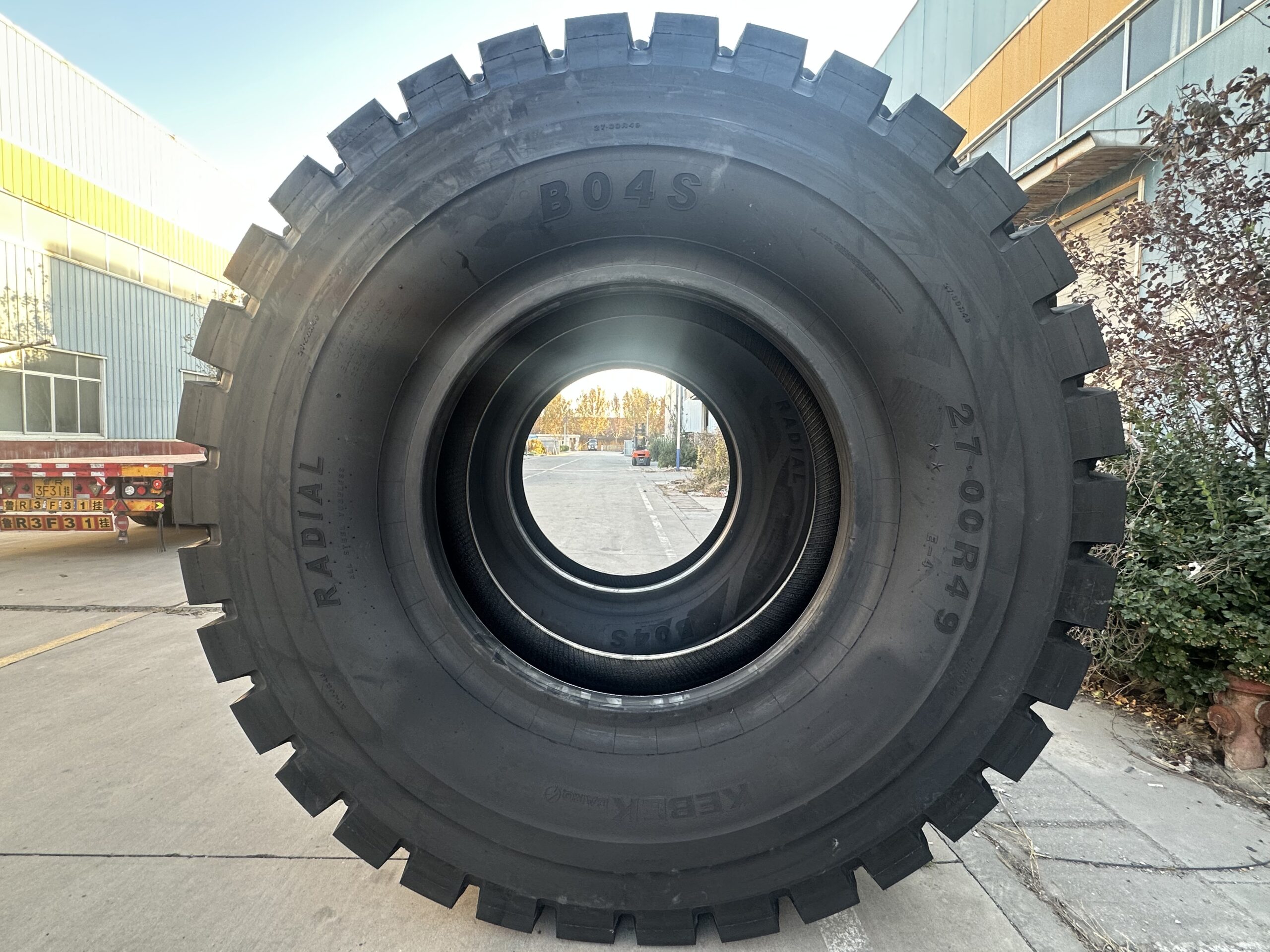
Solid tires in very large sizes (e.g., 27.00R49 equivalent) become extremely heavy, expensive, and difficult to mount. For large mining trucks and heavy wheel loaders, pneumatic radial tires remain the practical choice.
4. Traction in Soft or Muddy Conditions
Pneumatic tires can be run at lower pressures to increase the contact patch and improve flotation in mud, sand, or snow. Solid tires have a fixed contact area and cannot be “aired down.” If your site has extensive soft-ground operation, pneumatic tires may provide better traction.
How to Choose the Right Solid Tire for Construction
Step 1: Match the Tire to the Equipment
Check the equipment manufacturer’s approved tire list. Solid tires must match the rim size, load capacity, and overall diameter specified for the machine. Using an incorrect tire size can cause clearance issues, overloading, and safety hazards.
Step 2: Choose the Right Compound Hardness
Solid tires are available in different Shore hardness ratings:
| Compound Type | Shore A Hardness | Characteristics | Best For |
| Standard | 60–70 | Balanced wear and comfort | General construction forklifts, scissor lifts |
| Hard | 70–80 | Maximum wear resistance, firmer ride | High-cycle operations, abrasive surfaces, heavy loads |
| Non-Marking | 65–75 | Leaves no black marks; often colored | Indoor construction, finished floors, LEED-certified sites |
Step 3: Select the Right Tread Pattern
| Tread Pattern | Description | Best For |
| Smooth (Slick) | Maximum contact area, no grooves | Indoor concrete, finished surfaces, warehouse sections of site |
| Traction (Lug) | Aggressive lug pattern for grip | Gravel, dirt, mud, demolition zones |
| Ribbed | Straight ribs for directional stability | Mostly straight-line travel, forklift aisles |
| Block | Interlocking blocks for all-around grip | Mixed-surface construction sites |
Step 4: Consider PU-Filled as a Compromise
If you need puncture-proofing but also want pneumatic-level ride comfort, polyurethane foam-filled tires are an excellent middle ground. A standard pneumatic casing is filled with liquid polyurethane that cures into a resilient solid. You get:
- Puncture immunity (the fill cannot leak out)
- Pneumatic-level shock absorption
- The tread pattern and traction of a pneumatic tire
PU-filled tires are heavier than standard pneumatics (adding 30–50% to tire weight), which slightly increases fuel consumption and reduces maximum speed, but for most construction applications the trade-off is well worth it.
Step 5: Verify Load Capacity
Solid tires have specific load ratings. Ensure the tire’s rated load capacity exceeds the maximum axle load of your equipment, including the heaviest load the machine will carry. Exceeding the load rating causes rapid compound breakdown and can lead to tire failure.