
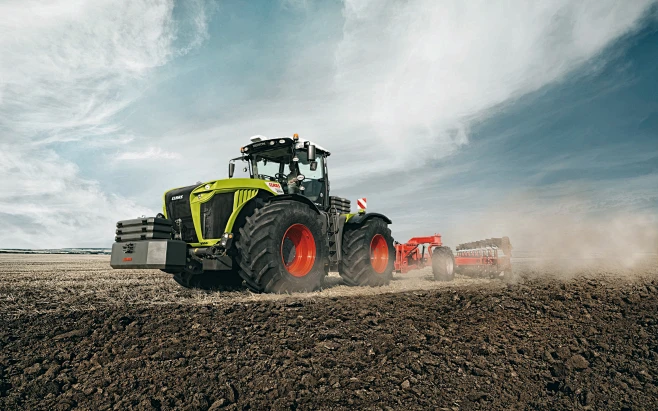
Modern farming is a precision operation. Every pass across a field costs fuel, time, and labor — and every pass that must be repeated because of poor traction, stuck equipment, or compaction-damaged soil eats directly into yield and profit. The tires on a tractor, combine, or sprayer are the single point of contact between hundreds of horsepower and the earth below, and yet they are often the most overlooked component on the machine.
The right agricultural tire does far more than keep a tractor moving. It maximizes drawbar pull, minimizes soil compaction, extends the working window in wet conditions, reduces fuel consumption, and protects the machine itself. The wrong tire — or a worn-out, under-inflated one — does the opposite: it spins, it sinks, it compacts, and it wastes money on every acre.
This guide explains how agricultural tires support productivity in modern farming, how to choose between radial and bias constructions, what the R-code tread classifications mean, and how new technologies like IF and VF tires are changing the economics of field operations.
[Link to: Agricultural Tire Product Page]
What Is an Agricultural Tire?
An agricultural tire (or ag tire) is a specialized pneumatic tire engineered for farm and forestry machinery — tractors, combines, sprayers, spreaders, and implements. Unlike highway or industrial tires, ag tires are designed around three competing priorities:
- Traction — to transfer engine power to the soil without excessive wheel slip.
- Flotation — to distribute heavy machine weight over a large footprint so the tire rides on top of soft soil rather than sinking in.
- Soil protection — to minimize compaction, which damages root development and reduces crop yield.
Balancing these three requires large air volumes, flexible sidewalls, deep lugged treads, and compounds formulated to resist stubble puncture and ozone cracking. The engineering is far more specialized than most operators realize — and the productivity impact is enormous.
How Agricultural Tires Affect Farm Productivity
1. Traction and Drawbar Efficiency
A tractor’s drawbar pull — the actual work it can do at the hitch — is limited by how effectively the tires grip the soil. When a tire slips, engine power is wasted as heat and torn-up earth instead of useful work. Optimal slip for an agricultural tire is typically 8–15% on tilled soil; slip above 20% means the tire is losing significant traction and burning fuel for nothing.
Factors that maximize traction:
- Correct tread pattern for the soil type (R-1, R-1W, etc.)
- Proper ballasting to optimize weight-to-power ratio
- Correct inflation pressure — lower pressure increases footprint and grip
- Dual or triples on high-horsepower tractors in soft conditions
2. Soil Compaction and Long-Term Yield
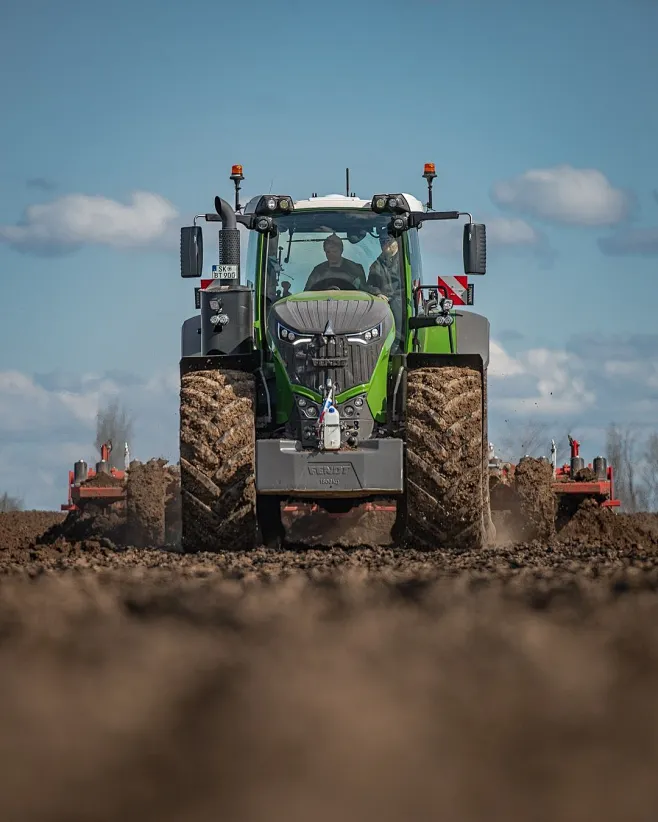
Soil compaction is the silent yield killer in modern agriculture. When a tire’s ground contact pressure exceeds the soil’s bearing capacity, the soil particles are compressed, reducing pore space for air and water. Compacted soil restricts root penetration, reduces water infiltration, and can depress yields by 5–20% for years after the event.
The tire’s role in compaction is direct: the larger the tire footprint and the lower the inflation pressure, the lower the contact pressure on the soil. This is why modern high-volume, low-pressure radial tires — and especially VF (Very High Flexion) tires — have become standard on large tractors and combines. They spread the load over a bigger area, reducing the depth and severity of compaction.
3. Flotation and the Working Window
In wet conditions, flotation determines whether a machine can enter the field at all. A tire with good flotation (large footprint, low pressure) stays on the surface; a narrow, high-pressure tire sinks, ruts, and gets stuck. Better flotation means farmers can plant, spray, or harvest sooner after rain — extending the productive working window and catching optimal timing for yield-critical operations.
4. Fuel Efficiency
Tire choice and inflation pressure directly affect fuel consumption. Under-inflated tires on hard roads increase rolling resistance and fuel burn; over-inflated tires in the field reduce traction and increase slip, also wasting fuel. Radial tires generally offer lower rolling resistance than bias tires, delivering measurable fuel savings over a season — particularly for tractors that spend significant time on road transport between fields.
5. Operator Comfort and Machine Longevity
A tire with good shock absorption protects the tractor’s drivetrain, cab, and operator from the jarring effects of field travel and road transport. Radial tires, with their flexible sidewalls, absorb impacts better than bias tires — reducing fatigue on both the operator and the machine structure over long working days.
IF and VF Technology: The Next Generation of Ag Tires
Two relatively recent technologies are transforming farm tire productivity:
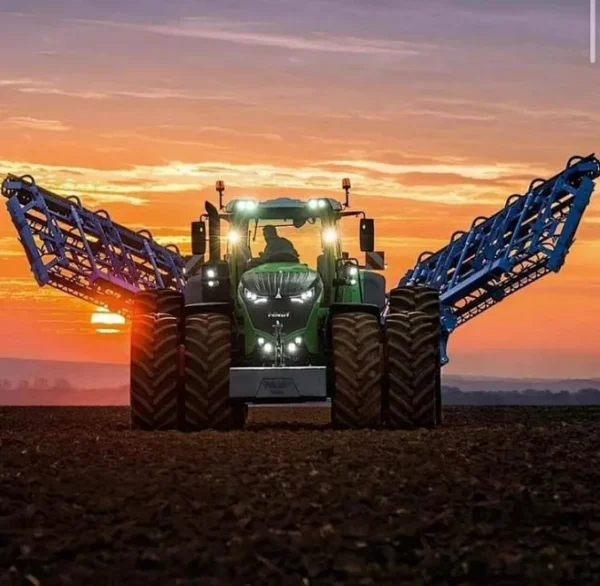
- IF (Increased Flexion): Carries the same load as a standard radial at 20% lower inflation pressure, or carries 20% more load at the same pressure.
- VF (Very High Flexion): Carries the same load at 40% lower pressure, or 40% more load at the same pressure.
The benefit is simple: lower pressure means a larger footprint, which means less soil compaction and better flotation without sacrificing load capacity. For large tractors, combines, and sprayers — where machine weights have steadily increased — IF and VF tires are one of the most cost-effective ways to protect long-term soil health while maintaining productivity.
[Link to: Agricultural Industry Solutions Page]
How to Choose the Right Agricultural Tire
Follow this decision framework:
- Identify your primary conditions. Is your soil mostly dry, wet, or mixed? Do you work in heavy stubble?
- Choose construction. Radial for large-scale, high-hour operations; bias for small equipment, implements, or very rocky ground.
- Select the tread code. R-1 for general use; R-1W for wet/heavy HP; R-2 for rice and cane; R-4 for loader work.
- Size for flotation. Go as large as your machine and fenders allow — bigger tire = bigger footprint = less compaction.
- Consider IF/VF. If you run heavy equipment, the compaction reduction alone often pays for the premium.
- Verify load capacity. The tire’s load index must exceed your machine’s heaviest loaded axle weight.
- Match front and rear. On 4WD/MFWD tractors, maintain the correct rolling circumference ratio (typically 1.0–1.05) between front and rear to avoid drivetrain stress.
Best Practices to Maximize Agricultural Tire Productivity
- Run the lowest safe pressure for the load. Use the manufacturer’s load-inflation table; lower pressure = bigger footprint = less compaction and more traction.
- Ballast correctly. Add liquid ballast or cast weights to achieve the optimal weight-to-power ratio (typically ~110–130 lbs per PTO horsepower for field work). Too little weight = excessive slip; too much = compaction and fuel waste.
- Check pressure seasonally. Temperature swings change pressure; check cold at the start of each season and adjust.
- Inspect for stubble damage. Modern corn and soybean varieties produce tougher stubble that can cut tire sidewalls. Inspect regularly and consider stubble-deflecting technology on the planter row units.
- Store properly. Keep spare and off-season tires away from direct sunlight, electric motors (ozone sources), and chemicals to prevent weathering.
- Rotate and match wear. On 4WD tractors, keep front and rear tire diameters matched; uneven wear changes the circumference ratio and stresses the drivetrain.
Frequently Asked Questions (FAQ)
What is the difference between R-1 and R-1W agricultural tires?
R-1 is the standard agricultural lug tread for general-purpose field work in normal-to-dry soil. R-1W has lugs approximately 20% deeper than R-1 and a wider tread profile, providing better traction, self-cleaning, and flotation in wet or sticky soil and for high-horsepower tractors. If you farm in wet conditions or run a large tractor, R-1W is usually the better choice.
Are radial agricultural tires worth the extra cost?
For most large-scale operations, yes. Radial ag tires deliver better traction, lower soil compaction, smoother ride, better fuel economy on road transport, and longer, more even tread life. While the initial cost is higher, the lower cost per acre over the tire’s life typically favors radial. Bias tires can still make sense for smaller tractors, implements, or extremely rocky/stubble-heavy ground where sidewall puncture risk is the primary concern.
How does tire pressure affect soil compaction?
Higher inflation pressure means a smaller tire footprint and higher ground contact pressure, which drives compaction deeper into the soil. Lower pressure spreads the load over a larger area, reducing both the severity and depth of compaction. Running the lowest safe pressure for the load — per the manufacturer’s load-inflation table — is the single most effective tire-side strategy for protecting soil structure and long-term yield.
What are IF and VF agricultural tires?
IF (Increased Flexion) and VF (Very High Flexion) tires have reinforced sidewalls that allow them to carry the same load as a standard radial at 20% (IF) or 40% (VF) lower inflation pressure — or carry 20–40% more load at the same pressure. The lower pressure creates a larger footprint, reducing soil compaction and improving flotation. They are increasingly standard on large tractors, combines, and self-propelled sprayers where machine weights have grown significantly.
How long do agricultural tires last?
Agricultural tire life varies widely with hours of use, conditions, and maintenance. A well-maintained radial on a large tractor typically delivers 4,000–8,000+ hours; bias tires on similar equipment may last 2,000–5,000 hours. Tires used primarily for road transport wear faster than field-only tires. Signs it’s time to replace: lugs worn below 20% of original depth, visible sidewall cracking or weathering, recurring slow leaks, or exposed cords.
Can I put liquid ballast in agricultural tires?
Yes. Liquid ballast (typically calcium chloride solution, windshield washer fluid, or beet juice) is commonly used to add weight for improved traction. However, liquid fill reduces the tire’s air volume (and thus its ability to absorb shocks), can corrode steel rims if not properly inhibited, and makes the tire heavier to handle. Many modern operations prefer cast iron wheel weights or front weights, which don’t compromise tire performance. If you use liquid ballast, fill to no more than 75% of the tire volume.
Should I use dual tires on my tractor?
Duals (or triples) increase the total footprint, which reduces ground contact pressure and soil compaction — especially valuable for high-horsepower tractors in wet conditions or for heavy draft operations. They also improve stability on slopes. The trade-offs are added cost, wider transport width, and potential crop damage in narrow rows. Use duals when compaction or flotation is the limiting factor; remove them when road transport width or maneuverability matters more.
Where can I get help selecting agricultural tires for my equipment?
Work with a tire supplier who understands farm applications and can match construction, tread code, size, and load capacity to your specific equipment, soil conditions, and operation scale. A factory-direct partner can also advise on IF/VF upgrades and provide technical support. [Link to: Contact Us / Agricultural Tire Consultation]
Conclusion
Agricultural tires are not a commodity — they are a productivity system that touches every acre you farm. The right tires transfer power efficiently, protect the soil that grows your crop, keep you in the field when conditions are marginal, and save fuel every season. The key decisions are:
- Construction: radial for large-scale productivity and lower compaction; bias for tough, puncture-prone ground or smaller equipment.
- Tread code: R-1 for general use, R-1W for wet conditions, R-2 for rice/cane, R-4 for loader work.
- Size and technology: go as large as practical for flotation, and seriously consider IF/VF tires to reduce compaction on heavy equipment.
- Maintenance: run the lowest safe pressure, ballast correctly, check pressure seasonally, and inspect for stubble damage.
Get these right and agricultural tires become a proactive investment in yield, efficiency, and soil health — not a recurring expense. If you’d like a tire specialist to analyze your equipment and conditions and recommend a specification, [reach out for a consultation].