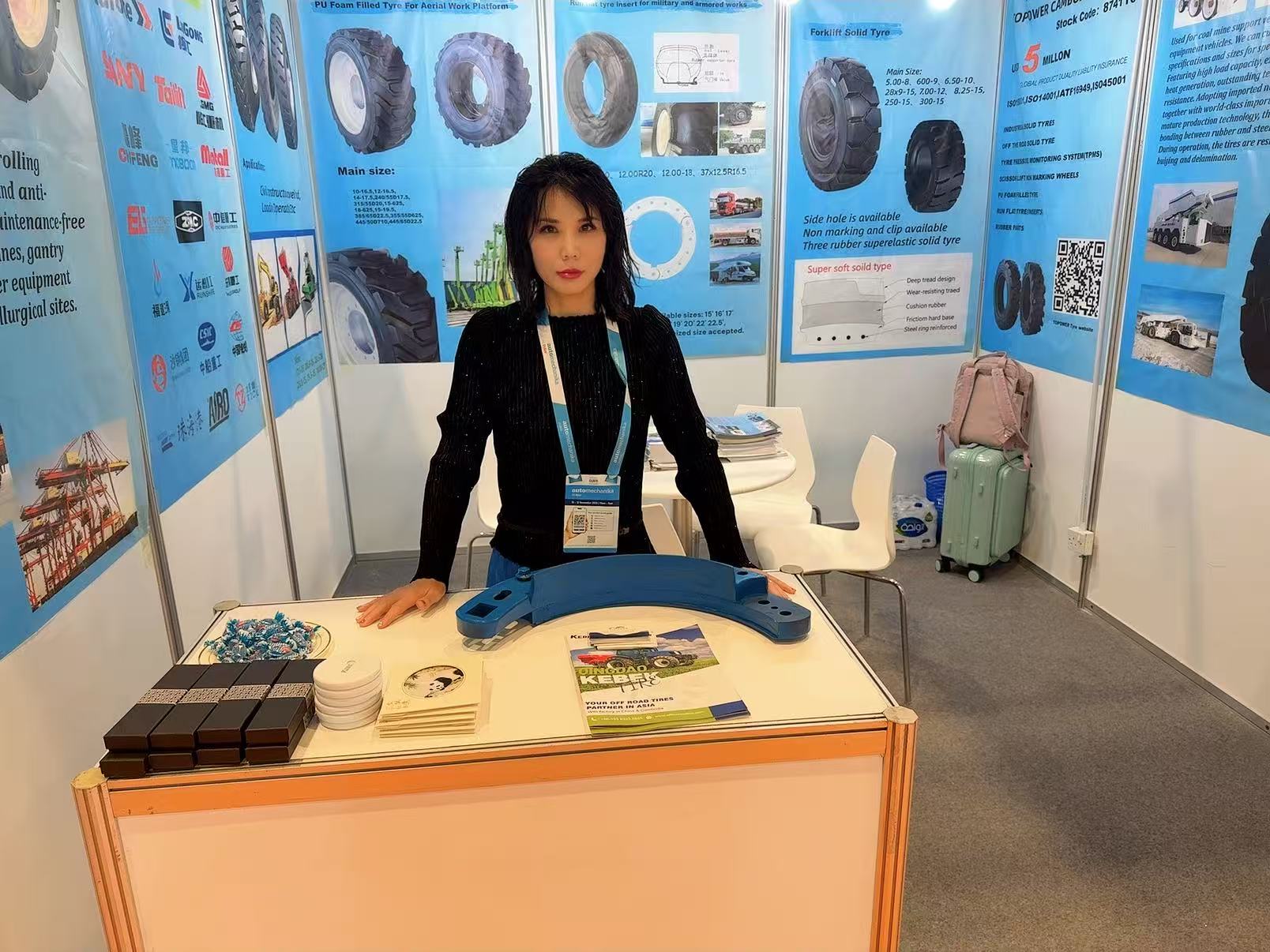
This week, our Kebek Tire team is on the ground in Dubai. From November 10 to 12, 2026, we are attending Automechanika Dubai at the Dubai Exhibition Centre (DEC), Expo City Dubai — the region’s leading trade fair for automotive parts, accessories, and aftermarket services, organized by Messe Frankfurt.
For us, this show is not a generic stop on the exhibition calendar. The UAE and the wider Gulf region are among the world’s most active markets for armored vehicles — military patrol fleets, VIP protection vehicles, cash-in-transit trucks, and civilian armored SUVs. And no product in our catalog is more closely connected to that market than our run flat insert system.
Here is why run flat inserts matter so much in this region, how the technology works, and what our team hopes to bring back from three days in Dubai.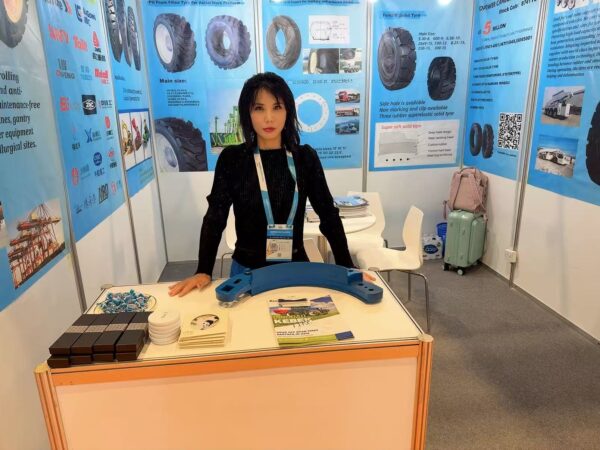
Why the UAE Is a Global Hotspot for Armored Vehicles
The Gulf region concentrates nearly every demand driver for armored mobility in one place:
- Security and defense operations. Border patrol, convoy escort, and critical-site protection fleets operate across desert and mountain terrain, far from immediate support.
- VIP and executive protection. The UAE hosts a dense population of diplomats, corporate executives, and high-net-worth individuals whose vehicles must remain mobile under attack.
- Cash-in-transit and high-value logistics. Banks and security companies move valuables daily through dense urban traffic in Dubai, Abu Dhabi, and Sharjah.
- A regional manufacturing base. The UAE is home to established armored vehicle OEMs and conversion companies that armor civilian SUVs and trucks for export across Africa, the Middle East, and Asia. Every one of those vehicles needs a certified run flat solution before it leaves the shop.
In all of these applications, the tires are the first — and often the only — part of the vehicle that attackers, debris, or road hazards can reach. A perfectly armored hull is useless if a single puncture strands the vehicle on the roadside.
What a Run Flat Insert Actually Does
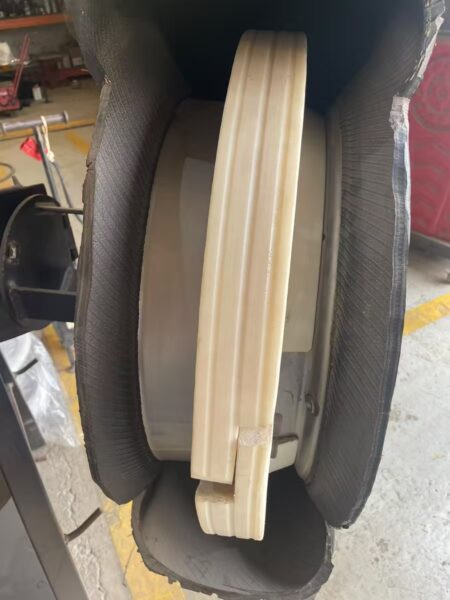
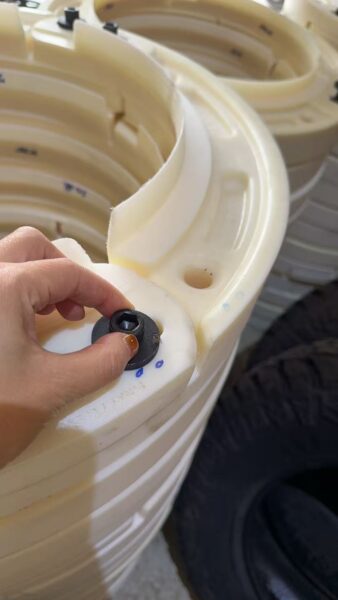
A run flat insert is a reinforced ring — typically made of a high-strength polymer composite — mounted inside the tire, onto the wheel rim, in the space normally occupied by air volume. If the tire loses pressure due to a puncture or gunfire, the vehicle’s weight settles onto the insert instead of collapsing the tire.
The result: the armored vehicle keeps moving.
With a properly specified insert, the vehicle can typically continue driving at reduced speed for a meaningful distance — enough to exit a threat zone, reach a secure compound, or complete a mission. This “escape capability” is the entire point of armoring a vehicle in the first place, and it is why armored vehicle converters treat the run flat insert as a mandatory component, not an optional accessory.
Run Flat Insert vs. Run Flat Tire vs. Standard Tire
| Aspect | Standard Tire | Self-Supporting Run Flat Tire | Kebek Run Flat Insert System |
| How it works | Air pressure carries the load; puncture = immediate deflation | Stiffened sidewalls support the vehicle briefly after air loss | Composite support ring on the rim carries the load after air loss |
| Mobility after puncture | None — immediate stop required | Limited distance, limited speed | Sustained mobility at reduced speed over a usable distance |
| Performance under gunfire / multiple penetrations | Fails immediately | Degraded — designed for road hazards, not attacks | Designed for repeated loss-of-pressure events, including ballistic |
| Fitment | Any standard rim | Only specific OEM wheels | Fits standard wheels of armored vehicles; installed at conversion |
| Cost | Lowest | Moderate | Higher upfront, standard practice for armored fleets |
| Typical users | Civilian passenger vehicles | Passenger cars with OEM run flat fitment | Armored SUVs, CIT vehicles, military and police fleets |
The key takeaway: for armored vehicles, the insert system is the industry-standard solution — which is exactly the segment we serve.
Why Run Flat Inserts Matter Even More in Gulf Conditions
The UAE environment pushes every tire to its limits, and inserts are no exception:
- Heat. Sustained ambient temperatures above 40°C and road surfaces far hotter than that accelerate rubber degradation and raise internal pressures. Insert materials and tire compounds must be specified for sustained high-temperature operation.
- Terrain. Armored vehicles in the region operate on everything from Dubai highways to gravel wadis and desert tracks — conditions where punctures from sharp stones are routine.
- Load. Armoring adds hundreds of kilograms of steel, glass, and ballistic material. An armored SUV can weigh nearly double its civilian equivalent. Every component in the wheel-end — tire, insert, rim — must handle the extra load continuously, not just in an emergency.
- Convoy doctrine. In a convoy, one stopped vehicle endangers everyone behind it. Mobility after a puncture is not a convenience; it is a survival requirement.
This is why conversations with fleet operators and converters in the Gulf rarely start with “what’s the price?” — they start with load ratings, speed-after-deflation expectations, and certification requirements. Those are exactly the conversations our technical team is having this week in Dubai.
What Our Team Is Doing at Automechanika Dubai 2026
Our colleagues and management are attending the show with three goals:
- Meeting armored vehicle converters and fleet operators across the UAE, Saudi Arabia, and the wider region — and learning what insert specifications their current programs demand.
- Presenting the Kebek run flat insert product line alongside our broader range, which includes TBR truck and bus tires, OTR tires, solid tires for material handling equipment, mining tires, and agricultural tires.
- Strengthening our Middle East distribution network. The show brings together distributors and aftermarket professionals from across the region, and many of the relationships that keep our products moving through the Gulf start in exactly these aisles.
If you are at the show and want to talk run flat inserts, armored vehicle fitments, or any tire program for heavy-duty fleets — reach out and we will arrange a meeting on site.

About Kebek Run Flat Inserts
Qingdao Kebek Tire Co., Ltd. is a tire manufacturer with 25 years of experience, supplying safety solutions for vehicles and machinery worldwide. Our run flat insert line is engineered specifically for armored and security vehicles:
- Composite support ring construction designed to carry full vehicle load after complete air loss
- Multiple size coverage for popular armored vehicle platforms — armored SUVs, CIT trucks, and light armored vehicles
- Pre-installed fitment support — inserts can be supplied mounted and balanced with the tire, ready for the conversion line
- Compatibility with standard wheels, so converters do not need to change rim specifications
- Factory-direct technical support — our engineers work directly with converters to match insert model, tire, and wheel for each vehicle’s gross weight and axle loads
We treat the insert not as a standalone part but as part of a wheel-end system: insert + tire + rim + vehicle weight all interact, and specifying them together is what makes the difference between a certified solution and a compromise.
Frequently Asked Questions
1. How far can an armored vehicle drive with run flat inserts after a puncture?
It depends on vehicle weight, insert model, road surface, and speed. With correctly specified inserts, an armored vehicle can typically continue at reduced speed over a distance sufficient to exit a danger zone and reach safety. Converters should always validate the insert rating against the vehicle’s actual axle loads.
2. What is the difference between a run flat insert and a run flat tire?
A run flat tire uses reinforced sidewalls and is designed for civilian road hazards. A run flat insert is a support ring fitted inside the tire onto the rim. Inserts offer substantially greater load-carrying capability after air loss and are the standard choice for armored and security vehicles.
3. Can run flat inserts be installed on any armored vehicle?
Most standard rims used in armored conversions can accept inserts, but the insert must be matched to the wheel diameter, tire size, and vehicle weight. Send us your vehicle model and gross vehicle weight, and our technical team will confirm the correct specification.
4. Do inserts affect ride comfort or handling?
Because the insert occupies part of the air volume, fitment and inflation pressure must be specified correctly. When properly matched to the vehicle, normal driving behavior remains predictable, and the insert only becomes active when pressure is lost.
5. Can Kebek supply inserts together with tires, pre-mounted?
Yes. We can supply tire and insert as a pre-installed, balanced assembly, which reduces conversion-line workload and ensures the insert is fitted correctly from the start.
6. Besides armored vehicles, what else are run flat inserts used for?
Inserts are also specified for cash-in-transit vehicles, police fleets, ambulances in high-risk deployments, government motorcades, and any vehicle where continued mobility after a puncture is critical.
7. Can we meet Kebek Tire at Automechanika Dubai 2026?
Yes — our team is attending the show from November 10 to 12, 2026 at the Dubai Exhibition Centre, Expo City Dubai. Contact us in advance via WhatsApp at +86 135 8323 8885 or email manager@chinakebektire.com to arrange an on-site meeting.
8. Does Kebek ship run flat inserts to the UAE and Middle East markets?
Yes. We supply converters, distributors, and fleet operators across the Middle East and support factory-direct export with technical documentation for conversion and certification needs.

Talk to Us — in Dubai This Week or Anytime
Whether you catch our team at Automechanika Dubai or prefer to start the conversation online, we are ready to help you specify the right run flat insert for your armored vehicle program.
- WhatsApp: +86 135 8323 8885
- Email: manager@chinakebektire.com
- Website: chinakebektire.com