
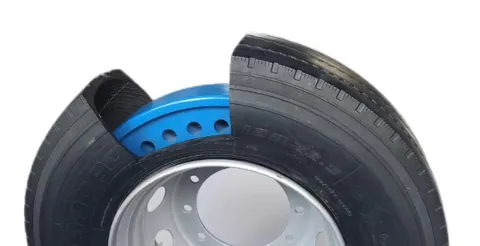
Run flat tire inserts play a critical role when sudden tire air loss occurs, helping vehicles stay stable and mobile in situations where a standard tire would fail immediately. Sharp road debris, sidewall damage, or extreme operating conditions can cause rapid pressure loss, turning a normal drive into a serious safety risk within seconds. Without internal support, tires rely entirely on air pressure to carry load, maintain shape, and protect the wheel.
This is where run flat tire inserts air loss protection becomes essential. By providing a solid internal support structure inside the tire, run flat inserts allow vehicles to maintain limited mobility even after a puncture. Instead of stopping instantly or risking wheel damage, drivers gain a controlled drive after puncture, enabling them to reach a safer location for inspection or repair.
For fleets operating in remote regions, high risk environments, or time critical missions, the puncture proof systems composed of run flat inserts are not just a convenience – they are a vital layer of tire safety and operational continuity.
Why Sudden Air Loss Is a Serious Risk for Modern Vehicles
What Happens When a Tire Loses Air at Speed
A rapid loss of air pressure instantly changes how a vehicle behaves. Steering response becomes unstable, braking distance increases, and the tire sidewall can collapse under load. At higher speeds, this loss of control can escalate quickly, especially for heavy or fully loaded vehicles.
Common Causes of Sudden Tire Air Loss
- Sharp objects penetrating the tread
- Sidewall cuts from curbs or rough terrain
- Overloading combined with heat buildup
- Long-distance driving on poor road surfaces
These risks are common in construction zones, mining areas, rural highways, and emerging markets where road conditions are unpredictable.
Why Traditional Tires Struggle After a Puncture
Air Pressure Is the Real Load Carrier
A standard tire is not designed to support vehicle weight without air. Once pressure is gone, the tire loses its shape, and the wheel rim quickly contacts the ground. This often leads to permanent tire failure and expensive wheel damage.
The Limits of Sealants and Spare Tires
Sealants only work for small tread punctures and fail completely with sidewall damage. Spare tires require safe stopping conditions, tools, and time – luxuries that are not always available in emergency or high risk environments.
What Are Run Flat Inserts and How Do They Work?
The Structure of Run Flat Inserts
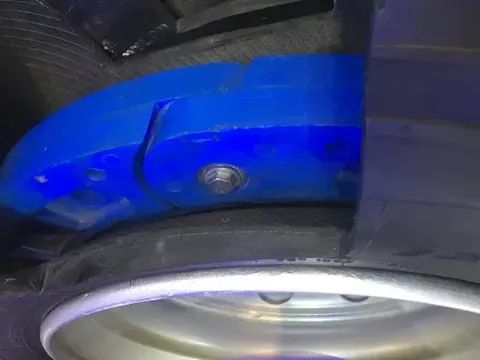
Run flat tire inserts are rigid or semi-rigid support rings installed inside the tire. They are engineered to sit between the tire and the wheel rim, ready to carry load when air pressure disappears.
How Run Flat Inserts Manage Air Loss
When a puncture occurs, the tire insert immediately takes over the load-bearing function. This prevents the tire from collapsing and keeps the vehicle stable. In this case, the tire no longer depends on air to function, but on the tire insert instead.
A True Drive After Puncture Solution
This design allows the vehicle to keep moving at a reduced speed for a limited distance after a puncture. It provides a practical post‑puncture mobility solution that reduces downtime and helps avoid unsafe roadside stops.
Key Safety Advantages of Run Flat Insert Systems
Improved Stability and Control
By maintaining tire shape after pressure loss, run flat tire inserts help preserve steering response and braking behavior, reducing the risk of accidents.
Protection for Tires and Wheels
Run flat inserts prevent direct rim contact with the road, reducing damage to both the wheel and the tire casing. This lowers repair costs and extends component life.
Why Emergency Driving Tires Matter
For vehicles operating in sensitive or isolated areas, emergency driving tires equipped with inserts allow drivers to focus on reaching safety rather than stopping immediately.
Typical Applications for Run Flat Tire Inserts
Commercial and Fleet Vehicles in Remote Regions
In Africa, South America, and parts of Asia, road hazards and long distances make tire safety inserts especially valuable for logistics and service fleets.
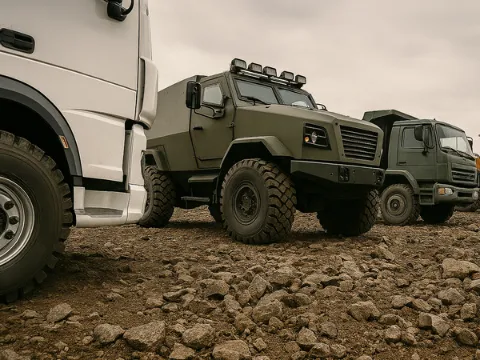
Military, Security, and Emergency Vehicles
These vehicles often operate where stopping is not an option. Run flat inserts support mission continuity and personnel safety.
Industrial and Off-Road Equipment
Construction, mining, and industrial vehicles benefit from tire safety inserts that reduce downtime and prevent secondary damage.
Polymer-Based Run Flat Tire Inserts and Performance Evolution
Material choice has a major impact on how tire inserts perform. Modern polymer-based designs offer better heat resistance, higher load capacity, and improved durability compared to traditional rubber systems.
For a deeper look at how advanced materials are changing performance limits, see our related article:
When Are Tire Safety Inserts the Right Choice?
- Vehicles that cannot afford unexpected stops
- Fleets operating in high-damage environments
- Applications where safety and continuity outweigh initial cost
Final Thoughts: Staying Mobile When Air Is Gone
Run flat tire inserts transform how vehicles respond to punctures. Instead of immediate failure, drivers gain control, time, and options. As puncture-proof systems continue to evolve, tire safety inserts are becoming a smart solution for fleets that value safety, reliability, and uninterrupted operation – even when air pressure is no longer there.