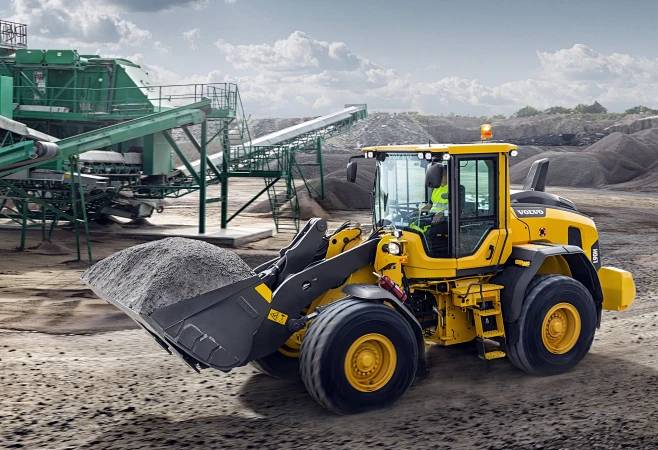
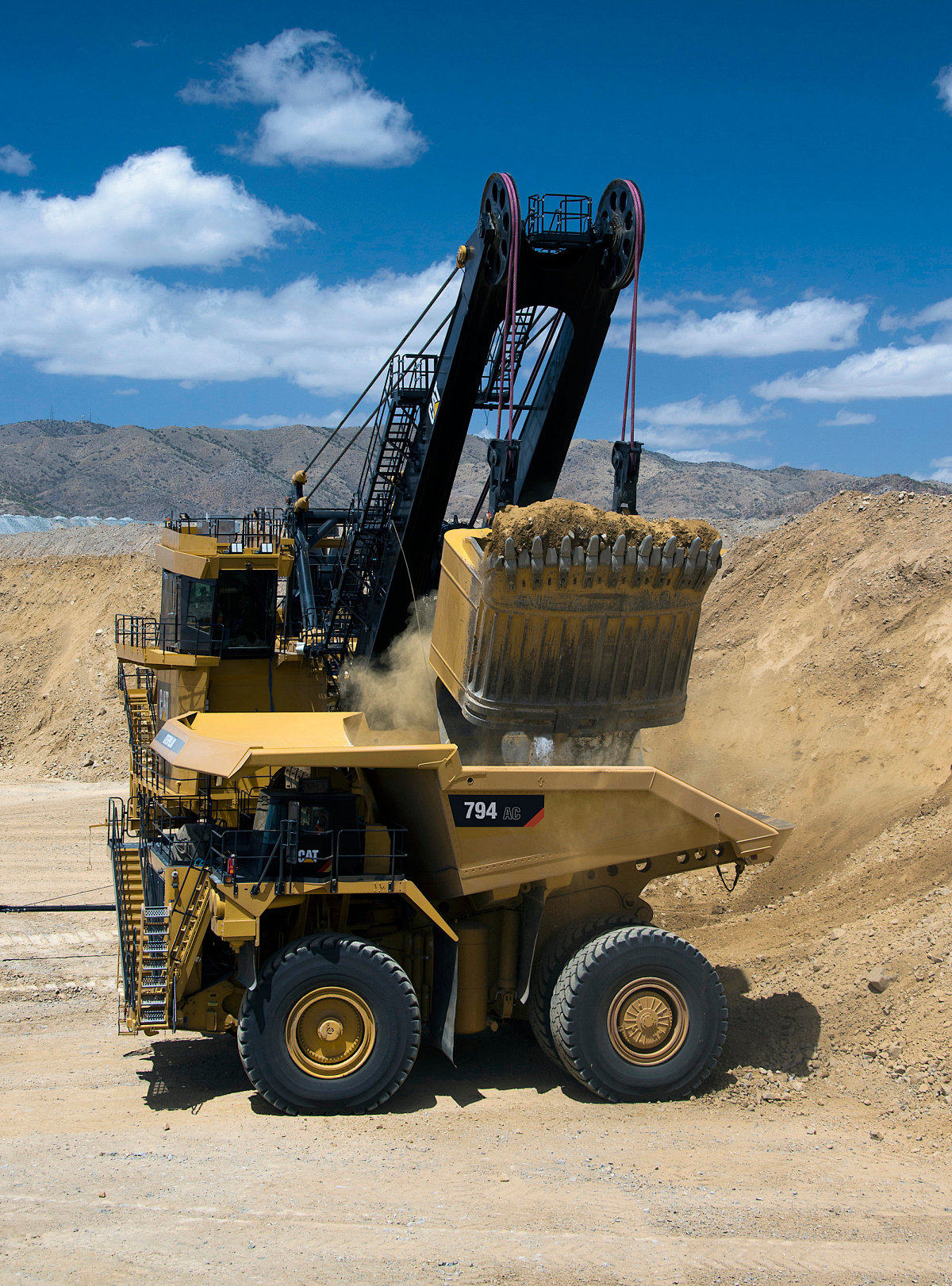
A quarry tire works harder than almost any tire on earth — and rarely the way buyers assume. The defining image of aggregates work is a wheel loader feeding a crusher all day over freshly blasted rock, while haul trucks run a short loop between the face and the plant. Neither machine travels far. Neither runs fast. And that is precisely why quarry tire selection follows different rules from both mining and general construction.
In mining, the enemy is heat — long hauls at speed build casing temperature until the tire fails. In quarrying, the enemy is rock: cutting, cutting, and more cutting. This guide explains what that difference means for every tire decision in an aggregates operation, from the loader at the face to the trucks on the loop and the machines around the plant.
What Makes Quarry Duty Different
| Factor | Quarry & aggregates | Large-scale mining | General construction |
| Dominant failure mode | Cutting and chunking | Heat / TKPH overload | Mixed: cuts, impacts, punctures |
| Haul distance | Short (often < 2 km loops) | Long (multiple km each way) | Variable |
| Speed | Low to moderate | Higher, sustained | Variable, often roading |
| Surface | Freshly blasted rock, abrasive | Graded haul roads | Mixed soil, rubble, finished grades |
| Key tire metric | Cut resistance, tread depth | TKPH rating | Versatility, availability |
| Tire cost driver | Tread loss & sidewall cuts | Heat-related casing loss | Mixed |
| Retread economics | Strong — casings often sound | Standard practice | Occasional |
Two consequences follow from this table, and they drive everything else in this article:
- Heat is usually not the limiting factor — so the classic argument for premium radial tires on TKPH grounds weakens, while the argument for deep, cut-resistant tread strengthens.
- The loader, not the haul truck, is the tire-consumption center of the operation — it lives on the worst surface in the quarry, all day, turning and shoveling on blasted rock.
Machine-by-Machine Tire Selection
Wheel loader at the face (the hardest job in the quarry)
The face loader works on freshly blasted rock: sharp, loose, and constantly shifting under the tires. Its tires suffer scrubbing in the turn, rock wedges in the tread, and sidewall contact with the pile.
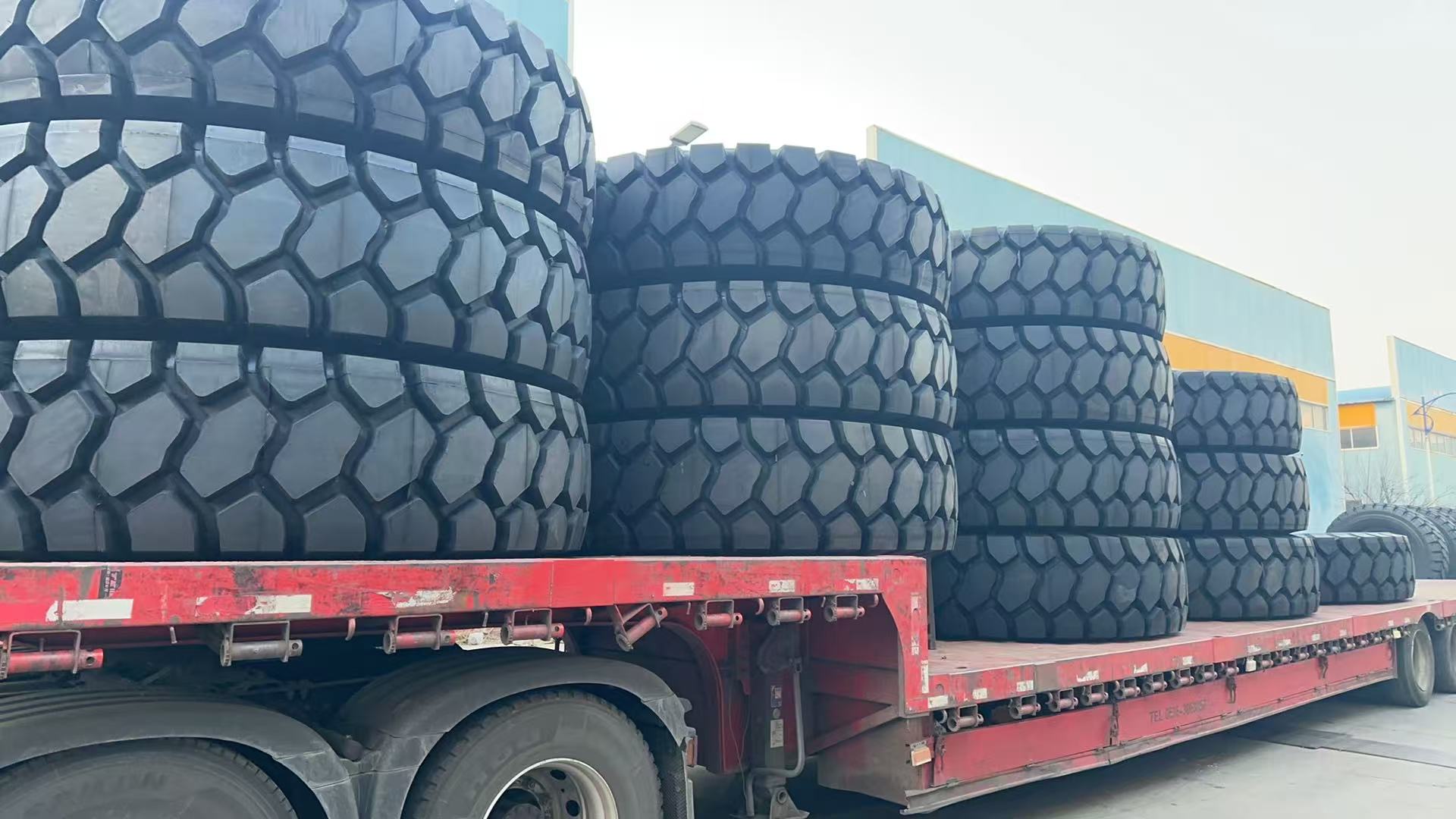
- Tread depth: L4 or L5. The extra depth is not for wear life alone — it is cut protection, putting more rubber between the rock and the casing. L5 (and L5S smooth) suits the most severe faces; L4 balances cut resistance and heat dissipation where the loader also trams between stockpiles.
- Construction: Bias tires remain common at the face for sidewall robustness; radial loaders dominate where the machine also travels. The trade-offs are laid out in What Is a Radial OTR Tire?.
- Pattern: Deep-lug rock service (E3/L3-family patterns with reinforced shoulders), specified by machine weight class — our loader tire range maps patterns to popular models.
The mechanics of why this surface destroys tires — and what slows it down — are covered in Why Loader Tires Wear Out Fast on Gravel; every practice in that article applies double at the quarry face.
Rigid haul trucks on the short loop
Quarry haul trucks (typically 30–60 t class) run shorter, slower circuits than mine haul trucks, so tire selection leans toward cut resistance over maximum TKPH:
- Common sizes: 18.00R33, 18.00-25, 2400R35 / 24.00R35, 2700R49 for larger operations — sizes and typical service parameters for haul truck tires.
- Pattern: E4 wide-base radial is the default; E3 and rock-service patterns where the road surface is coarse and freshly graded.
- Road discipline matters more than tire brand: on a short loop, the truck passes the same road defects hundreds of times a shift. A single unfilled rut or rock spill point can wipe out a set of tires.
Articulated dump trucks (ADTs)
Many aggregates sites run ADTs on softer or uneven ground between pit and plant. ADT tires (25.00R20, 26.5R25 class) prioritize traction and sidewall flex; wide flotation variants suit soft underfoot. ADT tires generally run bias or radial depending on haul condition, with all-terrain (G2/L2-family) patterns for mixed surfaces.
Around the plant: feeders, stackers, and loaders on finished material
Machines working on processed aggregate and hardstand face far less cut risk and far more turning and spinning on abrasive fines:
- Stockpile loaders: L3/L4 on clean material; watch for spin wear on stockpile faces rather than cuts.
- Scrapers and water trucks: bias patterns with high flotation; water trucks in particular are payload-heavy — verify inflation against the filled-tank axle load, not the empty weight.
- Plant yard forklifts and telehandlers: solid or press-on tires where the surface is paved; see our forklift tire options for compound and marking choices.
The Cut-Resistance Decision: Tread Depth vs Heat
The core trade-off in quarry tire specification deserves its own explanation, because it is where most mis-specification happens.
Deeper tread (L5, up to roughly 2.5–3× standard depth) buys cut protection — rock has to cut through more rubber to reach the belts. But deep tread also insulates the casing: heat generated in the tread cannot escape as easily, and more rubber flexing through every rotation generates more heat in the first place.
| Situation | Better choice | Why |
| Static face loader, < 1 km tram, cool climate | L5 deep tread | Cut risk dominates; heat rarely builds |
| Loader doing long stockpile carry cycles | L4 | Middle ground — some cut protection, better cooling |
| Hot climate, high-speed tramming, long carry | L3 with radial casing | Heat dissipation dominates |
| Smooth, wet rock floor | L5S smooth | No lugs to tear off; maximum contact |
| Crushed fines / sand yard | L2/L3 standard | Cuts rare; wear is abrasive but uniform |
That table is why “just put the deepest tread on it” is not a strategy — the correct depth is a function of temperature, tramming distance, and rock geometry, not toughness.
Load and inflation baselines for all of these service types are standardized in the reference tables published by TRA and ETRTO; quarries that trim pressure below spec to “soften the ride” on rock are trading comfort for casing life at an accelerating rate.
Site Practices That Extend Quarry Tire Life
Tire budgets in aggregates are won or lost outside the tire quotation. Five practices, in order of payback:
- Face and floor cleaning. A dozer or grader spending 30 minutes clearing the loader floor of loose rock can pay for itself in a week of tread life. Rock left on the floor becomes thousands of cut points.
- Haul road maintenance. Fill ruts, remove spillage, control drainage. On a short loop, every defect is hit hundreds of times per shift.
- Daily pressure checks at operating temperature. Underinflation is the fastest casing killer in any application, and quarry tires run at high loads. Check weekly at minimum — daily on face loaders.
- Spin management. Train operators to avoid spinning into the pile; spinning tires generate localized heat and scrub off tread at many times the normal rate. Bucket-entry technique is a tire-cost decision.
- Scheduled casing rotation and retirement. Rotate positions to equalize wear, and pull casings for retread before the belts are exposed. The retread market that Tyrepress tracks is a functioning economic lever for quarry fleets precisely because quarry casings — unlike mine casings cooked by heat — are often retreadable several times.
For the full lifespan picture by application — including what quarries typically achieve versus recycling and slag operations — see How Long Do Wheel Loader Tires Last?.
Common Quarry Tire Mistakes
| Mistake | What actually happens | Better approach |
| Specifying by price per tire | Cheap casings fail at the face; cost per hour rises | Compare cost per tonne moved, including retreads |
| Maximum tread depth everywhere | Heat build-up on carry cycles; chunking of lugs | Match depth to tramming and climate (table above) |
| Ignoring water tank weight | Rear tires overloaded when tank is full | Verify inflation against loaded axle weight |
| Replacing tires only when flat | Sidewall damage cascades into casing loss | Scheduled inspection and rotation |
| Buying odd sizes with long lead times | One tire out of stock stops a loader | Keep one spare set per critical size |
| Treating the quarry like a mine (TKPH-first) | Overpaying for heat capacity you do not use | Buy cut resistance and tread depth first |
Frequently Asked Questions
What is the best tire for a quarry wheel loader?
For loaders working the face on freshly blasted rock, a deep-tread L4 or L5 rock-service pattern is the usual answer, chosen by machine weight class and matched to how far the loader trams. For loaders mostly on processed material, L3 with a radial casing usually costs less per hour. The starting point is your machine model — see our loader tire lineup.
L3, L4, or L5 — which tread depth do I need?
L3 for processed material and longer carry distances; L4 as the general-purpose quarry depth; L5 (or L5S smooth) where the loader lives on raw blasted rock with minimal tramming. Deeper is not automatically better — deep tread traps heat, which matters on carry cycles and in hot climates.
Are bias or radial tires better in a quarry?
Both have a place. Radial tires win on carry cycles, fuel, and retread value; bias tires win on sidewall cut resistance and purchase price at the face. Many quarries run radial on haul trucks and tramming loaders, and bias or reinforced-sidewall radial on dedicated face loaders. The construction-level trade-offs are explained in What Is a Radial OTR Tire?.
How long do quarry tires last?
Highly variable: face loader tires may be consumed in one to two thousand hours on severe rock, while stockpile loaders and well-maintained haul trucks achieve several times that. Surface condition and operating practice move the number more than brand does — our loader tire lifespan guide breaks down typical ranges by application.
Do quarry haul trucks need the same tires as mining trucks?
Not necessarily. Quarry loops are short and slow, so the extreme TKPH ratings that mining demands are less critical, and cut resistance plus cost per tonne matter more. Mining-spec tires work, but quarry operations often find better economics in patterns and casings selected for their actual duty cycle.
Can quarry tires be retreaded?
Yes — quarrying is one of the strongest retread use cases, because casings often fail the tread before the structure. The key is pulling the tire for retread before rock reaches the belts; a casing with belt-edge damage is scrap.
What sizes are most common in aggregates?
On loaders: 20.5-25, 23.5-25, 26.5R25 depending on machine class. On rigid haul trucks: 18.00R33, 2400R35, 2700R49. On ADTs: 25.00R20 / 26.5R25 class. Size availability is a real procurement constraint — confirm stock before committing to a brand for a critical fleet.
How much does site practice actually affect tire cost?
More than most buyers expect. Floor cleaning, haul road upkeep, pressure discipline, and spin control routinely change tire cost per tonne by double-digit percentages. They are the cheapest tire program available, because they cost labor rather than tires.
Summary: Choosing Quarry Tires
- Quarry is a cut problem, not a heat problem. Optimize for cutting, chunking, and tread loss before anything else.
- The face loader is the priority. It consumes tires fastest; start your specification there with L4/L5 rock-service patterns.
- Match tread depth to tramming and climate. L5 for the face, L4 for mixed work, L3 for carry duty and heat.
- Use both constructions. Radial for trucks and tramming loaders; bias or reinforced sidewalls for face loaders.
- Retread deliberately. Pull casings early — quarry casings are usually structurally sound and worth 2–3 retreads.
- Invest in the site, not just the tire. Floor, road, and pressure discipline move cost per tonne more than brand choice.
Want a specification matched to your machines and rock type? Browse the full OTR range or send us your fleet list and site conditions — we will recommend patterns, depths, and stock positions for your operation.