Ask ten construction fleet managers which tire they run and you will get ten different answers — not because they disagree, but because a construction site is really half a dozen different applications sharing one fence. A wheel loader bucketing crushed stone needs a different tire than a dozer spreading fill, which needs a different tire than a compactor rolling asphalt, which needs a different tire than a telescopic handler carrying pallets across mud.
Specifying construction tires by “what fits the rim” instead of “what the machine actually does” is the single most common — and most expensive — mistake on job sites.
This guide sorts construction equipment tires by machine class and duty, so you can match the right OTR tire to each machine in your fleet.
Why Construction Is Different From Mining
The previous guide covered OTR tires for mining — and construction shares the hardware (loaders, dozers, dump trucks) but not the conditions:
| Variable | Mining | Construction |
| Site lifetime | 5–40 years, fixed layout | Weeks to months, constantly moving |
| Haul roads | Graded, permanent ramps | Unprepared, changing weekly |
| Speeds | High on long hauls | Low, short bursts, frequent reversing |
| Hazards | Heat, load, abrasion | Rebar, nails, formwork, debris cuts |
| Machinery mix | Few types, many hours | Many types, varied hours |
| Downtime cost | Extreme (tonnage lost) | High (crew idle, schedule slip) |
The practical consequence: construction tires are more often killed by cuts and punctures from site debris than by heat or tread wear. That shifts tire choice toward tougher sidewalls and cut-resistant compounds — even when a tread pattern would otherwise look identical to a mining tire.
Construction Tire Selection by Machine Class
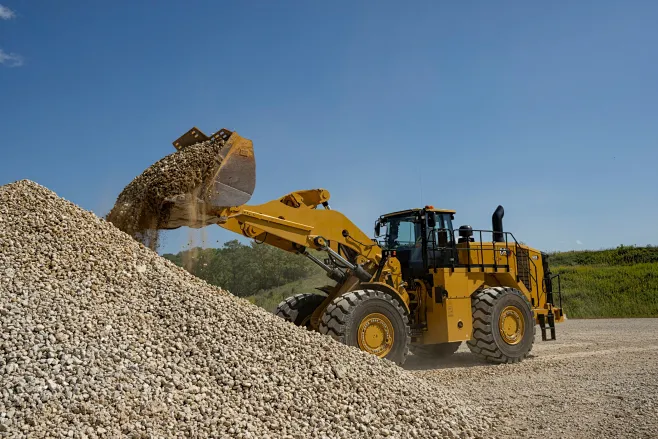
Wheel loaders — the utility player
The loader does everything on site: stone, sand, backfill, demolition debris. Its tire must handle abrasion (aggregate) and cuts (debris) simultaneously.
- Standard duty (sand, gravel, general earthmoving): L3 tread — see our wheel loader tire size guide for matching by machine class.
- Aggregate / crushing duty: L4 or L5 — the deeper tread resists the chipping described in why loader tires wear fast on gravel.
- Demolition / scrap: foam-filled or solid options if puncture frequency is unmanageable — trading ride for immunity.
For loader size comparisons between the two most common classes, our 23.5-25 vs 26.5R25 breakdown covers which fits which machine.
Dozers — sidewall is everything
Wheel dozers on construction sites push fill, spread material, and clean pads. Their signature tire problem is sidewall cuts — from windrows, buried rebar, and slab edges that appear where the blade is pushing. Dozer tires therefore favor:
- L4/L5 tread patterns for grip and wear on unimproved surfaces
- Reinforced sidewall constructions — often bias-ply, where the stiffer sidewall shrugs off sniping that would slice a radial
- Lower pressures for flotation on soft fill (set to the machine’s working pressure spec, not the max on the sidewall)
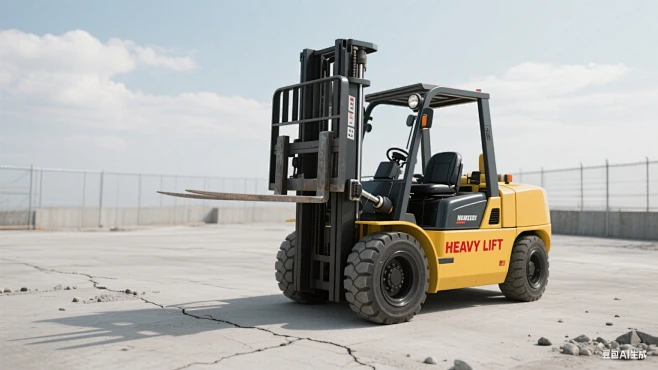
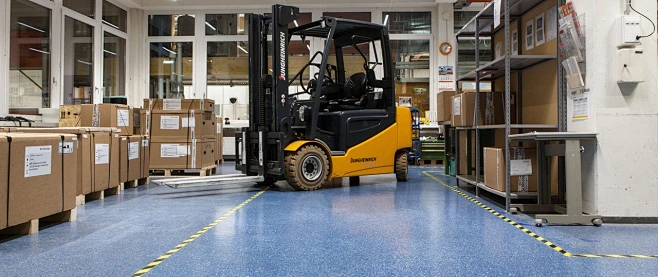
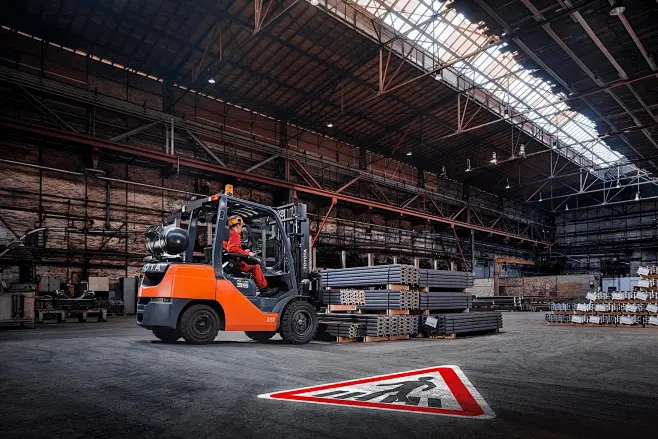
Telescopic handlers & rough-terrain forklifts — flotation and ride
Telehandlers move pallets, blocks, and personnel baskets across unfinished ground. Their tires must combine flotation (so they don’t sink in soft ground) with load-carrying capacity at full reach. Most run special tread patterns with a broad footprint; the key spec is matching the tire’s load index to the machine’s worst-case lift chart — the load on a tire at full forward reach can exceed the static rating by a wide margin.
Compactors — smooth, heat-resistant, puncture-proof
Rollers and compactors face the opposite problem from loaders: their tires run on smooth, hot surfaces (fresh asphalt) or sharp fill (rock embankments). Two distinct tire families:
- Smooth compactor tires for asphalt and soil — heat-resistant compounds to survive hot-mix contact and continuous rolling
- Rock/multi-purpose compactor tires for embankment work — with tread blocks that resist cutting from angular fill
Mixing these two is a common error: a treaded rock-compactor tire on hot asphalt leaves marks and overheats, while a smooth tire on rock fill gets destroyed in hours.
Motor graders — steering precision
Grader tires carry moderate loads but must deliver precise steering response on unimproved surfaces. They run a directional-ish tread optimized for lateral grip; graders also suffer from scuffing during tight blade work, so rotating tires front-to-rear on schedule matters more than on any other machine.
Site Debris: The Construction Tire Killer
Construction sites are unique in how much sharp, manufactured debris they contain: rebar ends, tie wire, formwork nails, cast concrete spalls, and crushed aggregate. Two defenses matter:
- Tire selection: cut-resistant compounds, reinforced sidewalls, and — for the worst stations — foam filling or solid tires
- Site hygiene: a daily magnetic-sweep pass on access roads and loading pads removes wire and nails before they become $8,000 punctures
Fleet data consistently shows debris cuts cause a larger share of construction tire failures than tread wear. A tire removed for a sidewall cut is almost never retreadable — the casing is gone. That is why the construction industry’s tire economics reward prevention, not replacement.
Construction Tire Comparison by Machine Type
| Machine | Typical sizes | Best tread | Main tire killer | Key spec to check |
| Wheel loader | 17.5-25 to 26.5R25 | L3 / L4 / L5 | Abrasion, spin | Tread depth, ply rating |
| Wheel dozer | 23.5-25 to 45/65-45 | L4 / L5 | Sidewall cuts | Sidewall construction |
| Telehandler | 15.5-25, 17.5-25 | Flotation pattern | Overload at reach | Load index at full reach |
| Asphalt compactor | 18.4-26 etc. | Smooth, heat-resistant | Heat, marking | Heat rating |
| Rock compactor | Varies | Deep rock tread | Cuts | Cut resistance |
| Motor grader | 13.00-24 to 17.5-25 | Grader pattern | Scuffing | Rotation schedule |
| Site dump truck | 20.5-25 to 26.5R25 | E3 / E4 | Cuts on haul routes | E-rating, TKPH |
Load and inflation for each size follow the standardized tables published by the U.S. Tire Manufacturers Association and the ETRTO — ask your supplier to reference them for the specific size and load you run, rather than quoting “typical” pressures.
Radial or Bias for Construction?
| Factor | Radial | Bias |
| Cut resistance | Good; thinner sidewall | Better; tougher sidewall |
| Ride and flotation | Superior | Harsher |
| Wear life on aggregate | 20–30% longer | Shorter |
| Heat at low speeds | Runs cool | Runs cooler still |
| Cost | Higher initial | Lower initial |
| Typical construction use | Loaders, graders, dump trucks on longer moves | Dozers, site dumpers, severe debris |
Radial has taken over most construction loader applications because wear life and ride outweigh the sidewall trade-off. Bias retains its niche where sidewall cuts dominate — dozers and short-travel machines working against buried debris — and where budgets favor lower first cost on low-hour machines.
FAQ
What tires do construction loaders use? Most run L3 radial tires for general earthmoving; L4/L5 for aggregate, crushing, and demolition duty. Size depends on machine class — a mid-size loader typically runs 23.5-25, larger machines 26.5R25 and up.
Why do construction tires fail more from cuts than wear? Because sites are full of manufactured debris — rebar, wire, nails, cast concrete — that mining sites don’t have. A sidewall cut ends the tire instantly and kills retread value, while tread wear is slow and predictable. Prevention (site sweeping, cut-resistant compounds) is therefore the highest-return investment.
Are compactor tires the same as loader tires? No. Asphalt compactors need smooth, heat-resistant tires; rock compactors need deep cut-resistant treads. Using a loader tire on a compactor, or a smooth compactor tire on rock fill, causes premature failure in hours.
Can I use one tire type across my whole construction fleet? You can standardize brand and supplier, but not tire type. Loader, dozer, telehandler, compactor, and grader tires are engineered for different stresses. Standardizing the wrong tire to save inventory cost will cost far more in premature failures.
How long do construction tires last? Construction tires typically last 1,500–3,500 hours depending on duty — loader tires on abrasive aggregate at the low end, graders and telehandlers at the high end. Calendar age matters less than hours and debris exposure. See how long wheel loader tires last for loader-specific figures.
Should construction tires be foam-filled? Only where punctures are chronic and speed is low — demolition, scrap, and some site-dump duties. Foam filling eliminates flats but adds weight (fuel cost), stiffens the ride, and makes the tire non-retreadable. Evaluate the puncture frequency against those costs before specifying.
Do I need different tires for winter construction work? Cold-weather sites change tire behavior: rubber hardens, grip drops, and soft ground freezes into hard, sharp-edged ruts. Special winter compounds or lower pressures for flotation may be justified on northern sites; at minimum, adjust pressure seasonally and inspect more often in thaw periods when debris shifts.
Where do I start when replacing tires across a mixed fleet? Inventory your machines by class, note each one’s actual duty (not its brochure duty), and prioritize the highest-failure machines first — usually loaders on aggregate and dozers. Then standardize supplier and spec process across the fleet. Our OTR tire supplier guide covers how to pick a partner who will manage this with you. If you want a machine-by-machine recommendation for your site, send us your fleet list and we will spec each position.
Summary
Construction sites combine many machine classes in one changing environment, and each class needs a different tire answer:
- Loaders: L3 for general duty, L4/L5 for aggregate and debris; radial preferred
- Dozers: bias with reinforced sidewalls — sidewall cuts are the #1 killer
- Telehandlers: flotation plus load index matched to full-reach charts
- Compactors: smooth/heat-resistant on asphalt, rock treads on embankments — never mixed
- Graders: rotate regularly against scuff wear
Two rules apply fleet-wide: site hygiene beats replacement (debris sweeps prevent the cuts that kill casings), and match the tire to the duty, not the rim (load and inflation per the TRA/ETRTO standards, tread depth per the surface, construction per the hazard).
Get those right and construction tires stop being a surprise line item — they become a predictable cost you can manage and even retread. The industry’s retread and casing-management economics apply on construction sites just as they do in mining, as Tyrepress documents across both sectors.
Next step: compare loader and dozer tire options in our range, or talk to our team for a duty-matched specification across your whole fleet.