If you’ve ever shopped for agricultural tires, you’ve encountered the cryptic codes stamped on the sidewall: R-1, R-1W, R-2, R-3, R-4. These aren’t arbitrary model numbers — they are industry-standard tread designations defined by the Tire and Rim Association (TRA) that tell you exactly what soil condition the tire was engineered for. Choosing the wrong code means poor traction, unnecessary soil compaction, premature wear, and wasted money.
The two most commonly confused designations are R-1 and R-1W. They look similar, they’re both used on tractors, and they’re both “agricultural traction” tires. But the difference between them — specifically the tread depth and lug angle — determines whether your tractor can pull through wet clay or gets stuck spinning in the mud.
This article explains exactly what R-1 and R-1W mean, how they differ in tread depth and design, which soil and climate conditions each is built for, and how to choose the right one for your farm.
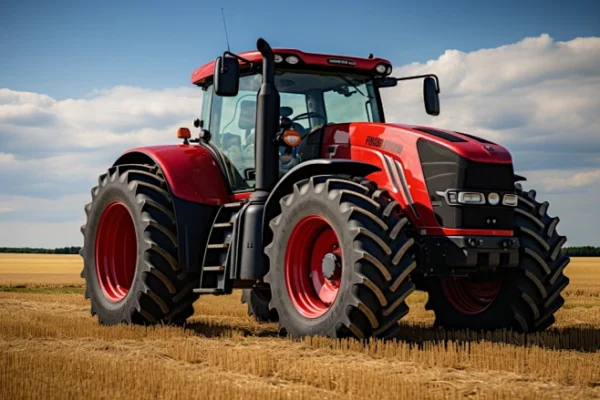
What Do R-1 and R-1W Mean?
The “R” in these designations stands for Rear (these are drive-wheel tires), and the number indicates the tread type within the agricultural tire classification system maintained by the Tire and Rim Association (TRA) and aligned with ETRTO (European Tyre and Rim Technical Organisation) standards.
| Designation | Tread Type | Primary Application |
| R-1 | Standard agricultural traction tread | General-purpose farming in normal soil conditions |
| R-1W | Wet/deep-tread agricultural traction tread | Wet, sticky, or high-clay soil conditions |
| R-2 | Cane and rice tread (deep, very open) | Flooded rice paddies, cane fields |
| R-3 | Smooth or shallow tread | Finished turf, golf courses, orchards |
| R-4 | Industrial lug tread | Industrial/loader applications on tractors |
R-1 and R-1W are the two most widely used agricultural drive tire designations. The “W” in R-1W stands for “Wet” — indicating a deeper tread designed for wet soil conditions. But the differences go beyond just tread depth.
[Link to: Agricultural Tire Product Page]
R-1 vs R-1W: Side-by-Side Comparison
| Specification | R-1 (Standard) | R-1W (Wet) |
| Tread depth | Baseline (100%) | 20–30% deeper than R-1 |
| Lug angle | Typically 23° from tire centerline | Typically 45° from tire centerline |
| Lug spacing | Moderate | Wider spacing for better mud clearing |
| Number of lugs | More lugs (denser pattern) | Fewer lugs (more open pattern) |
| Self-cleaning | Good in normal soil | Excellent in wet/sticky soil |
| Traction in dry soil | Excellent | Good (slightly less contact area) |
| Traction in wet/clay soil | Poor — lugs fill with mud | Excellent — lugs bite through and clear mud |
| Ride comfort on road | Better (denser tread, smoother) | Firmer (deeper lugs, more vibration) |
| Road wear | Slower tread wear on pavement | Faster tread wear on pavement (deeper lugs flex more) |
| Soil compaction | Moderate | Slightly higher (heavier tire, deeper penetration) |
| Typical cost | Baseline | +5–15% over R-1 |
| Common regions | Temperate climates, well-drained soils | Tropical, high-rainfall, heavy-clay regions |
The 4 Key Differences Explained
Difference 1: Tread Depth
This is the most visible and measurable difference. R-1W tires have 20–30% deeper lugs than equivalent R-1 tires of the same size.
| Tire Size | R-1 Tread Depth (approx.) | R-1W Tread Depth (approx.) | Difference |
| 13.6R28 | 32 mm | 42 mm | +31% |
| 14.9R28 | 35 mm | 46 mm | +31% |
| 18.4R34 | 41 mm | 53 mm | +29% |
| 18.4R38 | 43 mm | 56 mm | +30% |
| 480/70R34 | 38 mm | 49 mm | +29% |
| 710/70R38 | 48 mm | 62 mm | +29% |
Note: Actual tread depths vary by manufacturer. Always check the manufacturer’s specification sheet for exact values.
Why tread depth matters: Deeper lugs penetrate further into the soil, reaching firmer, drier layers beneath wet surface mud. This is why R-1W tires provide dramatically better traction in wet conditions — the lugs can “bite” through the slippery top layer.
Difference 2: Lug Angle
The angle at which lugs are molded relative to the tire’s centerline affects how the tire grips and cleans itself:
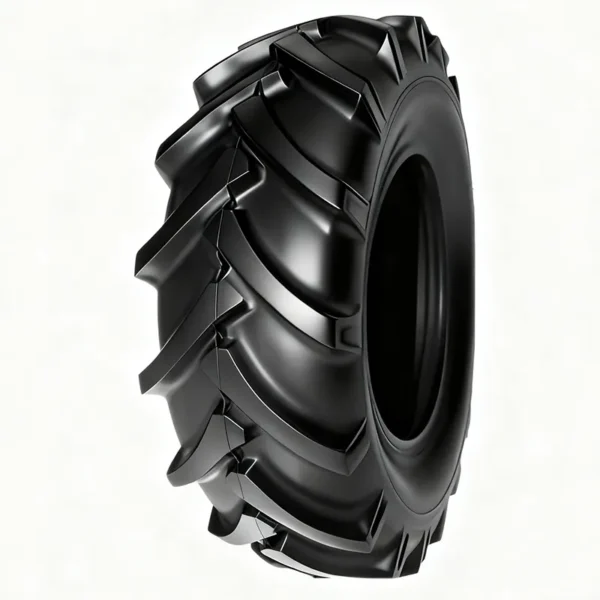
- R-1 (23° angle): The shallower angle creates a longer, more gradual lug path across the tire face. This provides a larger contact area on firm soil, resulting in excellent traction on dry ground and a smoother ride on hard surfaces. However, the shallow angle traps mud between lugs, reducing traction in wet conditions.
- R-1W (45° angle): The steeper angle creates a more aggressive, open lug pattern. Mud and debris are expelled more efficiently as the tire rotates — the lugs act like paddles that push wet soil outward. The trade-off is slightly less contact area on dry, hard soil and a bumpier ride on paved roads.
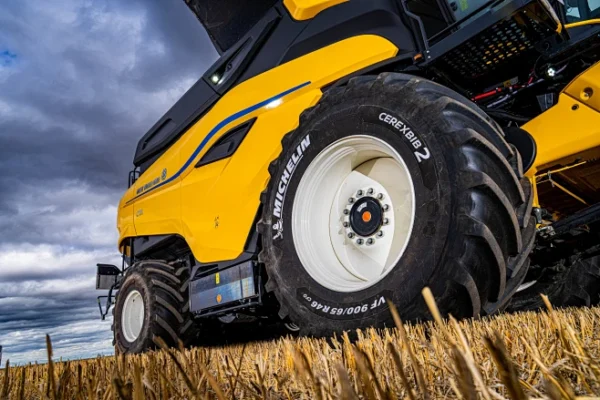
Difference 3: Lug Count and Spacing
| Factor | R-1 | R-1W |
| Lug count (typical 18.4R38) | 20–23 lugs | 16–18 lugs |
| Spacing between lugs | Narrower | Wider |
| Effect | Denser tread = smoother ride, better dry traction | Open tread = better mud clearance, better wet traction |
Difference 4: Compound and Carcass Design
R-1W tires are often built with slightly modified rubber compounds to handle the additional stress of deeper lugs flexing under load. The compound may be tuned for:
- Higher tear resistance — deeper lugs are more susceptible to chunking and tearing in rocky conditions
- Better heat dissipation — deeper lugs generate more internal heat during road transport
- Enhanced stubble resistance — the deeper tread is more exposed to corn stalk and wheat stubble cutting
When to Choose R-1 Tires
R-1 is the default choice for general-purpose agriculture in temperate climates. Choose R-1 when:
1. Your Soil Drains Well
If your fields have loam, sandy loam, or well-structured soils that drain and dry quickly after rain, R-1 tread provides excellent traction without the need for deeper lugs. The denser tread pattern maximizes ground contact and pulling power.
2. Your Climate Has Moderate Rainfall
In temperate climates with predictable rainfall patterns and distinct dry planting/harvest windows, R-1 tires perform well throughout the season. If you rarely work fields when they’re saturated, the extra tread depth of R-1W is unnecessary.
3. You Do Significant Road Travel
If your tractor travels on paved or gravel roads between fields, R-1 tires wear more slowly and provide a smoother, quieter ride. The denser, shallower tread pattern distributes road contact across more lugs, reducing individual lug stress and heat buildup.
4. You Operate on Varied Terrain Including Hillsides
R-1 tires with their 23° lug angle provide excellent lateral stability on slopes. The longer lug path across the tire face gives better side-hill grip than the more open R-1W pattern.
5. You Want Lower Upfront Cost
R-1 tires are typically 5–15% less expensive than R-1W equivalents. If your conditions don’t require the extra tread depth, there’s no reason to pay for it.
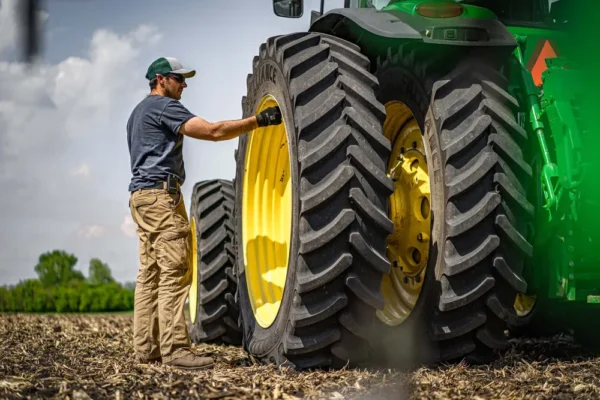
When to Choose R-1W Tires
R-1W is the specialist choice for wet, heavy, or high-clay conditions. Choose R-1W when:
1. Your Soil Is Heavy Clay or Gumbo
Heavy clay soils — especially the sticky, plastic clays found in river deltas, former wetlands, and tropical regions — become treacherously slippery when wet. R-1 lugs fill with mud and lose all grip. R-1W’s deeper, more open lugs bite through the wet surface layer and clear mud as they rotate, maintaining traction where R-1 tires would simply spin.
2. Your Climate Has High or Frequent Rainfall
In tropical and subtropical regions where rainfall occurs year-round or where wet seasons are prolonged, the planting and harvesting windows often coincide with saturated soil conditions. R-1W tires allow field work during periods when R-1 tires would leave the tractor stuck.
3. You Farm in Rice or Sugarcane Rotation
While dedicated R-2 tires are used for flooded rice paddies, many farms that rotate between rice and dryland crops use R-1W as a versatile compromise — deep enough for wet rice field margins, but not as extreme as the full R-2 cane-and-rice tread.
4. You Need to Work Fields Sooner After Rain
R-1W tires can enter wet fields days earlier than R-1 tires. In farming operations where timing is critical — planting before a rain window closes, harvesting before the next storm — this capability can be the difference between a successful crop and a lost one.
5. You Operate High-Horsepower Tractors on Soft Ground
Modern high-horsepower tractors (200+ HP) transmit enormous torque to the drive wheels. On soft or wet soil, this torque causes R-1 lugs to slip and spin, wasting fuel and causing rutting. R-1W’s deeper bite converts more of that torque into forward motion.
[Link to: Agricultural Tire Industry Application Page]
Regional Recommendations: Which Tire for Which Climate?
| Region / Climate | Soil Type | Recommended Tread | Rationale |
| US Midwest (Corn Belt) | Loam, silt loam, well-drained | R-1 | Moderate rainfall; well-structured soils; R-1 sufficient for most operations |
| US Mississippi Delta | Heavy alluvial clay | R-1W | Sticky clay soils; frequent wet conditions during planting/harvest |
| Brazil Cerrado | Red latosol, generally well-drained | R-1 | Well-structured tropical soils; R-1 standard for most operations |
| Brazil South (Rio Grande do Sul) | Clay loam, high rainfall | R-1W | Frequent wet conditions; heavy soil; R-1W for traction in wet windows |
| Argentina Pampas | Loam, sandy loam | R-1 | Well-drained temperate soils; R-1 standard |
| Northern Europe (UK, Germany) | Loam, clay loam, moderate rainfall | R-1 | Temperate climate; R-1 standard; R-1W for heavy clay areas |
| Southeast Asia (Thailand, Vietnam) | Clay, flooded rice rotation | R-1W or R-2 | Tropical rainfall; heavy clay; wet field operations common |
| Australia (Queensland) | Heavy clay (vertisols) | R-1W | Cracking clay soils; wet season operations require deep tread |
| Australia (Wheat Belt) | Sandy loam, well-drained | R-1 | Dry climate; R-1 sufficient |
| South Africa | Varied; clay in KwaZulu-Natal | R-1 (most areas); R-1W (KZN) | Climate varies; choose based on local soil and rainfall |
R-1 vs R-1W: Impact on Soil Compaction
A common concern is whether deeper-tread R-1W tires cause more soil compaction. The answer is nuanced:
| Factor | R-1 | R-1W | Impact on Compaction |
| Tire weight | Baseline | Slightly heavier (more rubber) | R-1W marginally higher |
| Lug penetration | Shallower | Deeper (20–30% more) | R-1W penetrates deeper into topsoil |
| Contact pressure | Spread across more lugs | Concentrated on fewer, deeper lugs | R-1W higher local pressure |
| Inflation pressure (at same load) | Baseline | Comparable (if same size + IF/VF) | No difference if size and pressure are matched |
| Flotation (with IF/VF technology) | Good | Comparable | No significant difference when using IF/VF at matched pressure |
Key insight: The biggest factor in soil compaction is inflation pressure, not tread depth. If you run R-1W tires at the same inflation pressure as R-1 tires (using IF/VF technology to allow lower pressures), compaction differences are negligible. The compaction concern with R-1W arises only when operators run higher pressures because of the heavier tire — which is unnecessary if the tire is properly matched to the load.
Can You Mix R-1 and R-1W Tires on the Same Tractor?
It is not recommended. Mixing R-1 and R-1W tires on the same axle creates several problems:
- Uneven rolling circumference — R-1W tires have a slightly larger loaded diameter due to deeper lugs. This causes the tires to rotate at different speeds, creating drivetrain stress and accelerated differential wear.
- Inconsistent traction — One side of the tractor grips differently from the other, causing pulling to one side and uneven field performance.
- Uneven wear — The tires wear at different rates, shortening the life of both.
If you must transition between R-1 and R-1W, replace all four tires (or at least both tires on each axle) at the same time with the same designation.
Front Tire Considerations
On front-wheel-assist (FWA / MFWD) tractors, front tire tread must be matched to the rear tire designation:
- If rear tires are R-1 → front tires should be F-1 (single rib) or F-2 (triple rib) matched to R-1
- If rear tires are R-1W → front tires should be F-2M (modified triple rib) or the R-1W-compatible front designation
Using mismatched front and rear tread designations can cause front axle lead/lag issues, where the front wheels turn faster or slower than the rear wheels, stressing the front-drive system.
FAQ: R-1 vs R-1W Agricultural Tires
Q1: Can I use R-1W tires in dry conditions?
Yes. R-1W tires work in all conditions that R-1 tires handle, but they are specifically optimized for wet soil. In dry conditions, R-1W tires may provide slightly less traction than R-1 (due to fewer, more widely spaced lugs reducing contact area) and wear faster on hard surfaces. However, they will not perform poorly — they simply don’t offer their full advantage in dry soil.
Q2: Are R-1W tires worth the extra cost?
If your farm has heavy clay soil, high rainfall, or you frequently need to work fields in wet conditions, R-1W tires are absolutely worth the 5–15% premium. The ability to enter fields sooner after rain can save an entire planting or harvest window. If your soil drains well and you rarely work wet ground, R-1 is the more economical choice.
Q3: How much deeper are R-1W tires compared to R-1?
R-1W tires typically have 20–30% deeper tread lugs than R-1 tires of the same size. For example, an 18.4R38 R-1 tire might have 43 mm of tread depth, while the R-1W equivalent has 56 mm. The exact difference varies by manufacturer and tire size.
Q4: Do R-1W tires cause more soil compaction?
Not significantly, if properly inflated. The biggest factor in soil compaction is inflation pressure, not tread depth. If you use IF or VF technology to run R-1W tires at lower pressures (as you would with R-1 tires), compaction is comparable. R-1W tires are slightly heavier and penetrate deeper into topsoil, but the practical compaction difference is minimal in most field conditions.
Q5: Can I switch from R-1 to R-1W when I replace my tires?
Yes, as long as you replace all tires on each axle with the same designation. The tire size (e.g., 18.4R38) remains the same between R-1 and R-1W — only the tread pattern changes. Ensure your front tires are also matched to the new rear designation on FWA tractors.
Q6: Which is better for road travel — R-1 or R-1W?
R-1 is better for road travel. The denser, shallower tread pattern provides a smoother, quieter ride on pavement and wears more slowly. R-1W tires with their deeper, more open lugs generate more vibration, noise, and heat during extended road travel. If your tractor spends significant time on roads, R-1 is the preferred choice.
Q7: What about radial vs bias construction — does it affect the R-1 vs R-1W choice?
No. R-1 and R-1W designations apply to the tread pattern only, regardless of construction type. You can find both R-1 and R-1W tires in radial and bias constructions. Radial construction is generally recommended for modern tractors (better traction, lower compaction, longer life), but the tread designation choice is independent of construction type.
Q8: Where can I buy R-1 and R-1W agricultural tires?
Kebek Tire manufactures a full range of agricultural tires in both R-1 and R-1W tread patterns, in sizes from 13.6R28 through 710/70R38, available in both bias and radial constructions including IF and VF variants. [Reach out for a consultation] and our agricultural tire specialists will help you select the right tread pattern, size, and construction for your soil, climate, and equipment.
Conclusion: Match the Tire to Your Dirt
The difference between R-1 and R-1W comes down to one question: How wet is your soil when you need to work it?
| Your Situation | Recommended Choice |
| Well-drained soil, moderate rainfall, temperate climate | R-1 |
| Heavy clay, high rainfall, tropical/subtropical climate | R-1W |
| Significant road travel between fields | R-1 (smoother, longer-lasting on road) |
| Need to enter fields soon after rain | R-1W (deeper bite, better mud clearance) |
| Budget-conscious, conditions don’t require deep tread | R-1 (5–15% less expensive) |
| High-horsepower tractor on soft ground | R-1W (converts torque to traction) |
| Rice/sugarcane rotation with wet field margins | R-1W (versatile compromise) |
Summary of the key differences:
- Tread depth: R-1W is 20–30% deeper — bites through wet surface layers.
- Lug angle: R-1 is 23° (denser, smoother); R-1W is 45° (more open, self-cleaning).
- Mud clearance: R-1W clears mud far better; R-1 fills and loses grip in wet soil.
- Road wear: R-1 wears slower and rides smoother on pavement.
- Cost: R-1W costs 5–15% more but is essential for wet-clay conditions.
If you’re unsure which tread pattern is right for your farm’s soil and climate, [reach out for a consultation]. Our agricultural tire team will help you evaluate your soil type, rainfall patterns, and equipment to recommend the optimal tire — and provide a size-by-size comparison across R-1 and R-1W options.
[External Link to: Kebek Tire Made-in-China Store — https://chinakebektire.en.china.cn — Browse our complete agricultural tire catalog including R-1, R-1W, IF, and VF tires] [External Link to: Kebek Tire Alibaba Store — https://chinese.alibaba.com/product-detail/massey-ferguson-tractor-tires-radial-tractor_60814410642.html — Explore agricultural tractor tires on Alibaba.com]