
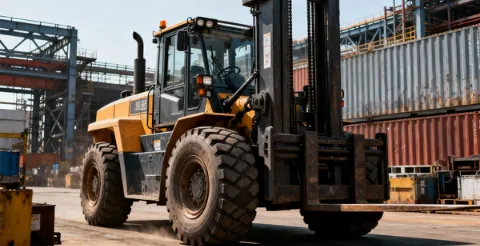
Solid tires are not just another tire option – they are a smart solution for operations where stopping work is simply not acceptable. In many industrial sites, one flat tire can stop machines, delay schedules, and quietly burn money. For companies that run ports, recycling yards, warehouses, or construction sites, downtime is not just annoying – it is expensive.
This is why more operators are moving away from air-filled tires and choosing puncture proof tires designed for nonstop performance. Let’s take a closer look at why downtime hurts so much, what usually causes tire failure, and how industrial solid tires help keep machines moving.
Why Downtime Is So Costly in Industrial Operations
Downtime is more than a machine standing still. When equipment stops, people stop too. Operators wait, trucks line up, and schedules fall behind. In high-traffic industrial sites, even 30 minutes of downtime can cause a chain reaction.
Costs show up in many ways:
- Lost working hours
- Emergency maintenance expenses
- Delayed loading or production
- Customer complaints and contract penalties
For equipment rental companies, downtime is even worse. A machine with a flat tire cannot be rented, which means lost daily revenue. That’s why many fleets now look for zero downtime tires instead of focusing only on the purchase price.
Common Causes of Tire Failure in Industrial Sites
Industrial environments are not friendly to tires – especially pneumatic ones. Sharp objects, heavy loads, and long working hours all push tires to their limits.
The most common causes include:
- Scrap metal, glass, nails, and steel wires
- Uneven or broken ground surfaces
- Overloading and sidewall stress
- Heat buildup during multi-shift use
In places like scrap yards or ports, punctures are not a “maybe.” They are a “when.” Even the best air-filled tire cannot survive long in these conditions. This is where heavy duty solid tires clearly show their value.
How Solid Tires Eliminate Unplanned Stops
Solid tires are made without air. That simple difference changes everything.
Because there is no air inside:
- Punctures are impossible
- Blowouts do not happen
- Air pressure checks are no longer needed
This means machines can work through debris-filled areas without fear. Operators do not need to stop and inspect tires every day. Maintenance teams can focus on planned service instead of emergency repairs.
Modern industrial solid tires are also designed with improved rubber compounds. They offer better shock absorption and traction than older solid tire designs. So while they are tough, they are not “rock hard” anymore.
In short, solid tires turn unexpected downtime into predictable operations.
Applications That Benefit Most from Solid Tires
Scrap, port, and construction environments
These are the toughest places for any tire. Scrap yards are full of sharp metal. Ports handle extreme loads and constant movement. Construction sites change surface conditions every day.
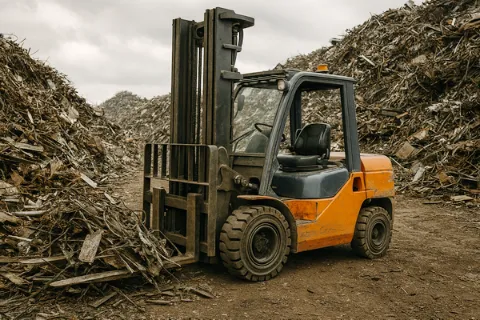
In these environments, puncture proof tires are not a luxury – they are protection against daily damage. Many operators switch to solid tires after realizing how much time and money they lose fixing flats.
Multi-shift and high-load operations
If your machines run two or three shifts per day, tire heat and fatigue become serious issues. Air-filled tires can overheat or fail faster under constant load.
Solid tires are built for this kind of work. They maintain their shape and performance even under heavy loads and long hours. For warehouses, factories, and logistics centers, this stability brings peace of mind – and smoother planning.
Maintenance cost comparison
At first glance, solid tires may look more expensive than pneumatic tires. But the real comparison is about total cost, not just the invoice.
With solid tires, you save on:
- Flat tire repairs
- Emergency service calls
- Downtime-related losses
- Spare tire inventory
Over time, many operators find that zero downtime tires cost less per working hour. For fleet managers and rental companies, that math is easy to understand.
Making the Switch: Is It Right for You?
Solid tires are not for every situation. If machines work on soft ground or need maximum ride comfort, air-filled tires may still be the better choice.
But if your operation values:
- Reliability over comfort
- Predictable costs over surprise repairs
- Productivity over short-term savings
Then solid tires are worth serious consideration.
Many companies start by switching only their highest-risk machines. Once they see the difference, the rest of the fleet often follows.
Conclusion: Keep Moving, No Matter What
In industrial operations, time is money – and downtime quietly steals both. Solid tires offer a practical answer for environments where flats are common and stopping is not an option.
By choosing puncture proof tires, operators reduce stress, improve safety, and keep equipment running as planned. Whether you manage a port, a scrap yard, or a rental fleet, the right tire choice can make your whole operation smoother.
If you’d like to explore this topic further, check out our related article:
→ Why Solid Tires Are the Smart Choice for Tough Industrial and Construction Environments