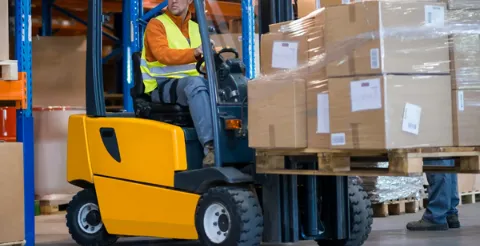
Solid tires are built for one simple mission: carry heavy loads again and again without losing shape, strength, or stability. In warehouses, ports, recycling yards, and factories, equipment does not rest much. Forklifts lift, stop, turn, reverse, and lift again. This repetitive duty cycle creates a very different kind of stress compared to normal road use.
Unlike pneumatic options, solid tires do not rely on air. That means no punctures, no pressure checks, and no sudden flats during a busy shift. But their real advantage goes beyond that. Their structure is designed to handle continuous compression, high torque, and long operating hours without failure.
Why Heavy Loads and Repetitive Cycles Matter
Continuous Load Pressure in Industrial Work
Solid tires in many industrial settings operate close to maximum load rating. A forklift carrying heavy pallets applies strong vertical pressure to a small contact patch. When the machine moves, that static load becomes dynamic. Each start and stop increases internal stress.
Start-Stop Stress and Heat Accumulation
Frequent acceleration and braking add torque forces. Sharp turns in tight aisles create side pressure on the tire. Over time, these combined forces generate heat. If a tire cannot manage that heat, wear speeds up and structural fatigue begins.
Multi-Shift Operations With Limited Cooling
In some facilities, equipment runs 16 to 24 hours per day. There is very little cooling time between operations. Tires must maintain consistent performance even when internal temperatures rise.
This is where proper design becomes critical.
Structural Engineering That Supports High Loads
Multi-Layer Construction for Load Stability
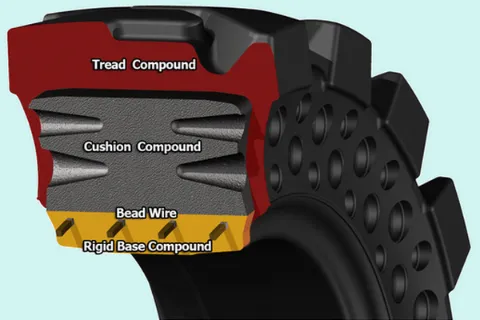
Most heavy load industrial tires use a multi-layer construction. The outer tread layer is wear resistant. It handles abrasion from concrete floors and rough surfaces. Beneath that, a softer cushion layer absorbs shock and reduces vibration. At the base, a reinforced compound supports the rim and keeps the tire stable under high torque.
This layered approach spreads stress more evenly across the tire body. It reduces deformation during lifting and improves heat control during repetitive cycles.
High-Density Structure for Improved Balance
Material density also plays a key role. Higher-density structures enhance stability and reduce sway during load lifting. If you want a deeper technical explanation on how structure improves balance and control, you can explore our related article, Improving Equipment Stability with High-Density Solid Tire Structures. It explains how compound density and internal design directly affect machine stability.
Reinforced Bead Design Under Torque
Reinforced bead areas ensure strong bonding between tire and rim. This prevents slipping under heavy torque, especially during sudden directional changes.
Real-World Performance in Demanding Environments
Puncture-Free Operation in Harsh Sites
In scrap yards and recycling plants, sharp debris can easily damage air-filled tires. Solid tires eliminate that risk. There is no air chamber to puncture, which greatly reduces unexpected downtime.
Stability and Safety at Maximum Capacity
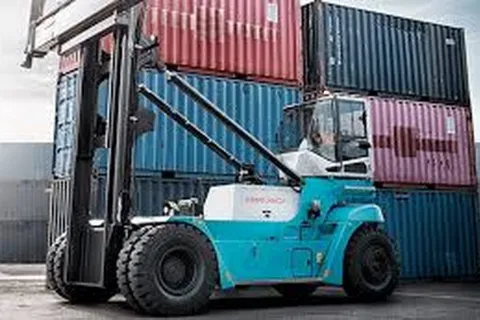
In port operations, container handlers lift extreme weights at height. Stability becomes a safety factor, not just a performance feature. A properly selected solid tire maintains shape under load and minimizes sidewall flex. This improves balance and supports operator confidence.
Predictable Wear Across Continuous Shifts
Indoor warehouses also benefit. Frequent pivot steering creates high friction on smooth floors. Durable tread compounds resist chunking and tearing. Non-marking versions protect floor surfaces while still providing grip.
Across all these environments, one advantage stands out: predictability. Solid tires wear gradually and consistently. There are no sudden pressure losses. Maintenance teams can plan replacement schedules instead of reacting to emergencies.
Matching Tire Design to Work Cycles
Application-Specific Compound Selection
Not all duty cycles are equal. Light warehouse use may prioritize ride comfort and floor protection. Heavy port equipment requires higher load capacity and stronger base compounds. Outdoor construction environments demand enhanced cut and abrasion resistance.
Balancing Hardness and Comfort
Choosing the correct hardness level is important. Softer compounds improve comfort but may wear faster under extreme loads. Harder compounds increase durability but may transfer more vibration. The right balance depends on equipment weight, shift duration, and operating surface.
Monitoring Wear for Timely Replacement
Monitoring wear indicators helps determine replacement timing. Replacing tires before they reach critical wear ensures stable performance during peak production periods.
Managing Cost Through Lifecycle Planning
Evaluating Cost Per Operating Hour
Initial purchase price is only part of the equation. Cost per operating hour provides a clearer picture. Solid tires often last longer in high-duty environments because they avoid air-related failures and reduce service interruptions.
Reducing Downtime in Multi-Shift Facilities
Less downtime means higher productivity. Predictable wear patterns allow better budget planning. For multi-shift facilities, reliability is often more valuable than marginal upfront savings.
Preventive Maintenance for Extended Service Life
Regular visual inspections, rotation where applicable, and correct load matching all extend service life. When managed properly, solid tires become a stable and cost-effective solution for repetitive industrial work.
Conclusion
Solid tires are engineered for environments where heavy loads and repetitive duty cycles are part of daily life. Through multi-layer construction, reinforced structure, and durable compounds, they handle continuous compression, torque stress, and long working hours without compromise.
By selecting the right design for the specific application and planning lifecycle management carefully, industrial operators can reduce downtime, improve safety, and maintain stable performance shift after shift. In demanding operations where equipment cannot afford to stop, solid tires provide the steady foundation that keeps everything moving.