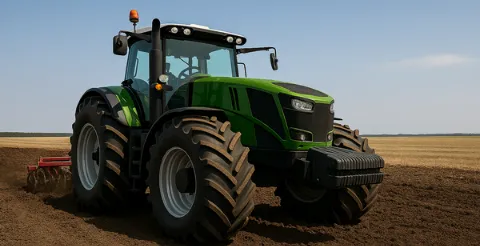
Agricultural tires play a much bigger role in modern farming than many people think. Sure, they look like big black circles of rubber, but on today’s high-horsepower tractors, they are more like the “shoes” that decide how well the whole machine performs. If the shoes are wrong, the tractor slips, wastes fuel, and makes the operator feel like the day will never end. If the shoes are right, the tractor works smoothly, pulls harder, and helps the farm finish jobs on time.
The Rise of High-Horsepower Agricultural Equipment
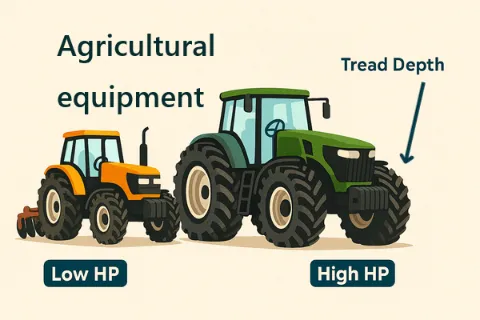
Over the past decade, tractors have become stronger and smarter. Many farms now use machines with 250 to 600 horsepower. These tractors can pull wider tools, work faster, and cover more land in a shorter time. But all that power needs the right tires to keep it under control.
Think of it this way: a strong worker wearing slippers will not get much done. A strong worker wearing good boots will finish the job before lunch. High-horsepower tractors need the same kind of support.
Bigger engines mean more weight, more pulling force, and more pressure on the ground. That is why modern tractor tires must handle heavy loads, long working hours, and higher travel speeds on the road. Without the right tires, even the best tractor cannot show its full power.
Load Capacity and Speed Requirements
One of the biggest challenges for high-horsepower tractors is carrying heavy tools. Many farms use front loaders, deep tillage tools, seeders, and other equipment that add a lot of weight. This means the tires must support both the tractor and the tools without overheating or wearing out too fast.
Modern tractors also move faster than older models. Many can travel at 40 to 50 km/h on the road. At these speeds, the tires must stay cool and stable. If the tire is too weak or the load is too heavy, the tire can wear unevenly or lose grip.
Axle Load Considerations – H3
A common problem is uneven weight on the front and rear axles. When the front axle carries too much weight, the front tires wear out quickly. When the rear axle carries too much weight, the tractor may lose steering control. Good tire choice and correct air pressure help balance the load and keep the tractor safe.
Some modern tires use IF and VF technology. These designs allow the tire to carry more weight at the same air pressure or carry the same weight at lower pressure. Lower pressure means a bigger footprint, better grip, and less soil damage. It is a simple idea that makes a big difference in the field.
Tire Construction for Modern Tractors
There are two main types of farm tires: bias and radial. Bias tires are older and cheaper, but they are not the best choice for high-horsepower tractors. Radial farm tires are stronger, cooler, and last longer. They also give a smoother ride, which every tractor operator will appreciate after a long day.
Radial tires spread the weight more evenly across the ground. This helps reduce soil compaction, which is a big problem for crop growth. A tractor with the wrong tires can squeeze the soil so tightly that roots cannot grow well. A tractor with the right tires protects the soil and helps the farm get better yields.
IF / VF Technology Overview
IF (Increased Flexion) and VF (Very High Flexion) tires are like the “premium version” of radial tires. They bend more without damage, which helps them carry heavier loads. IF tires can carry about 20% more weight, and VF tires can carry about 40% more weight at the same pressure. For high-horsepower tractors, this is a big advantage.
These tires also help reduce soil compaction because they can run at lower pressure. A bigger footprint means the tractor “floats” better on soft ground instead of sinking in.
Prompt
Avoiding Mismatch Between Tire and Machine
Even the best tractor will struggle if the tires are not matched correctly. Here are some common mistakes:
- Using tires with low load ratings
- Running the wrong air pressure
- Choosing the wrong size for the tools being used
- Mixing old and new tires on the same axle
When the tire does not match the machine, the tractor may slip, burn more fuel, or wear out the tires too fast. In some cases, the tractor may even damage the soil more than necessary.
Choosing the right tire is not difficult, but it does require checking the load charts, understanding the work conditions, and making sure the tire fits the tractor’s power level. A high‑horsepower tractor with weak tires is like a sports car with bicycle wheels—funny to imagine, but not fun to use.
For more ideas on how the right tires protect your soil, you can read our article: How Agricultural Tires Help Reduce Soil Compaction and Crop Damage.
Conclusion
Choosing the right tires helps your tractor work harder, last longer, and protect your soil. With proper load planning and the right radial designs, even high‑horsepower machines stay efficient, stable, and ready for long days in the field.