
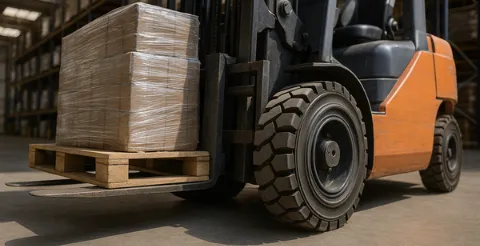
Solid tire design plays a much bigger role in equipment stability than many operators realize, especially when machines are working under heavy loads or in high-risk industrial environments. From forklifts in busy warehouses to industrial equipment operating on rough floors, stability is not just about the machine – it starts from the ground up, with the tire structure itself.
hen stability improves, everything else improves with it: safety, operator confidence, productivity, and even maintenance costs. That is why high-density solid tires have become a preferred choice in many demanding applications.
Why Equipment Stability Matters in Industrial Operations
In industrial settings, equipment stability is not a “nice to have.” It is a basic safety requirement. Forklifts lift heavy loads at height. Loaders move uneven materials. Industrial vehicles often turn sharply in narrow spaces.
If stability is compromised, the risks increase fast:
- Load sway during lifting
- Reduced control during turning
- Higher chance of tipping or imbalance
Many accidents are not caused by operator error alone. They happen because the equipment behaves unpredictably under load. Tires are a major reason for that unpredictability, especially when they deform too much or lose shape under pressure.
What Makes High-Density Solid Tires Different
Material Composition and Density Design
High-density solid tires are built with a much higher rubber density than standard solid or pneumatic options. This denser structure limits deformation when the tire is under load.
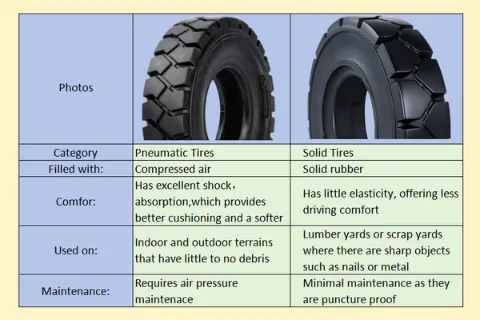
Unlike air-filled tires, solid tires do not rely on internal pressure to hold their shape. There is no air loss, no pressure imbalance, and no gradual softening over time. What the operator feels on day one is very close to what they feel months later.
This consistency is one of the key reasons solid tires stability is easier to control and predict.
Consistent Shape Under Heavy Load
When a forklift lifts a full load, the tire must support both weight and movement. Pneumatic tires can compress unevenly, especially if pressure is not perfectly matched.
High-density solid tires keep their shape. This means:
- More stable contact with the ground
- Less side-to-side movement
- Better balance during lifting and lowering
For load bearing solid tires, shape consistency is not just a feature – it is the foundation of safe operation.
How Solid Tire Structures Improve Equipment Stability
Lower Center of Gravity Effect
Solid tires typically sit lower than air-filled tires under the same load. Because they do not compress as much, the equipment maintains a more stable center of gravity.
This matters most when loads are raised. Even small reductions in vertical movement can make a noticeable difference in how stable the machine feels to the operator.
Reduced Sidewall Deflection During Turning
Turning is one of the most unstable moments for industrial equipment. Sidewall flex in softer tires can cause delayed response and sudden shifts.
High-density solid tires provide strong lateral support. During turns, the tire responds immediately, helping the equipment stay balanced and predictable. This is why forklift stability tires are often specified as solid in busy or high-risk facilities.
Safety and Operational Benefits Beyond Stability
Predictable Handling Builds Operator Confidence
When tires behave consistently, operators trust their machines more. Predictable handling reduces hesitation and sudden corrections, which are common causes of workplace incidents.
Operators can focus on the job instead of compensating for unstable equipment. Over time, this improves both safety records and productivity.
Reduced Maintenance-Related Stability Risks
Pneumatic tires require constant attention. Pressure changes, slow leaks, and uneven inflation all affect stability.
Solid tires eliminate these variables completely. There is no air pressure to check and no gradual performance loss caused by underinflation. This makes equipment balance tires easier to manage across large fleets.
Typical Applications for High-Density Solid Tires
Forklifts in Warehouses and Logistics Centers
Warehouses demand:
- Frequent turning
- Repeated lifting
- Continuous operation
In these conditions, stability is more important than ride comfort. Solid tires are widely used because they support consistent performance throughout long shifts.
Industrial Equipment in Harsh Environments
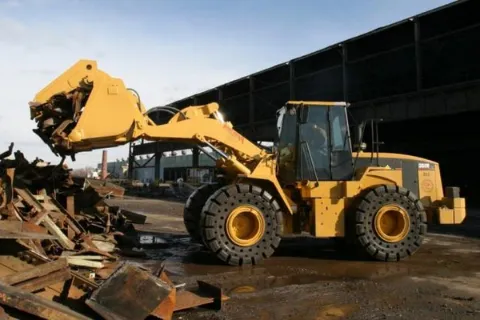
Factories, ports, recycling plants, and steel yards are tough on tires. Sharp debris, heavy loads, and uneven surfaces are common.
In these environments, stability and puncture resistance go hand in hand. Solid tires provide both, reducing downtime while keeping equipment steady and safe.
Choosing the Right Solid Tire Structure for Stability
Not all solid tires are the same. Density levels, internal structure, and rubber formulation all affect performance.
When selecting a solid tire, buyers should consider:
- Maximum load weight
- Lifting height
- Operating speed
- Floor condition
Choosing the wrong density can reduce comfort or increase wear. Choosing the right one delivers long-term stability and lower operating risk.
Solid Tires and Puncture-Free Stability
One major advantage of solid tires is that stability does not disappear when conditions get harsh. There is no puncture risk, no sudden air loss, and no emergency tire changes.
For a deeper look at how this improves safety and uptime, see our related article:
How Solid Tires Eliminate Puncture Risks in Demanding Work Environments
Conclusion: Stability Starts from the Ground Up
Equipment stability is not controlled by a single component, but tires are where stability begins. High-density solid tires provide consistent shape, predictable handling, and reliable support under heavy loads.
For operators, this means safer workdays. For fleet managers and buyers, it means fewer incidents, less downtime, and better long-term value. When stability matters, choosing the right solid tire structure makes all the difference.