
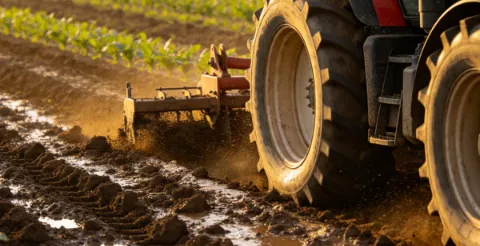
Farm tire selection is one of the most important factors when it comes to maintaining traction in wet field conditions, yet it is often overlooked in daily farm operations. When fields are muddy, soft, or water-logged, even powerful tractors can struggle if the tires are not designed for the job. The right tire choice can mean smoother workdays, lower fuel use, and healthier soil for the next season.
Wet fields are not just inconvenient. They test the limits of traction, stability, and efficiency. Understanding how farm tires work in these conditions helps farmers and equipment buyers make smarter decisions – and avoid costly mistakes.
Why Wet Fields Are a Traction Challenge
Wet soil behaves very differently from dry ground. When moisture levels rise, the soil loses strength and becomes easier to deform. Instead of pushing the tractor forward, the ground starts to move under the tire.
This leads to three common problems:
- Excessive wheel slip
- Reduced pulling power
- Higher fuel consumption
Many operators assume the solution is more horsepower. In reality, traction loss in wet fields is usually a tire problem, not an engine problem. If the tire cannot grip the soil properly, extra power only makes the wheels spin faster.
Wet conditions also increase the risk of soil damage. Repeated slipping compacts the soil, limits air flow to plant roots, and can reduce yields long after the season ends.
Tread Design and Self-Cleaning Performance
Lug Angle and Depth
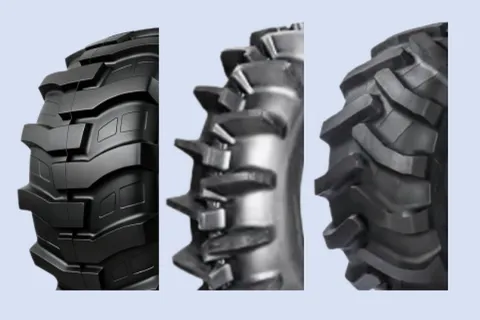
The tread pattern is the heart of any farm tire. In wet conditions, lug angle and lug depth play a major role in how effectively a tire transfers power to the ground.
Deeper lugs help the tire bite into soft soil instead of sliding across the surface. A well-designed lug angle pushes soil backward efficiently, creating forward motion without digging too aggressively.
However, more depth is not always better. Extremely deep lugs can increase rolling resistance and fuel use if they are not matched to the tractor size and field conditions. The goal is balance: enough depth to grip wet soil, but not so much that energy is wasted.
Self-Cleaning Tread Blocks
Mud buildup is the enemy of traction. When soil packs between tread blocks, even the best pattern becomes smooth and useless.
This is why self-cleaning design matters so much for wet field tires. Wide spacing between lugs allows mud to release as the tire rotates. Open shoulder designs help soil exit the tread before the next rotation hits the ground.
If a tire looks aggressive but cannot shed mud, traction will disappear within minutes of entering a wet field.
Managing Slip to Protect Soil and Crops
Why Slip Reduction Matters
Wheel slip is normal, but too much slip causes serious problems. In wet fields, high slip levels lead to:
- Deep ruts
- Soil compaction
- Damage to seedbeds and root zones
Most agricultural experts agree that an ideal slip range is around 10–15%. Beyond that point, traction efficiency drops sharply.
Slip reduction tires are designed to maintain grip without tearing up the soil. They move the tractor forward instead of spinning in place. This protects soil structure and helps crops develop stronger root systems.
Long-Term Benefits for Farm Productivity
Reducing slip is not just about finishing today’s job faster. It has long-term benefits:
- Less soil compaction improves water drainage
- Healthier soil supports better crop growth
- Equipment wear is reduced
Over time, the right tire choice helps lower operating costs while improving field performance season after season.
Practical Tips for Seasonal Operations
Inflation Pressure in Wet Fields
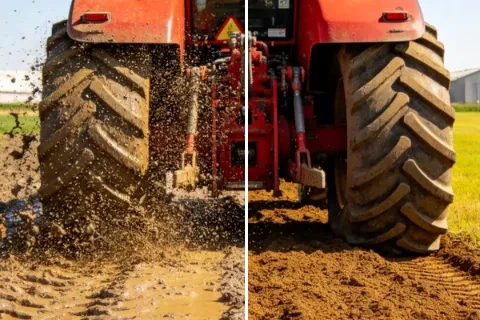
Tire pressure has a huge impact on traction. In wet conditions, lower inflation pressure increases the contact area between the tire and the soil. This spreads the load and reduces ground pressure.
Lower pressure helps the tire “float” on soft soil instead of sinking in. It also improves grip and reduces slip.
That said, pressure must be adjusted carefully. Road transport, heavy loads, and field work all require different settings. Many operators damage tires simply by forgetting to adjust pressure when conditions change.
Matching Tire Type to Seasonal Tasks
Different seasons create different challenges:
- Spring planting often involves very soft soil
- Mid-season field work may require stability and precision
- Harvest season combines heavy loads with unpredictable ground
Using one tire setup for all seasons is convenient, but not always efficient. Matching tire type and setup to seasonal tasks improves traction and protects both equipment and land.
Choosing the Right Farm Tires for Wet Conditions
Selecting the right farm tire means looking at the full system:
- Tractor power and weight
- Field conditions and soil type
- Seasonal workload
A tire that performs well on a high-horsepower tractor must handle torque without excessive slip. This is especially important as modern tractors continue to grow more powerful.
For a deeper look at how tire choice connects with today’s powerful equipment, see our related article: Matching Agricultural Tires to Modern High-Horsepower Tractors
Final Thoughts
Wet fields do not have to slow down farm operations. With the right tire design, proper pressure management, and a focus on slip reduction, tractors can work efficiently even in challenging conditions.
Instead of fighting the ground, a well-chosen farm tire works with it – delivering traction, protecting soil, and keeping productivity on track. And on muddy days, that makes all the difference.