If you manage a construction fleet or handle tire purchasing, you already know this truth: OTR tires never fail at a “good time.”
They fail when a machine is loaded, a deadline is tight, and everyone is looking at you. That’s why OTR tire selection is not just about price or size. It is about matching the right tire to the real job, so the fleet keeps moving instead of sitting still.
Let’s break down how matching OTR tires to terrain, load, and equipment type works as a practical solution – not a textbook theory.
The Real Problem Behind Most OTR Tire Issues
Many fleets face early tire damage, uneven wear, or sudden downtime. But in most cases, the tire itself is not the real problem.
The real issue is mismatch.
A tire designed for hard ground is used in mud.
A tire built for light work is pushed under heavy load.
A loader tire is mounted on a machine that behaves very differently.
The result? Short tire life, higher cost per hour, and more calls you didn’t want to receive.
Good tire matching is a risk-control solution that helps reduce surprises, control cost, and make planning easier.
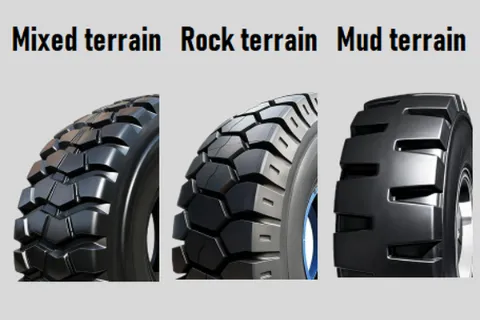
Matching OTR Tires to Terrain Conditions
Rock and Quarry Work
Rocky ground is tough, sharp, and unforgiving. Tires here face strong impact and constant cutting stress.
A good solution focuses on:
- Strong tread blocks
- Rubber that resists cuts
- A stable structure that handles shock
The goal is simple: fewer chunks, fewer sidewall problems, and fewer emergency replacements.
Mud and Soft Ground
Mud is sneaky. It looks soft, but it causes slip, heat, and fast wear when traction is poor.
For muddy sites, the right solution offers:
- Open tread design
- Good self-cleaning ability
- Better grip with less spinning
Less spinning means less heat. Less heat means longer tire life. Everyone wins.
Sand and Loose Soil
Sand does not cut tires, but it loves to trap machines.
Here, the solution is not “stronger,” but “smarter”:
- Wider contact area
- Lower pressure on the ground
- Smooth movement instead of digging
The benefit is steady work without getting stuck – because no one enjoys digging out a loaded machine.
Mixed Construction Sites
Many fleets work on more than one type of ground. This is where balance matters.
A multi-application solution focuses on:
- Even wear
- Stable handling
- Acceptable performance across changing conditions
For fleets working across different job sites, this approach often delivers the best long-term value.
Related solution: OTR Tires Designed for Multi-Application Construction Fleets
Load Matching Is Not Optional
Why Load Matters More Than Most People Think
Two machines can use the same tire size – and still destroy tires at very different speeds.
Why? Load.
Heavy loads cause:
- Extra heat
- More flex inside the tire
- Faster wear if the tire is not rated correctly
The right load-matched solution helps:
- Control heat build-up
- Keep tire shape stable
- Make tire life more predictable
And predictable tire life makes planning and budgeting much easier.
Better Load Matching Means Better Cost Control
When load and tire capability are aligned:
- Tire life becomes more consistent
- Maintenance schedules improve
- Spare tire planning becomes simpler
That’s not theory – that’s fewer headaches.
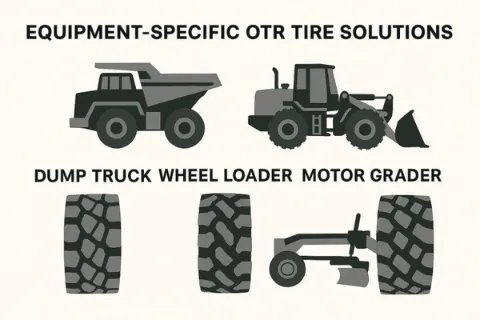
Equipment Specific Tire Solutions
Wheel Loaders
Wheel loaders stop, start, and turn all day long. That puts stress on the tire shoulders.
A good solution focuses on:
- Strong shoulder support
- Good wear balance
- Stable grip during loading
Articulated Dump Trucks
These machines travel farther and faster, often with heavy loads.
The solution here emphasizes:
- Smooth rolling
- Even wear
- Stability during transport
Rigid Dump Trucks
Heavy loads. Fixed routes. Serious stress.
The right solution prioritizes:
- High load capability
- Heat control
- Long working cycles
Graders and Support Machines
These machines turn a lot and face strong side forces.
A suitable solution improves:
- Steering control
- Even wear
- Operator comfort
Why Integrated Tire Matching Works Better
Trying to choose a tire based on only one factor – price, size, or availability – often leads to hidden cost later.
A matched solution considers:
- Ground conditions
- Actual working load
- Machine behavior
When these factors work together, fleets see:
- Higher uptime
- Lower total tire cost
- Fewer “urgent” phone calls
And yes, fewer surprises is always a good thing.
Final Thoughts
OTR tire selection is not about finding the “strongest” tire or the “cheapest” one. It is about finding the right fit for the real job.
When terrain, load, and equipment are matched correctly, tires last longer, machines work better, and fleet managers sleep a little easier.
And in this business, that last point matters more than most people admit.