
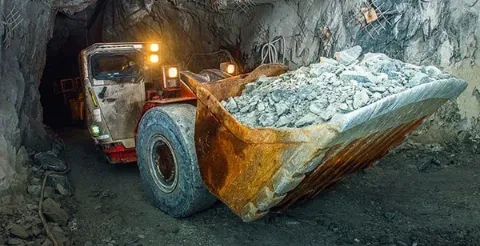
Mining tires working underground deal with one of the toughest environments imaginable. Unlike surface mines where airflow helps cool equipment, underground tunnels trap heat. Add heavy loads, constant torque, and long operating cycles, and you get the perfect conditions for tire temperatures to rise quickly.
If heat is not properly controlled, it can shorten tire life, increase wear, and even cause structural damage. That’s why modern mining tires are carefully engineered with specialized rubber compounds, reinforced structures, and optimized tread patterns that help manage heat while maintaining durability.
Why Heat Build-Up Is a Major Challenge in Underground Mining Tires
Confined tunnels limit natural cooling
Underground mines don’t offer much room for airflow. Ventilation systems exist, but compared to open-pit mines, the air movement is still limited.
This means heat generated by tires, engines, and braking systems tends to stay in the tunnel environment. When tires keep rolling under these conditions for hours, temperatures can gradually climb unless the tire design helps release that heat efficiently.
Heavy loads and constant torque generate friction heat
Mining equipment underground rarely gets an easy job. Loaders, haul trucks, and utility vehicles constantly carry heavy material through narrow tunnels and steep ramps.
These machines often operate at low speeds but with high torque. The tire carcass flexes repeatedly under load, and this flexing generates internal friction. That friction is one of the biggest contributors to heat build-up inside the tire.
Heat acceleration leads to faster tire wear and failure
When tire temperatures rise too much, the rubber compound begins to degrade faster. Heat can weaken bonding between layers, increase tread wear, and accelerate fatigue in the tire carcass.
Over time, this may lead to issues like chunking, tread separation, or structural failure. For underground mining fleets, avoiding excessive heat isn’t just about tire life – it’s about maintaining safety and operational reliability.
Heat-Resistant Rubber Compounds Used in Mining Tires
Low heat generation rubber formulations
One of the first lines of defense against heat is the rubber compound itself. Tire manufacturers develop special formulations designed to reduce hysteresis, which is the energy lost when rubber repeatedly flexes and returns to shape.
Lower hysteresis means less energy turns into heat during operation. This allows mining tires to maintain stable temperatures even during long duty cycles underground.
High thermal stability for long operating cycles
Rubber compounds used in underground mining tires must also withstand sustained high temperatures. These materials are designed to resist thermal aging so the rubber doesn’t harden, crack, or lose flexibility over time.
This is especially important for equipment that runs continuously for multiple shifts.
Balancing cut resistance and heat control
Underground mines are full of sharp rocks and abrasive debris. A tire compound that only focuses on heat resistance wouldn’t last long in such conditions.
Engineers therefore balance heat control with strong cut and chip resistance, ensuring the tire can survive both temperature stress and harsh terrain.
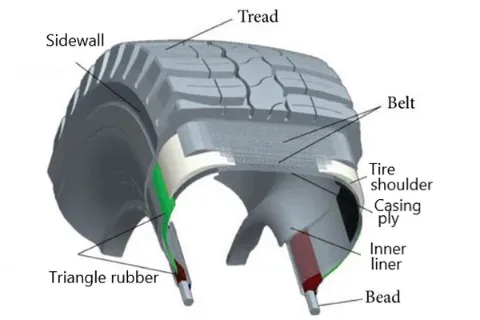
Tire Structure Design That Improves Heat Dissipation
Reinforced carcass construction reduces internal stress
The internal structure of mining tires plays a major role in temperature control. Reinforced carcass layers help distribute loads more evenly and reduce excessive flexing.
Less deformation means less internal friction, which directly reduces heat generation during operation.
Optimized tread depth prevents excessive flexing
Deep tread patterns provide traction and durability, but if the tread is too deep, it can cause excessive flexing as the tire rolls.
Engineers carefully balance tread depth so the tire maintains traction while minimizing unnecessary heat buildup.
Wide tread blocks distribute load evenly
Large tread blocks help spread the vehicle’s weight across a wider contact area. This reduces localized stress and prevents certain parts of the tire from overheating.
A well-balanced tread layout also improves overall tire stability.
Tread Patterns Designed to Control Heat Generation
Open tread patterns improve cooling airflow
Underground mining tires often feature open tread designs with wide grooves. These grooves increase surface area and allow air to move through the tread pattern as the tire rotates.
Even small improvements in airflow can help carry heat away from the tire surface.
Reduced tread squirm lowers friction heat
Tread squirm happens when tread blocks move too much while rolling. Excess movement creates friction and therefore heat.
By stabilizing the tread blocks and reinforcing their shape, engineers reduce this unwanted motion and keep temperatures lower.
Self-cleaning grooves prevent heat trapping
Mining environments constantly throw rocks, mud, and debris at tires. If this material becomes trapped in the tread, it can increase friction and trap heat.
Self-cleaning groove designs help eject debris, keeping the tread clear and allowing the tire to operate more efficiently.
For a deeper look at how tread design also improves traction and equipment stability, you can read our related article “Mining Tires Designed to Improve Stability on Loose and Abrasive Surfaces.”
Operational Practices That Help Reduce Tire Heat
Maintaining correct tire inflation pressure
Even the best tire design cannot compensate for incorrect inflation pressure. Underinflated tires flex more during operation, which increases internal friction and generates extra heat.
Regular pressure checks are essential for underground fleets.
Managing vehicle speed and load cycles
Although underground vehicles typically move slower than highway trucks, sudden acceleration or consistent overloading can still push tire temperatures higher.
Maintaining controlled speeds and balanced loads helps keep heat levels manageable.
Regular tire inspection in underground fleets
Routine inspections help operators detect early signs of overheating, such as unusual wear patterns or rubber degradation.
Catching these issues early can prevent costly downtime.
Engineering Mining Tires for Safety and Productivity
Reducing heat extends tire service life
When heat levels stay within the designed range, tires last longer and maintain their structural integrity.
Stable temperature improves operational reliability
Temperature stability also means fewer unexpected tire failures. For mining operations that run 24/7, reliability is everything.
Integrated design approach for underground mining conditions
Modern mining tires combine compound technology, structural engineering, and tread pattern optimization. Each element plays a role in controlling heat and maintaining performance.
Conclusion
Underground mining may be one of the harshest workplaces for tires, but smart engineering helps keep temperatures under control. From specialized rubber compounds to reinforced carcass structures and carefully designed tread patterns, modern mining tires are built to handle the heat – literally.
When good tire design is combined with proper maintenance and responsible vehicle operation, mining fleets can reduce downtime, extend tire life, and keep equipment running smoothly deep below the surface. In underground mining, keeping cool isn’t just a comfort – it’s a critical part of productivity and safety.