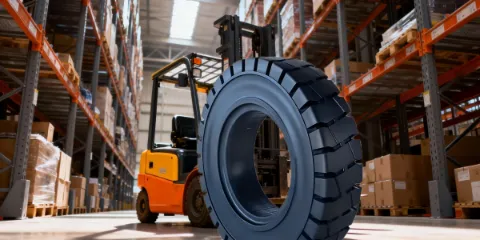
Solid forklift tires are becoming a smart choice for many modern warehouses. In places where every square meter matters and forklifts must move smoothly through tight aisles, solid forklift tires help keep daily work stable, simple, and safe. Today, let’s take a friendly look at how these tires make warehouse operations easier without changing your whole workflow.
Solid forklift tires are built with high-density rubber or composite material. They have no air chamber inside, so leaks, punctures, and blowouts are no longer part of your day. Compared with air-filled tires, they stay strong, resist cuts, and handle long hours better. For warehouses that run forklifts almost nonstop, this reliability is like having a calm, dependable teammate on the floor.
What Are Solid Forklift Tires?
Solid forklift tires are exactly what their name says – solid. There is no air inside, so they do not deform easily, and they do not fail due to air loss. These tires are known for long service life, strong structure, and tough performance. In high-intensity warehouse operations, this toughness becomes a real advantage. Long shifts, sharp turns, small spaces… these tires take them all without complaint.
Stability Challenges in a Warehouse
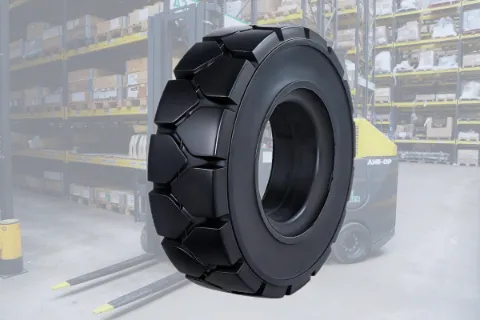
Tight warehouses give forklifts several stability challenges, including:
- Narrow aisles: The turning radius is limited, and tipping risks increase when space is small.
- High rack operations: When lifting heavy loads, the center of gravity moves up, and stability drops.
- Mixed floor conditions: Rough, uneven, or even slightly wet surfaces can make forklifts harder to control.
With these challenges around every corner, tire performance becomes a key part of safe and efficient work.
How Solid Tires Improve Stability
Solid forklift tires offer several clear stability advantages:
- Lower center of gravity: Because solid tires do not compress or deform easily, the forklift stays more balanced during turns.
- Good grip: Solid rubber holds the ground firmly, reducing slips and helping operators feel more confident in tight spots.
- No puncture surprises: Since there is no air, the tire will not suddenly fail, keeping your forklift steady at all times.
- Less shaking: Air-filled tires compress heavily when carrying large loads. Solid tires keep their shape, helping the forklift move smoothly even when handling boxes all day long.
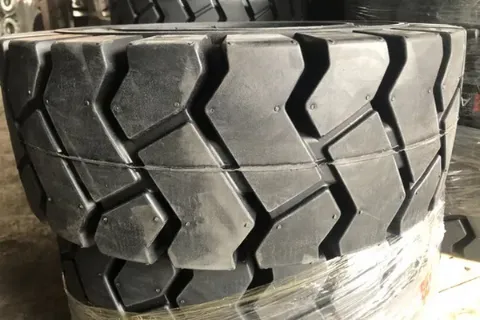
These features work together to make forklifts safer and easier to control, especially in small or busy warehouse areas.
Extra Benefits of Solid Forklift Tires
Beyond stability, solid tires bring several long-term advantages:
- Lower maintenance costs: No air means no pressure checks, no patching, and no downtime for repairs.
- Longer service life: Solid materials resist wear and stay strong under heavy use.
- Perfect for high-intensity work: Long hours, hot days, heavy loads- solid tires can handle all of them without heating up or breaking down.
For many companies, these benefits translate into real savings over time.
How to Choose the Right Solid Tire
When selecting solid forklift tires, here are a few things to consider:
- Warehouse floor type: Smooth, rough, dusty, or moist floors each need the right rubber mix.
- Forklift model and load capacity: Pick a tire that matches your machine and the weight you lift.
- Brand quality and certifications: Good products come with tested standards, clear labeling, and trustworthy manufacturing.
If you want to learn more about different types of industrial solid tires, feel free to check our related guide Solid Industrial Tires for Forklifts & Material Handling, which explains more applications in detail.
Conclusion
In tight warehouse environments, stability is everything. Solid forklift tires bring durability, puncture resistance, and strong ground grip to help forklifts stay steady and predictable. For companies aiming to improve warehouse safety and boost efficiency, upgrading to solid tires is a simple but powerful decision. They make daily operations easier, reduce unexpected downtime, and help both operators and managers enjoy a smoother workday.