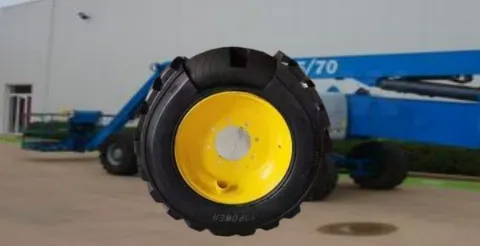
Dock yards are some of the toughest environments for tires, which is why PU filled industrial tires, puncture resistant tires, and industrial forklift tires have become essential for equipment working on cracked concrete, scattered metal debris, steep ramps, and uneven loading platforms. A standard pneumatic tire simply cannot cope with the constant threat of punctures and instability. But PU filling changes everything, giving operators a tire that stays solid, stable, and reliable even in the harshest industrial conditions.
What PU Filling Technology Actually Is
PU filling starts by injecting liquid polyurethane into a pneumatic tire casing. The material expands and cures into a uniform, elastic solid – creating a tire that behaves like a shock-absorbing solid core.
Compared with pneumatic tires, PU filled tires can’t lose air, don’t deform from low pressure, and maintain a consistent footprint.
Compared with press-on solid tires, PU filling retains a bit more elasticity, making it more comfortable for operators who drive over cracks, bumps, and broken ground dozens of times per shift.
How PU Filled Industrial Tires Handle Rough Dock Yard Terrain
Stability on Uneven and Damaged Ground
Dock surfaces are rarely flat. Edges, dips, repaired patches, and expansion joints constantly push a tire off balance. PU filled industrial tires keep the machine stable by distributing weight evenly and preventing the sidewalls from collapsing.
100% Puncture Resistance
Sharp metal chips, screws, nails, and scrap are common around container loading areas. Because the tire is completely filled, there is zero risk of sudden deflation. This is why PU filling is considered one of the most effective puncture resistant tire technologies available.
Durability Under Repetitive, Heavy Loads
Dock operations require forklifts to carry heavy pallets and containers repeatedly throughout the day. PU filled tires resist deformation, reducing wobble and providing predictable stability even when the machine is fully loaded.
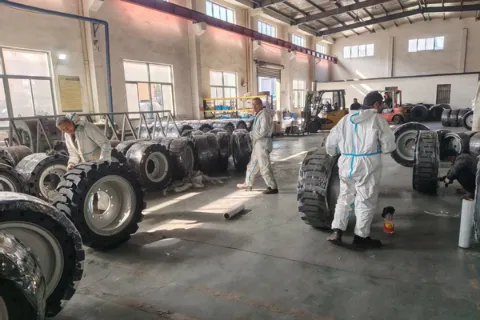
Why Dock Yard Operators Prefer PU Filled Industrial Tires
Zero Unexpected Downtime
A puncture can stop operations for hours and disrupt container unloading schedules. PU filled tires eliminate this risk completely, keeping fleets running without interruption.
Better Shock and Vibration Absorption
Although solid, the polyurethane core absorbs a significant portion of the vibration from broken concrete and steel plates.
This protects:
- Operators
- Hydraulic components
- Forklift chassis
- Sensitive loads
Long-Term Cost Benefits
While the upfront investment is higher than pneumatic tires, the savings in maintenance, repairs, and downtime make PU filled options far more cost-effective across the tire’s lifespan.
Performance in Real Dock Yard Conditions
On Ramps and Loading Platforms
The uniform PU core keeps the tire shape stable, preventing the machine from rolling or bouncing when climbing steep metal ramps.
On Broken or Uneven Concrete
PU filled industrial tires offer better balance than pneumatic tires, which can over-flex or lose pressure under heavy loads.
On Wet or Slippery Surfaces
No risk of air loss means no sudden changes in footprint or grip—an important safety factor for dock sites exposed to rain and seawater.
When PU Filled Industrial Tires Are the Best Choice
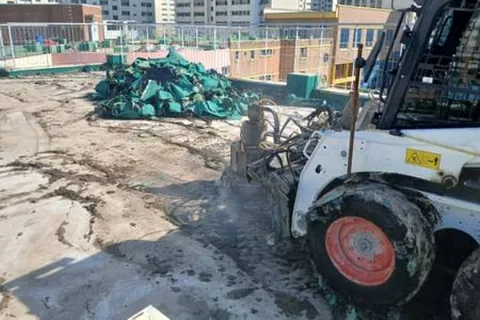
These tires are most beneficial for equipment such as:
- Heavy industrial forklift tires working indoors and outdoors
- Yard tractors in logistics hubs
- Equipment frequently crossing rough transitions between dock surfaces
- Locations with high puncture risk from metal debris
Internal Link:
For deeper technical details, see: Is PU Foam Filled Tire the Ultimate Solution to Puncture Problems and Operational Downtime?
Installation and Maintenance Considerations
- Choose a strong tire carcass designed for fi lling
- Note the increased weight compared with pneumatic tires
- Verify rim compatibility
- Refill only when the tread is worn out, not when the core fails
Conclusion
PU filled industrial tires are built for the most demanding dock yard operations. They eliminate punctures, stabilize equipment on uneven ground, reduce vibration, and significantly lower the risk of unexpected downtime. For logistics fleets, port operators, and warehouse managers, they offer a dependable long-term solution for challenging industrial environments.