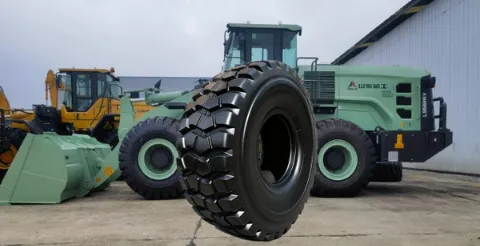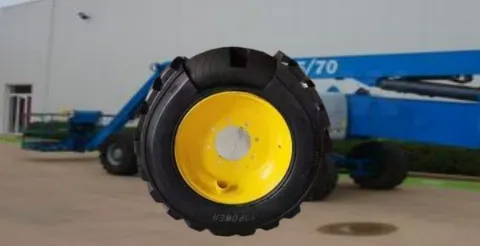
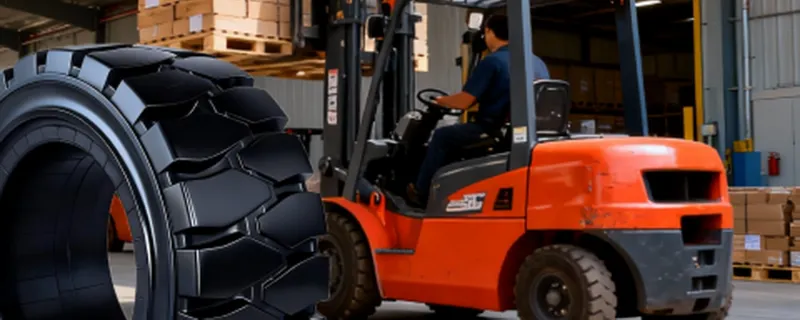
Industrial tires are the backbone of modern material-handling and construction operations, supporting machines that run heavier loads, longer hours, and faster cycles than ever. From warehouses in Brazil to factories in South Africa and busy port terminals in Southeast Asia, these tires quietly determine how safely a machine moves, how stable it remains on uneven ground, and how productive the entire operation becomes. Even though they rarely get the attention they deserve, the performance of industrial equipment is often only as strong as the tires beneath it.
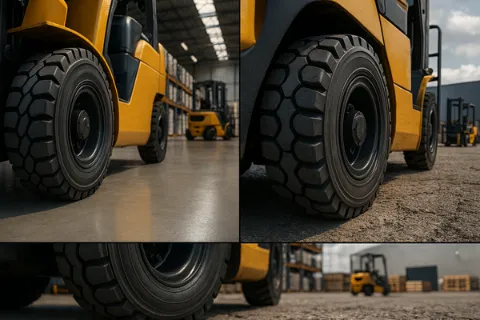
Industrial tires come in multiple designs – solid tires, press-on tires, pneumatic options, and PU foam filled industrial tires – each built for a different environment and performance requirement. For operators, importers, and fleet owners, understanding how these tires influence safety, stability, grip, load capacity, and long-term cost efficiency is essential for choosing the right setup and avoiding unnecessary downtime.
-
The Major Types of Industrial Tires
Solid Industrial Tires
Solid tires are built for durability above all else. They do not contain air, cannot be punctured, and provide strong load-bearing capacity for warehouses, recycling plants, steel mills, and container yards. Their rigid structure makes them the preferred option where debris, metal scraps, or sharp materials are present.
Press-On Tires
These tires are commonly used on electric forklifts and indoor logistics equipment. Their compact rubber profile and steel band allow quick mounting, low rolling resistance, and excellent maneuverability on smooth factory floors. For businesses focused on speed and consistent indoor routes, press-on tires offer a practical balance of performance and value.
PU Filled Industrial Tires
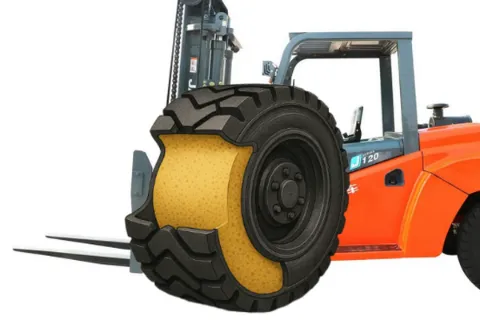
PU filled tires take a pneumatic tire carcass and fill it with polyurethane. This eliminates air loss while maintaining more elasticity than traditional solid tires. The result is a tire that combines puncture resistance with improved shock absorption – useful in dock yards, mixed indoor/outdoor environments, and facilities with broken pavement or concrete cracks.
-
How Industrial Tires Improve Safety
Better Grip and Surface Control
Industrial floors vary widely – from polished indoor concrete to wet port ramps and uneven outdoor yards. Tire compounds, tread patterns, and footprint consistency directly influence grip. Solid and PU filled tires maintain stability even under heavy loads because they resist pressure loss and sidewall collapse.
Reducing Tire-Related Accidents
Loss of tire pressure is one of the biggest causes of forklift instability. A sudden deflation can tilt a machine, drop a load, or reduce braking capacity. Solid tires and PU filled tires eliminate this risk, providing a predictable and stable operating platform throughout the entire shift.
Minimizing Operator Fatigue
Constant vibration – from metal transitions, cracked surfaces, and loading docks – creates fatigue and reduces operator productivity. PU filled tires offer improved vibration filtering compared with solid tires, while solid tires provide predictable stability when lifting high or turning sharply.
-
Stability and Load Handling in Demanding Environments
Maintaining Balance Under Heavy Loads
Industrial tires support everything from 1-ton warehouse forklifts to 15-ton port machines. Sidewall stiffness, bead design, and tread structure determine how well a tire handles weight. A stable tire reduces sway, “wobble,” and uncontrolled movement – key for lifting pallets to the top rack or transporting containers on uneven ground.
High-Lift and High-Reach Performance
When equipment operates at high lifting heights, a tire’s rigidity becomes even more important. Solid tires provide a strong base for order pickers, reach trucks, telehandlers, and high-reach forklifts, reducing rocking and lateral movement.
Consistency on Uneven and Damaged Surfaces
Outdoor industrial yards often suffer from potholes, cracks, dents, and exposed metal plates. PU filled tires shine here, maintaining a flatter footprint compared with pneumatic tires and providing more elasticity than solid tires.
-
Productivity Gains from the Right Industrial Tire Setup
Less Downtime
Punctures, blowouts, and pressure loss are some of the most common causes of unexpected delays. Solid and PU filled tires virtually eliminate these issues. For logistics yards running 16–24 hours daily, this translates into enormous time and labor savings.
Faster and Smoother Material Handling
Proper tire selection influences:
- Turning speed
- Acceleration
- Braking predictability
- Battery efficiency on electric forklifts
Press-on tires reduce rolling resistance indoors, while solid and PU filled tires maintain consistent handling outdoors.
Mixed-Route Efficiency
Facilities operating both indoors and outdoors – common in ports, industrial zones, and manufacturing parks – benefit from PU filled or robust solid tires that can transition smoothly between smooth floors and rough yards.
-
Considerations for Choosing Industrial Tires
When selecting industrial tires, operators should evaluate:
- Surface conditions (smooth floors vs. rough yards)
- Load weights and lifting height
- Daily travel distance
- Tire temperature sensitivity (especially in steel mills or cold storage)
- Maintenance cycles and replacement frequency
PU filled tires are heavier and require a strong casing. Solid tires require monitoring for chunking and heat buildup. Press-on tires need correct fitment for smooth operation.
-
Pain Points for African and South American Importers
Importers in Africa and South America face unique challenges not always seen in developed logistics markets.
Unpredictable Ground Conditions
Many industrial sites in Kenya, Ghana, Nigeria, Brazil, and Chile operate on rough, unpaved, or partially repaired ground. Importers often request:
- Tires with stronger sidewalls
- Extra thick compounds
- PU filled options to eliminate puncture downtime
Mixed Equipment Fleet
It’s common for fleets to consist of mixed-brand forklifts and older models. Importers need versatile tire options that:
- Fit multiple rim sizes
- Require minimal maintenance
- Perform on both indoor and outdoor surfaces
High Downtime Cost
In South America’s busy port cities (Santos, Cartagena, Callao) and African logistics hubs (Durban, Mombasa, Lagos), a single machine breakdown can delay entire container movements. PU filled or solid tires are preferred as a “zero interruption” solution.
Import Taxes and Limited Local Stock
Due to high duties and slow shipping cycles, importers rely heavily on:
- Longer lifespan
- Puncture-proof options
- Tires that reduce the need for frequent replacement
Industrial tires with strong compounds and long tread life help lower total cost of ownership.
For deeper insights into when solid tires deliver the best value, see our related guide: Why Solid Tires Are the Smart Choice for Tough Industrial and Construction Environments.
-
Conclusion
Industrial tires determine how safely and efficiently warehouses, factories, and logistics hubs operate. Solid tires deliver strength and durability, press-on tires maximize indoor maneuverability, and PU filled industrial tires provide a balanced solution for rough or unpredictable surfaces. For global operators – and especially importers in Africa and South America – the right tire choice reduces downtime, improves load stability, and ensures reliable workflow across every shift.
By understanding the unique strengths of each tire type, fleet managers and buyers can build safer, more productive, and more cost-effective industrial operations.