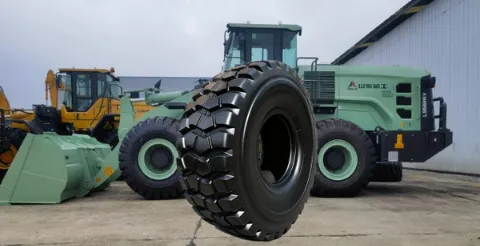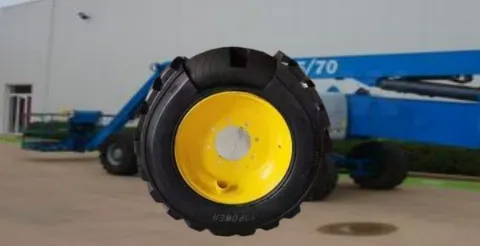
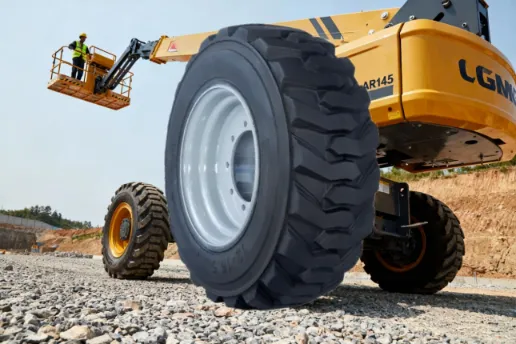
Our boom lift tires play a key role in keeping LGMG aerial platforms working safely and smoothly across busy job sites every day. Builders, cleaners, warehouse staff, and maintenance crews rely on these machines to finish work at height with safety and speed. One key part that keeps these platforms moving is the tires. High-quality boom lift tires improve stability, protect operators, and help the machine stay productive. For rental fleets and end users around the world, reliable solid tires mean fewer breakdowns and lower operating costs.
Why Boom Lift Tires Matter for LGMG Aerial Platforms
Every LGMG boom lift depends on strong, well-matched tires to stay stable while lifting. Tires carry the full weight of the machine, the operator, tools, and materials. They must handle tight turns, long travel paths, soft ground, slopes, and rough surfaces.
Solid tires are widely used on boom lifts because they resist punctures, avoid pressure loss, and last longer in demanding daily use. For LGMG machines working in airports, steel plants, malls, construction sites, and rental fleets, this reliability is essential.
LGMG Boom Lift Tire Sizes for Key Boom Models
Different machine types need different tire sizes. Here are the common sizes used on LGMG platforms.
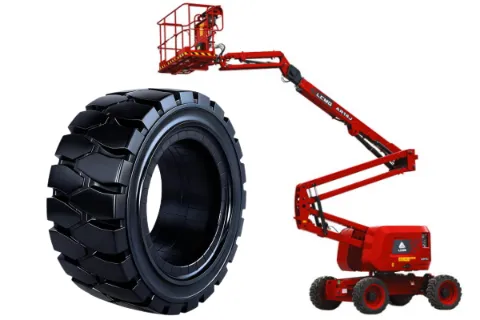
Articulating Boom Lifts (AR Series)
Common sizes include:
- 12-5 solid rough-terrain tires
- 355/55D625 solid tires
- 315/55D20 solid tires
These tires support the flexible up-and-over reach of articulating booms, keeping the platform steady while rotating and extending in complex job sites.
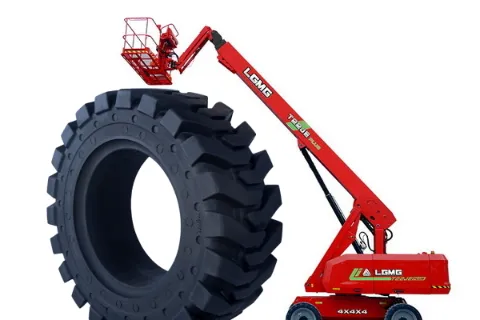
Telescopic Boom Lifts (T Series)
Typical tire sizes include:
- 385/45D28 solid tires
- 445/50D710 solid tires
- 14-5 solid rough-terrain tires
These tires carry high loads and maintain strong lateral stability when the boom reaches far horizontally.
Compact Boom Lifts (Small AR & T Series Units)
Some compact boom lifts also use:
- 240/55-5 solid tires
- 27×10-15 solid tires
These versions work in mixed indoor–outdoor conditions, requiring narrow tires that still support heavy loads.
What Makes Solid Boom Lift Tires a Better Choice for LGMG Equipment?
Solid boom lift tires bring clear advantages:
- No air → no blowouts or pressure loss
- Thick structure → longer wear life
- Stronger sidewalls → stable lifting at full height
- Better resistance to debris, steel scraps, gravel, and job-site hazards
For customers using LGMG boom lifts daily, this means fewer delays and predictable performance.
Key Performance Benefits of Using OEM-Matched Boom Lift Tires
- Guaranteed Compatibility
OEM-matched tires follow the exact load rating, rim size, and footprint required by each LGMG boom model. This ensures safe lifting and reliable travel.
- Better Traction and Maneuverability
The right solid tire helps boom lifts move safely on:
- concrete
- steel plates
- gravel
- mud
- warehouse ramps
Good traction helps operators make small positioning adjustments without sliding.
- Lower Operating Cost for Fleets
High-quality solid tires reduce replacement frequency and machine downtime. Proper stability also protects axles, hubs, and drive motors from excess shock and vibration.
How to Choose the Right Boom Lift Tires for Your LGMG Model
- Confirm the model, working height, and load rating
- Use the OEM-recommended tire size
- Select non-marking solids for indoor work
- Use aggressive tread solids for outdoor and mixed terrain
- Choose wider tires for soft ground or rough zones
The right match improves safety and reduces long-term service cost.
Boom Lift Tires Maintenance Tips
Even solid tires need simple inspections:
- Check for cracks, cuts, and chunking
- Watch for uneven wear from misalignment
- Keep wheel nuts tight after long drives
- Avoid overloads
- Reduce sharp, high-speed turns
Small habits extend the service life of the tires and protect the boom lift’s drivetrain.
Why Our OEM Boom Lift Tires Are Trusted by LGMG Users Worldwide
As a long-term OEM supplier for LGMG boom lifts, we provide tires designed for stability, long wear, and global conditions. Each batch follows strict standards to support fleets in Asia, Europe, the Middle East, Africa, and the Americas. Operators can count on safe, smooth, and trouble-free performance.
Related Reading