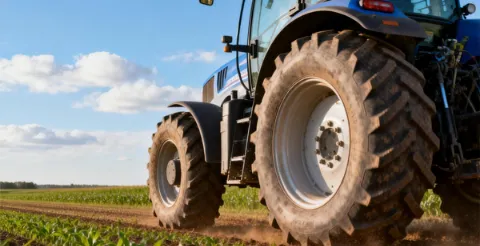
Agricultural tires are not just rubber parts that keep machines moving. They are key systems that directly affect agricultural tires performance, farm productivity, soil compaction, fuel use, and even final crop yield. In modern farming, tractors and harvesters are more powerful and more intelligent than ever before. However, without the right tires, this advanced machinery cannot deliver its full value. Choosing the correct agricultural tires is one of the most important steps toward efficient and sustainable farming.
In a previous article, How to Read Agricultural Tire Sizes and Specifications?, we explained how to understand size markings, load index / speed rating, and pressure limits. That knowledge is the first step. The real return on investment comes when farmers understand how those specifications translate into real field performance. Tire size, construction, and inflation pressure all shape how machines work on soil every day.
The evolution of agricultural tire technology in modern farming
Agricultural tire technology has changed greatly over the past decades. Early farm machines mainly used bias tires, which were simple and strong but limited in flexibility. Today, radial tires have become the industry standard. Updated national standards in China and many other regions clearly support this shift, because radial tires offer longer life, better traction, and lower rolling resistance.
Another clear trend is specialization. Agricultural work is no longer one size fits all, and tire design follows this logic. For example, row crop tires use a narrow section width and smoother tread shape. This allows tractors to move between crop rows during the growing season while reducing plant damage.
For wet field operations such as rice farming, paddy tires are essential. A size like 460/85R38 shows how deep tread depth and wide contact area help machines stay stable on soft and muddy ground. These tires reduce slipping and sinking, which protects both equipment and working efficiency.
Key performance areas where agricultural tires shape farm operations
Traction and fuel efficiency in daily field work
Tread design and contact area play a major role in traction. When tires grip the soil better, machines slip less. Lower slip means more engine power is used for work instead of wasted movement. Research shows that fitting the correct radial tires on combine harvesters can improve power efficiency and reduce fuel consumption during long harvesting hours.
Soil protection as hidden farm productivity
Soil compaction is one of the biggest long term risks in modern agriculture. Heavy machines press soil particles together, reducing air space and water movement. This damages root growth and limits nutrient uptake, which can lead to lower yields over time.
Advanced tire technology offers solutions. Very high flexion tire designs allow tires to carry more load at the same pressure or work at lower pressure with the same load. Studies show that these tires can carry up to forty percent more weight under the same pressure compared to standard radial tires. Lower pressure increases contact area and reduces ground pressure, which helps protect soil structure.
Tire pressure management is just as important as tire selection. Adjusting pressure based on load and field condition can significantly reduce compaction. Lower pressure increases the footprint and reduces working depth, making it a practical management tool for soil care.
Load capacity and stability during heavy operations
During harvest season, machines often carry heavy loads. Tire load index and ply rating ensure safety and stability under these conditions. Correct tire matching prevents sidewall damage, uneven wear, and machine imbalance when working at full capacity.
A practical framework for choosing the right agricultural tires
Selecting agricultural tires should always start with the main working task.
| Main working situation | Core challenge | Recommended tire features | Typical technology |
| Field tillage and planting | Heavy load and high traction demand | Large diameter, wide section, traction tread | Standard or very high flexion radial tires |
| Row crop management | Crop protection | Narrow section, smooth tread | Row crop tires |
| Wet paddy fields | Anti sinking and anti slip | Very deep tread, wide footprint | Paddy radial tires |
| Sloped orchards and vineyards | Complex terrain and erosion risk | High lateral stability, low ground pressure | Track systems or hybrid solutions |
| Spraying and transport | Repeated soil pressure | Large diameter, very low pressure | Very high flexion radial tires |
Tire selection should always match the machine itself. Engine power, machine weight, and transmission type all affect tire performance. Working with tire specialists or equipment suppliers helps ensure the best overall setup.
The future of agricultural tires in data driven farming
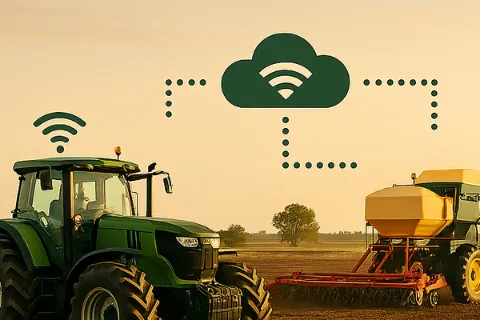
Smart technology is shaping the next stage of agricultural tires. Systems like the Cool Walk solution developed by Guizhou Tire use sensors and artificial intelligence to monitor temperature, pressure, and wear in real time. This supports predictive maintenance and improves safety and energy efficiency.
In the future, smart tires will become part of precision agriculture systems. Data collected from tire contact pressure can combine with GPS and yield maps to create soil compaction risk maps. Farmers can then adjust working paths and loads to protect soil health and improve long term productivity.
Manufacturing innovation also plays a role. Smart factories and full digital production control help ensure stable and reliable tire performance. This consistency is critical for modern large scale farming operations.
Final thoughts and action steps for farmers
Agricultural tires are a foundation of modern farm productivity. By improving traction, protecting soil, and increasing energy efficiency, they support both short term performance and long term land value.
Farmers should look beyond purchase price and focus on total ownership cost. Fuel savings, improved soil health, and longer tire life all contribute to higher returns. Investing in radial and specialized tires based on real working needs is a smart decision. Active tire pressure management should become part of daily operations. Most importantly, professional advice helps ensure the best match between land, machine, and tire.
Agricultural tires should be seen as a productive investment rather than a simple replacement item. The right choice directly supports farm profitability and a sustainable future for the land.