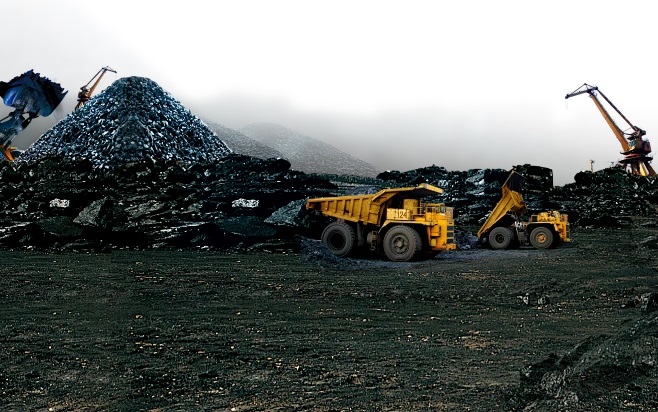
Underground mining is one of the most hostile environments on earth for rubber tires. Temperatures can exceed 60°C at the rock face. Hot debris, slag, and even open flames from welding or cutting operations are routine. Sulfur-rich ores and hydrocarbon residues coat haul roads. When a standard tire encounters a hot spot — a piece of smoldering rock, a weld spark, or a pool of heated slurry — the rubber compound can ignite within seconds, releasing toxic fumes and creating a fire that spreads rapidly through the tire’s carcass.
Tire fires in underground mines are not just equipment-damaging events. They are life-threatening emergencies. Smoke and toxic gases accumulate in confined spaces with limited ventilation. Evacuation routes are narrow. Fire suppression systems may not reach a burning tire on a haul truck deep in a decline. For these reasons, mining regulators, insurance providers, and major mining companies mandate the use of fire-resistant (FR) tires in underground operations — and increasingly in high-temperature surface applications as well.
This article explains what FR mining tires are, how they work, when they are required by regulation and best practice, how they differ from standard OTR tires, and how to select the right FR tire for your operation.
What Is a Fire-Resistant (FR) Mining Tire?
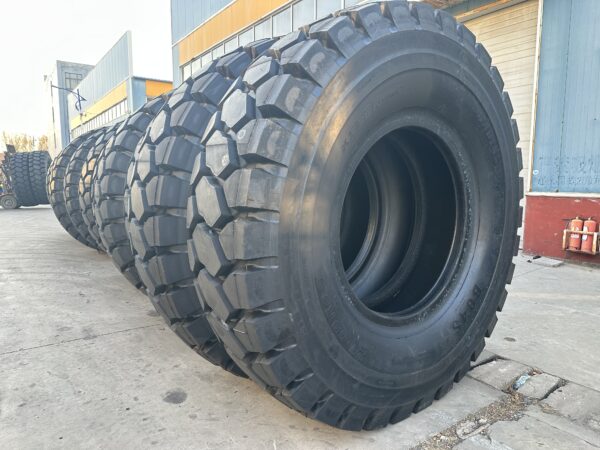
A fire-resistant (FR) mining tire is an OTR tire engineered with specialized rubber compounds and construction features that resist ignition, slow flame spread, and self-extinguish when the heat source is removed. FR tires are designed to give operators critical additional time — typically 5–15 minutes — to move the equipment to a safe location and evacuate before a tire fire becomes uncontrollable.
How FR Tires Differ from Standard OTR Tires
| Property | Standard OTR Tire | Fire-Resistant (FR) Mining Tire |
| Rubber compound | Natural/synthetic blend optimized for wear and cut resistance | Compound infused with fire-retardant chemicals (alumina trihydrate, antimony trioxide, zinc borate) |
| Ignition temperature | ~250–350°C (standard rubber ignites readily) | ~450–550°C (significantly higher ignition threshold) |
| Flame spread rate | Rapid — flame travels along the carcass quickly | Slow — flame spread is inhibited; self-extinguishes when heat source is removed |
| Smoke toxicity | High — burning rubber releases dense black smoke with CO, SO₂, HCN | Reduced — FR compounds produce less smoke and lower-toxicity gases |
| Carcass construction | Standard steel/fabric belts | May include fire-resistant barrier plies and enhanced heat-dissipating belt packages |
| Sidewall markings | Standard size + load index | Size + load index + “FR” or flame symbol designation |
| Typical applications | Surface mining, construction, quarry, port | Underground mining, high-temperature surface mines, smelter areas, hot-slag handling |
| Cost premium | Baseline | +15–30% over equivalent standard tire |
| Wear life | Baseline | Slightly lower (5–10%) due to compound trade-offs |
[Link to: Mining Tire Product Page]
When Do You Need FR Mining Tires?
Mandatory: Underground Mining
In underground mining, FR tires are not optional — they are required by regulation in most major mining jurisdictions. The confined space, limited ventilation, and difficulty of evacuation make tire fires one of the most dangerous underground hazards.
| Jurisdiction / Standard | FR Tire Requirement |
| Australia (MDG 15 / MDG 41) | Mandatory for all rubber-tired equipment in underground coal and metalliferous mines |
| South Africa (SANS 1589) | Fire-resistant tires required for underground mining equipment |
| Canada (provincial mining regulations) | FR tires required in underground operations; varies by province |
| United States (MSHA) | Fire-resistant tires or equivalent fire suppression required for underground equipment |
| Chile (SERNAGEOMIN) | FR tires required for underground mining mobile equipment |
| ISO 16000 series | International fire-test standards used to qualify FR tire performance |
| Major mining companies (BHP, Rio Tinto, Anglo American, Glencore) | Internal standards mandate FR tires for all underground rubber-tired equipment, exceeding regulatory minimums |
If you operate rubber-tired equipment underground — LHDs (load-haul-dump units), underground dump trucks, utility vehicles, drill jumbos, or scissor lifts — FR tires are mandatory.
Recommended: High-Temperature Surface Operations
FR tires are increasingly recommended (and sometimes required by site safety policies) for surface operations where tire fire risk is elevated:
- Hot climate surface mines — Operations in ambient temperatures above 40°C (e.g., the Atacama Desert, Pilbara region, Middle East) where tire operating temperatures already approach thermal limits.
- Smelter and refinery areas — Equipment working near molten metal, slag transport routes, or hot-processing zones where hot debris is common.
- Hot slag handling — Forklifts or loaders handling slag pots, ladles, or refractory materials where spills of hot material onto tires are possible.
- Sulfur-rich ore bodies — Ore with high sulfur content can oxidize and generate heat, creating hot spots on haul roads that ignite standard tire rubber.
- Welding and cutting zones — Equipment operating in areas where hot work (welding, cutting, burning) is performed regularly.
Not Required: Standard Surface Mining and Construction
For typical surface mining (open-pit quarries, aggregate operations) and construction sites in temperate climates with no hot-debris hazard, standard OTR tires are sufficient. FR tires are unnecessary in these environments and their cost premium is not justified.
How FR Tire Technology Works
Fire-resistant mining tires rely on three complementary technologies:
1. Fire-Retardant Compound Chemistry
FR tire compounds incorporate chemical additives that disrupt the combustion process at the molecular level:
| Additive | Mechanism | Effect |
| Alumina Trihydrate (ATH) | Releases water vapor when heated, cooling the rubber surface and diluting flammable gases | Raises ignition temperature; reduces flame spread |
| Antimony Trioxide (Sb₂O₃) | Synergist that enhances halogenated flame retardants; interferes with free-radical combustion chain reactions | Suppresses flame propagation |
| Zinc Borate | Forms a glassy protective char layer on the rubber surface at high temperatures; releases water vapor | Creates physical barrier against flame and heat |
| Magnesium Hydroxide | Endothermic decomposition absorbs heat; releases water vapor | Cools the tire surface; delays ignition |
These additives are mixed into the rubber compound during manufacturing, typically adding 15–25% to the compound’s material cost.
2. Self-Extinguishing Design
FR tires are designed so that when the external heat source is removed (e.g., the equipment drives away from a hot spot), the tire self-extinguishes rather than continuing to burn. This is achieved by:
- High char-forming tendency — The compound forms a thick carbonaceous char layer that insulates the underlying rubber from oxygen and heat.
- Low dripping — Unlike standard rubber, which melts and drips (spreading fire), FR compounds maintain structural integrity at high temperatures.
- Reduced volatile release — FR compounds release fewer combustible gases when heated, starving the flame of fuel.
3. Enhanced Heat Dissipation Construction
Some FR tires incorporate construction features that help dissipate heat more effectively:
- Wider belt packages — Increased steel belt area improves heat transfer away from the tread surface.
- Thermal barrier plies — Special fabric or composite plies that insulate the tire’s air chamber from external heat sources.
- Optimized void ratio — Tread patterns with slightly higher void ratios increase airflow across the tire surface, improving convective cooling.
FR Tire Testing and Certification Standards
FR mining tires must pass rigorous fire-test protocols before they can be certified for underground use. The most commonly referenced standards include:
| Standard | Test Description | Pass Criteria |
| ISO 3795 / FMVSS 302 | Horizontal burn test: a flame is applied to a sample of the tire’s rubber compound; the burn rate is measured | Burn rate must not exceed 100 mm/minute; sample must self-extinguish within 60 seconds of flame removal |
| SANS 1589 | South African standard for fire-resistant tires for underground mining | Compound must pass burn rate, self-extinguishing, and smoke toxicity tests |
| MDG 15 (NSW, Australia) | NSW Mining Design Guideline for mobile equipment in underground coal mines | Tires must meet fire-resistance criteria and be listed on approved tire registers |
| EN 45545-2 | European railway/fire safety standard (sometimes referenced for mining vehicle components) | Material must meet specified Hazard Level (HL) ratings for flame spread, smoke density, and toxicity |
What the Tests Measure
- Burn rate — How fast flame travels across the tire surface material.
- Self-extinguishing time — How quickly the material stops burning after the heat source is removed.
- Smoke density — How much visible smoke the burning material produces (critical for underground visibility during evacuation).
- Smoke toxicity — The concentration of toxic gases (CO, HCN, HCl, SO₂) in the smoke (critical for respiratory safety).
- Afterglow — Whether the material continues to smolder after visible flame is extinguished.
Always verify that your FR tires carry valid certification documentation for the jurisdiction where your mine operates.
FR Tires vs Standard Tires: Performance Trade-Offs
FR technology is not free. The fire-retardant additives and modified construction introduce trade-offs that mining operations must understand:
| Performance Factor | Standard OTR Tire | FR Mining Tire | Trade-Off |
| Fire resistance | Low — ignites at 250–350°C | High — ignites at 450–550°C, self-extinguishes | FR is vastly superior |
| Wear life | Baseline | 5–10% shorter | FR compounds are slightly less wear-resistant |
| Cut resistance | Baseline | Slightly lower (5–8%) | Additives reduce compound hardness marginally |
| Heat dissipation | Baseline | Enhanced (in some designs) | FR may run cooler in normal operation |
| Traction | Baseline | Comparable | Minimal difference in most compounds |
| Load capacity | Baseline | Comparable | Same load index; no derating required |
| Cost | Baseline | +15–30% | Premium for FR compound and certification |
| Availability | Widely available | Limited sizes and patterns | Fewer manufacturers produce FR tires |
| Recyclability / retreading | Standard retreading available | Retreading possible but must use FR recap compound | Fewer retreading facilities handle FR tires |
The bottom line on trade-offs: FR tires cost 15–30% more and last 5–10% less. In exchange, they provide a critical safety margin that can prevent catastrophic tire fires, save lives, and keep mines compliant with regulations. The trade-off is not a business decision — it is a safety and compliance necessity in underground mining.
How to Choose the Right FR Mining Tire
Step 1: Confirm Regulatory Requirements
Before anything else, identify the fire-resistance standards mandated by:
- Your country’s mining authority
- Your mine site’s safety management plan
- Your insurance provider
- Your company’s internal HSE standards
This determines which certifications your FR tires must carry.
Step 2: Match the Tire to the Equipment and Application
| Equipment | Typical FR Tire Size Range | Key Considerations |
| Underground LHD (scoop tram) | 17.5R25 – 26.5R25 | Needs cut resistance + FR; L-4 or L-5 tread common |
| Underground dump truck (ADT) | 23.5R25 – 29.5R29 | High load capacity + TKPH rating + FR |
| Underground utility / service vehicle | 10.00R20 – 14.00R24 | Lighter duty; FR mandatory |
| Underground drill jumbo | 14.00R24 – 17.5R25 | Low speed; FR + cut resistance |
| Surface smelter forklift / loader | 12.00R24 – 20.5R25 | Hot debris exposure; FR recommended |
| Personnel carrier (underground) | 8.25R20 – 11.00R24 | Life safety critical; FR mandatory |
Step 3: Verify TKPH and Load Ratings
FR tires must still meet the same TKPH (ton-kilometer-per-hour) and load capacity requirements as standard tires for the same application. Do not sacrifice thermal performance for fire resistance — both must be satisfied simultaneously.
Step 4: Check Sidewall Markings and Documentation
FR tires should carry visible “FR” markings or flame symbols on the sidewall, along with the standard size, load index, and speed rating. Request and retain:
- Manufacturer’s FR certification documents
- Test reports (ISO 3795, SANS 1589, or applicable standard)
- Batch/lot numbers for traceability
Step 5: Plan for Spare Tire Inventory
FR tires are produced in smaller volumes than standard OTR tires and may have longer lead times. Maintain a spare tire inventory that accounts for:
- 20–30% longer procurement lead times
- Limited availability from alternative suppliers
- The criticality of underground equipment uptime
[Link to: Mining Tire Industry Application Page]
Common Misconceptions About FR Mining Tires
Misconception 1: “FR Tires Are Fireproof”
False. FR tires are fire-resistant, not fireproof. They resist ignition, slow flame spread, and self-extinguish when the heat source is removed. But if a tire is exposed to sustained high heat (e.g., a brake fire, a pool of burning fuel, or prolonged contact with molten material), it will eventually ignite. FR tires buy time — they do not make fires impossible.
Misconception 2: “FR Tires Last as Long as Standard Tires”
Mostly false. FR compounds typically wear 5–10% faster than equivalent standard compounds due to the fire-retardant additives slightly reducing rubber hardness and abrasion resistance. Budget for this when calculating tire life and cost-per-ton.
Misconception 3: “FR Tires Are Only for Coal Mines”
False. While coal mines were the original driver for FR tire development (due to methane explosion risk), FR tires are now required in underground metalliferous mines, and increasingly recommended for high-temperature surface mines, smelter areas, and hot-slag handling operations.
Misconception 4: “Any Tire With a Flame Symbol Is FR-Certified”
False. Some manufacturers use decorative or marketing flame symbols on tread patterns. True FR certification requires documented test results against recognized standards (ISO 3795, SANS 1589, MDG 15, etc.). Always request certification paperwork.
Misconception 5: “FR Tires Are Too Expensive to Justify”
False economics. A single underground tire fire can cause:
- Equipment damage:
50,000–500,000+
- Mine evacuation and production shutdown:
100,000–1,000,000+ per day
- Potential injuries or fatalities: incalculable
- Regulatory penalties and insurance premium increases
The 15–30% cost premium of FR tires is trivial compared to the cost of a single tire fire incident.
FAQ: Fire-Resistant Mining Tires
Q1: Are FR tires required by law for all mining operations?
No. FR tires are mandatory for underground mining in most major mining jurisdictions (Australia, South Africa, Canada, USA, Chile, etc.). They are recommended but not always mandatory for high-temperature surface operations. Check your local mining regulations and site safety plan for specific requirements.
Q2: Can FR tires be retreaded?
Yes, but the retreading process must use FR-certified recap compound. Standard recap compounds will negate the tire’s fire-resistant properties. Only use retreading facilities that are certified to handle FR compounds and can provide documentation that the recap meets the same fire-test standards as the original tire.
Q3: How much more do FR tires cost compared to standard OTR tires?
FR tires typically cost 15–30% more than equivalent standard OTR tires of the same size and pattern. The premium covers the fire-retardant additives, specialized manufacturing processes, and certification testing. This cost is easily justified by the safety and compliance benefits in underground operations.
Q4: Do FR tires affect equipment performance or fuel consumption?
The impact is minimal. FR tires have the same load index and TKPH ratings as standard equivalents, so equipment performance is unaffected. The slightly higher compound density may increase rolling resistance marginally (1–3%), but this is negligible compared to other operational factors. Fuel consumption impact is typically undetectable in real-world operations.
Q5: How can I verify that a tire is genuinely fire-resistant?
Request three documents from the manufacturer or supplier: (1) FR certification test reports (ISO 3795, SANS 1589, or applicable standard), (2) sidewall marking documentation showing the FR designation, and (3) batch/lot traceability records. If the supplier cannot provide these, the tire’s fire resistance is unverified.
Q6: Can I use FR tires on surface equipment that also works underground?
Yes. FR tires perform equally well on surface applications — they simply have additional fire-resistant properties that are unnecessary (but not harmful) in standard surface conditions. Some mines standardize on FR tires across their entire fleet for inventory simplification, even for surface-only equipment.
Q7: What happens if a standard tire is used underground instead of an FR tire?
Using standard (non-FR) tires in an underground mine where FR tires are mandated is a regulatory violation that can result in mine shutdown, significant fines, invalidation of insurance coverage, and criminal liability in the event of a fire-related injury or fatality. Never substitute standard tires for FR tires in regulated underground environments.
Q8: Where can I source certified FR mining tires?
Kebek Tire manufactures fire-resistant OTR tires for underground mining applications, with compounds certified to international fire-test standards. We offer FR variants of our L-4 and L-5 tread patterns in sizes from 17.5R25 through 29.5R29, suitable for LHDs, underground dump trucks, and service vehicles. [Reach out for a consultation] and our mining tire specialists will help you select the right FR tire with proper certification documentation for your jurisdiction.
Conclusion: FR Tires Are Non-Negotiable for Underground Safety
Fire-resistant mining tires are not a premium upgrade or an optional accessory. In underground mining, they are a life-safety requirement mandated by regulation and demanded by common sense. The fire-retardant compounds, self-extinguishing design, and certified performance provide the critical minutes that operators need to move equipment to safety and evacuate personnel when a tire encounters a heat source.
Key takeaways:
- FR tires are mandatory underground in virtually all major mining jurisdictions — non-compliance is a regulatory violation with serious legal and financial consequences.
- FR technology works through fire-retardant additives (ATH, zinc borate, antimony trioxide), self-extinguishing char formation, and enhanced heat dissipation.
- The trade-offs are manageable — 5–10% shorter wear life and 15–30% higher cost are trivial compared to the cost of a single tire fire.
- Certification matters — always verify ISO 3795, SANS 1589, or applicable standard documentation before purchasing.
- Plan for longer lead times — FR tires are produced in lower volumes; maintain adequate spare inventory.
- FR tires are recommended (not just mandatory) in high-temperature surface applications — smelter areas, hot-slag handling, and hot-climate mines.
If you operate underground mining equipment or surface equipment in high-temperature environments, and you need FR-certified tires with proper documentation, [reach out for a consultation]. Our mining tire specialists will help you match the right FR tire to your equipment, operating conditions, and regulatory requirements.
[External Link to: Kebek Tire Made-in-China Store — https://chinakebektire.en.china.cn — Browse our complete FR mining tire and OTR tire catalog] [External Link to: Kebek Tire Alibaba Store — https://www.alibaba.com/product-detail/High-quality-wheel-loader-tires-23_60779164970.html — Explore mining and OTR tires on Alibaba.com]